




Cotti Coffee closing stores: Key takeaways
- Cotti Coffee has grown fast, but now it is closing about as many stores as it is opening.
- Lower subsidies, dense store networks, and shifting commercial terms have made the franchise model difficult to run profitably.
- The brand’s push to build private WeChat communities shows how growth targets can shift operational pressure from headquarters to already-stretched franchisees.
Cotti Coffee (库迪咖啡) has spent the summer moving like a brand in confident expansion mode. They were a sponsor of Argentina’s national football team. They were an official licensed retailer of products for the World Cup. They appointed Li Sitong, star of recent breakout film A Letter to Grandma, as quality ambassador. But a question mark looms over all this high-profile activity — whether or not Cotti’s franchisees can still make money.
For a chain that once targeted 50,000 stores by the end of 2025, the picture they’re projecting looks a lot different to the reality on the ground


The chain has built more than 16,000 stores in fewer than four years, putting it second only to Luckin Coffee in China’s branded coffee market. But figures show that growth is being offset by closures. Data from Hongcan recorded 762 Cotti openings and more than 700 closures between March and May this year. For a chain that once targeted 50,000 stores by the end of 2025, the picture they’re projecting looks a lot different to the reality on the ground.
The franchise model comes under pressure

Cotti’s rapid store rollout has been driven by a franchising system, but this system is now where the cracks are starting to show. Franchisees describe the economics of running a Cotti outlet becoming difficult to understand, let alone sustain.
Cotti has been changing its franchising terms. That’s creating confusion. Older operators may receive different commission structures and subsidies from newer ones, while top-down financial support attached to each drink is not always transparent at store level.
Cotti has been changing its franchising terms. That’s creating confusion.
Word is that subsidies have fallen. Reports suggest that a coffee that had been subsidised at RMB 9.50 (about US$1.40) could now receive closer to RMB 7.50 (about US$1.10). That’s pennies, but for a store selling cup after cup of low-cost coffee it adds up.
Another key change in the franchising agreement – one revealing about the state of things – is Cotti’s guaranteed buyback. Under this agreement, if a store failed to meet expectations, franchisees could exit and recover part of their initial investment. This policy was cancelled in late June. An easy way out is closed. Franchisees can now only close or transfer their stores.
Cheap coffee, expensive KPIs


Another issue is Cotti’s rising prices, and the fact that higher prices have not necessarily eased the pressure on franchisees. Now, the pressure comes from initiatives. Stores are being asked to recruit customers into WeChat groups, where users receive daily low-price offers.
In theory, the groups create a private customer base that stores can repeatedly activate. In practice, it’s become another layer of performance management. Stores are judged on how many new people join their groups. The proportion of orders coming through private channels is judged too, as is the number of new recruits placing an order immediately.
It’s not hard to see the flaws in a system like this. A store near a hospital may have strong footfall and hundreds of daily orders, but few customers willing to stop and scan a QR code to join a promotional group the way they would in a neighbourhood outlet they visit regularly. Recruitment KPIs basically fail to account for that difference.
This is where Cotti’s central challenge becomes clearest. Store count, social-group membership, and low-price transactions can all show growth on a dashboard. None necessarily demonstrates that franchisees are building sustainable businesses.
The Dao view: Cotti Coffee needs sustainable growth to solve their franchising problem
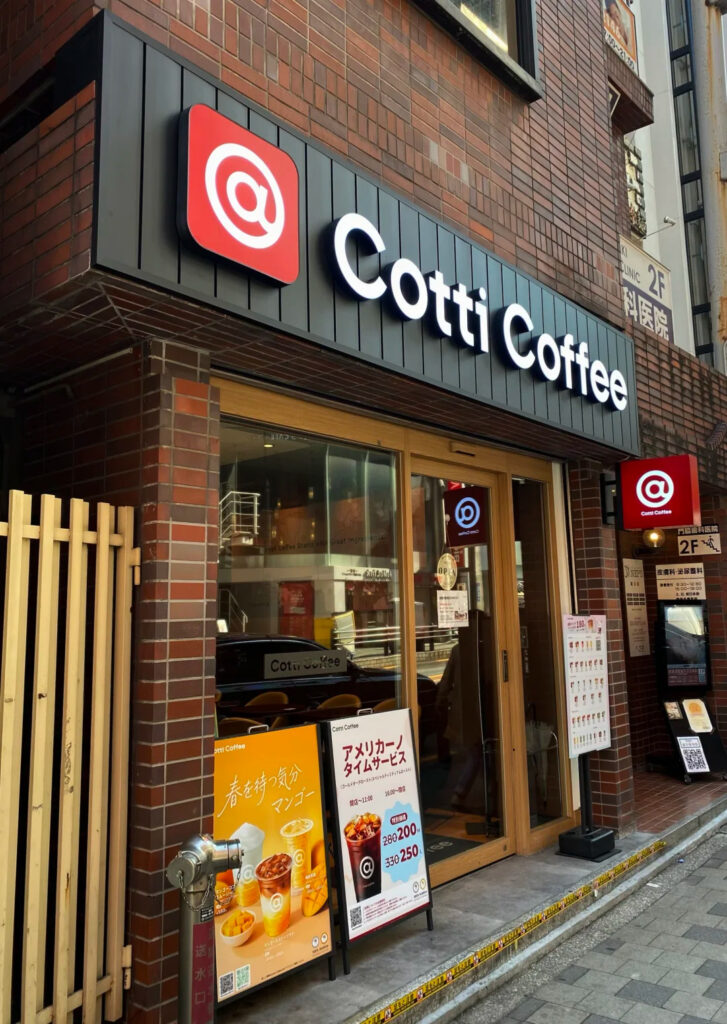
High churn is a feature of China’s intensely competitive, discount-led coffee market. So, Cotti’s problem isn’t that stores are closing. The biggest issue as far as we can see, is the mismatch between national expansion targets and local economics.
Cotti Coffee must prove it can work for the people running the stores
Opaque subsides and ever-changing policies, customer acquisition tasks that don’t take into account the reality of business at street level – it all points to a disconnect between top-level management and the people at the franchise level.
This is a classic bug of China’s coffee market, and you could say the same about the milk tea/fruit tea industry too: rapid expansion is easier to finance than a stable, repeatable business model. Cotti has proved it can effectively scale. Its next test is proving that scale can work for the people running the stores.