


Convenience Store Cocktails: Key takeaways
- Convenience stores are becoming an informal new channel for social drinking
- Younger consumers want low-pressure, lower-ABV and highly customisable serves
- Brands may want to build for the freezer aisle, not the back bar
Young Chinese consumers are rewriting the rules of drinking. One mini bottle, a mixer and a cup of ice, and you’ve mixed yourself a new trend – one that’s sweeping across the web.
Consumers aged 18 to 35 now account for 70% of the low-alcohol market
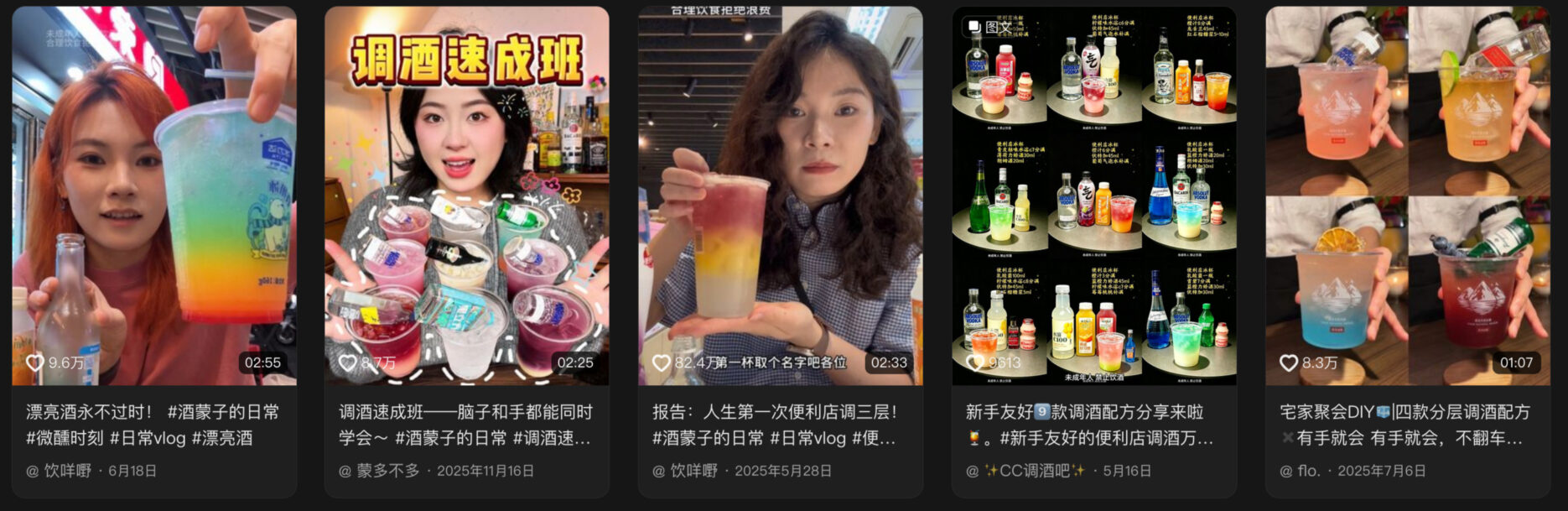
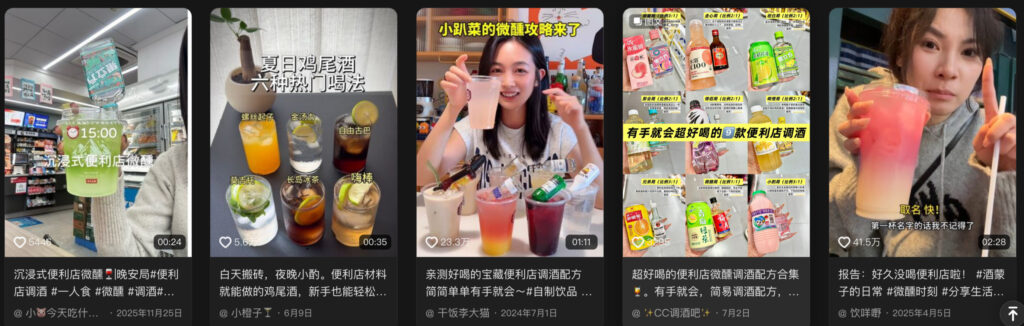
They’re known as convenience store cocktails (便利店调酒), basically beverages assembled personally from the shelves of your local convenience store, often at a price far lower than you’d pay for a drink in a bar. The format has become a social-media phenomenon. Users are swapping combinations and reviewing flavours online, comments sections are starting to look like the pages of the Savoy Cocktail Book.
- Hashtag and audience data: #便利店调酒 has surpassed 4.6 billion views on Douyin, while related Xiaohongshu posts have generated 400 million views.
Social feeds and freezers


Convenience stores are jumping in on the trend, and fast. They’ve responded by placing all the components – miniature spirits, colourful mixers and ready-to-use ice cups – together on the aisle.
What’s rather smart about this is that grouping the products is essentially merchandising a complete drinking occasion out of products that don’t necessarily demand one. This plays on the rising popularity of experience-based shopping among young Chinese consumers, who are – as we’ll now see – a very influential market for alcohol companies in today’s China.
Convenience store cocktails and a shift in traditional Chinese drinking culture
If you’re an overseas drink brand you’ve got a handsome opportunity here
We’ve written before about the generational shift going on in China’s traditional drinking culture. Younger people are less and less keen to take part in the formal, high-pressure corporate banquets associated with strong baijiu. Consumers aged 18 to 35 now account for 70% of the low-alcohol market. This is a segment that favours affordable, customisable drinks designed for relaxed social occasions not drink-till-you-drop all-nighters.
Legacy liquor is taking note. Moutai and Wuliangye have both moved into lower-ABV fruit and sparkling products, while low-alcohol sales reportedly surged more than 210% during Spring Festival.
If you’re an overseas drink brand you’ve got a handsome opportunity here. You can fit into a very specific consumption scene: small-format bottles, accessible pricing and a place beside the ice. And without doing anything more than putting a small bottle on a shelf, you’ve become a part of the drinking rituals of alcohol’s head-turning target market.
The Dao view: Convenience store cocktails are about an occasion to drink
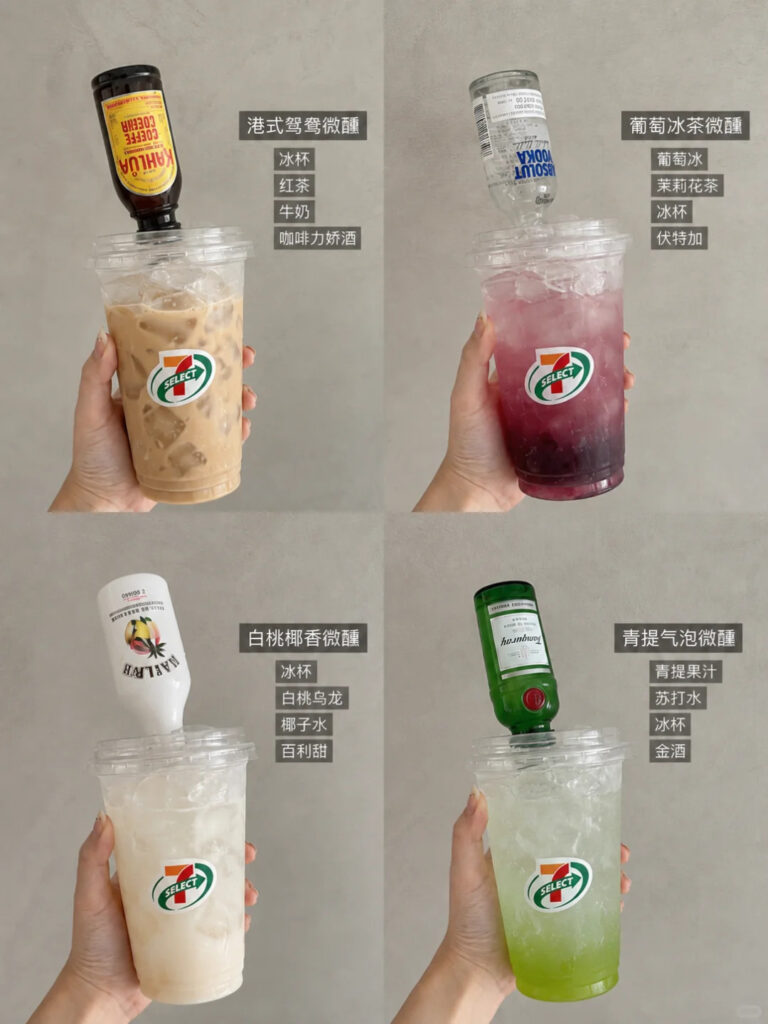
This is ultimately a case study in designing for an occasion rather than selling a finished product. Small bottles and accessible prices lower the cost of experimentation, but distribution and placement are equally important.
A spirit hidden in a conventional alcohol aisle is less useful than one displayed beside mixers and ice. There is also an important distinction between producing the entire cocktail and becoming one component within it. Consumers clearly enjoy assembling, naming and sharing their own combinations. Brands that leave room for that creativity may benefit more than those attempting to package the experience completely.