


Yili’s World Cup campaign: Key takeaways
- Yili built its tournament campaign around fans’ emotional journey, from pre-match excitement to the nostalgia surrounding Messi and Ronaldo’s potential final World Cup
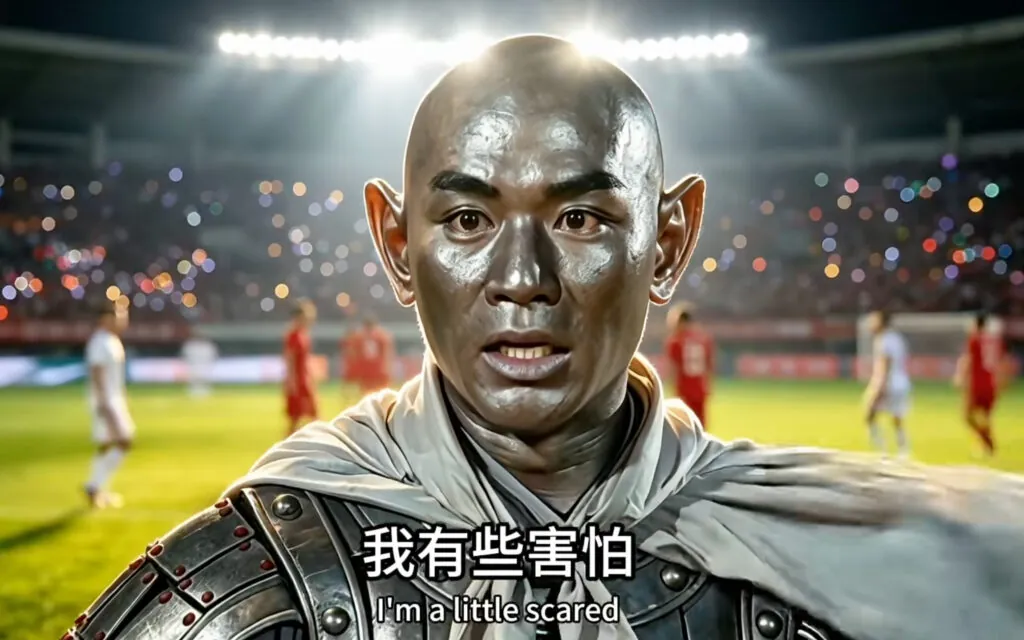
- Its kung fu football films translated global football assets into a distinctly Chinese cultural story, generating discussion beyond conventional player-led advertising
- A seven-minute tribute to the Messi-Ronaldo era and a clever 7/10 metro activation gave fans highly shareable emotional hooks
As events go, it’s hard to find more of a marketing frenzy than the World Cup. FIFA alone expected to earn US $1.8 billion from marketing rights in 2026. Tourism, hospitality, retail and travel capture billions more around the tournament. Sports goods do the same.
With such ubiquity of marketing, the real challenge becomes standing out when it feels like every company has signed a player and every brand has landed a partnership. Yili’s answer was to stop treating football solely as a source of attention.
Yili was always positioning itself as a partner to Chinese consumers’ World Cup experience
Instead, the Chinese dairy giant built a campaign around the emotional arc of the tournament: pre-kick-off anticipation, nostalgia as Messi and Cristiano Ronaldo approached what could be their final World Cup, and the comedown when the final whistle blows.
And boy, did the approach find traction. The brand has said that its campaign hashtags #FootballPartnersHaveYili and #710IsAYouthCodeOnlyFansUnderstand have generated more than 1 billion reads on Weibo. The latter topped off at fourth place on the platform’s main trending list with more than 100 million reads. Here’s how they got there.
Turning football into a martial-arts story
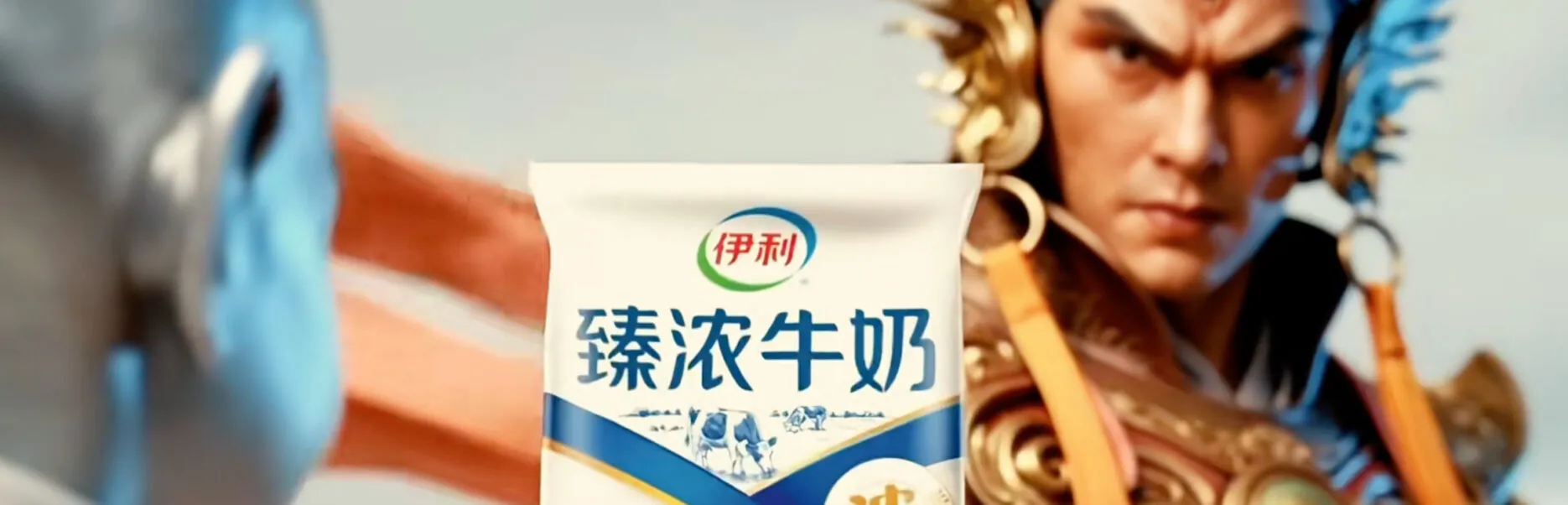
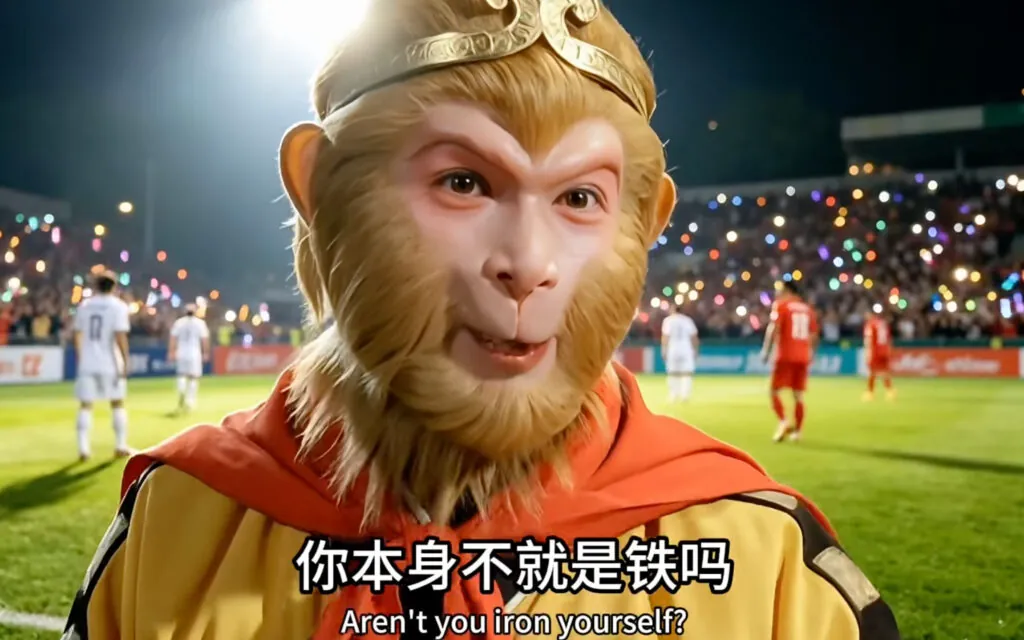
With rights to five major national teams – Spain, Argentina, Portugal, France and Germany – the brand had the raw materials for a conventional star-led campaign. Even so, they dropped the familiar formula of athletes, products and slogans in favour of a very Chinese option: They recast the teams as rival martial-arts schools in a football-martial arts epic.
The concept worked because it found a recognisable bridge between football and Chinese popular culture. Stephen Chow’s comedy hit Shaolin Soccer laid the groundwork for this back in 2001 and has remained big in the culture for Chinese people.
This take also gave Yili an opportunity to continue the campaign through spin-off campaigns and continued storytelling, which they did. Legendary players and younger stars including Erling Haaland, Jérémy Doku and Matt O’Riley, took centre stage for that – an exercise in narrative world-building that gave fans something more substantial to discuss than the other ads they were seeing.
The viral power of 7 and 10
The campaign’s emotional centre was Messi and Ronaldo. To tap into that nostalgia, Yili dropped a timed campaign film titled A Youth Called Messi and Ronaldo that played on the legendary duo’s shirt numbers, 7 and 10. It was released on 10 July at 7:10am, ran to seven-minute, 10-seconds long.
Nostalgia for Messi and Ronaldo’s final World Cup plays a big role
In it, supporters shared their memories of watching the two play. Music associated with Football Night and narration from famed Chinese commentator Liu Jianhong were used as familiar cultural cues for Chinese football fans.


This was a concept that Yili seeded in the minds of Chinese fans with offline activations. They used transfer points between Metro Line 7 and Line 10 in five cities to create a symbolic meeting between Messi and Ronaldo. It was designed for social sharing: an easily understood visual metaphor that fans could photograph, post and add their own memories to.
But this is where the campaign becomes truly smart. Yili did not merely attach itself to two famous names. It gave fans a code – 7:10 – through which to express their own nostalgia.
Yili’s World Cup campaign: From tournament traffic to lasting association
Yili closed the campaign with another fan-focused film, Thank You, Football, for Making Me Cry. Focus was shifted away from the eventual winner. Football, it argued, is not only about trophies. It is also about defeats, farewells, years of companionship and the emotional rewards that come with following a team.
It’s consistent with the subtext in all of Yili’s World Cup campaigning. Across the kung fu films, the Messi-Ronaldo tribute and the final farewell, Yili was always positioning itself as a partner to Chinese consumers’ World Cup experience.
The lesson is not that every brand needs an epic long-form film. It is that major sporting events offer more than fleeting memes and player endorsements. The strongest campaigns identify the feelings fans are already having, then create the symbols, stories and spaces through which those feelings can be shared.