



For years, international luxury jewellers sold China a dream wrapped in platinum, diamonds, and understated minimalism. China’s love for gold, meanwhile, never really ceased. As we’ve seen lately, the market is swinging decisively back in its direction.
At Hermès’ 2025 earnings call, executive chairman Axel Dumas revealed just how dramatic that adjustment has become. ‘Previously, 95% of what we sold was silver,’ he said. ‘But in Asia, consumers prefer gold.’ Today, gold jewellery reportedly accounts for more than two-thirds of the brand’s jewellery sales.
That comment says a lot about where China’s luxury market is heading. Gold is no longer just a traditional wedding purchase or investment hedge. It has become a fashion statement. It’s also a cultural symbol and – increasingly – a choice option for financial security in an uncertain economy. Gold’s new status is forcing international jewellery houses to rethink everything from product design to storytelling. Here’s how they’re doing it.
China’s love for gold is reshaping luxury competition


China’s gold boom has accelerated over the past two years. Domestic brands such as Lao Pu Gold have exploded in popularity by combining traditional Chinese gold craftsmanship with luxury-style retail experiences and highly social-media-friendly aesthetics.
According to Huazhi research, more than half of high-net-worth Chinese consumers are willing to redirect spending from international jewellery brands toward Chinese gold brands. In high jewellery specifically, over 60% said they preferred gold materials. How do you ignore those numbers if you’re a foreign brand?
Well, you don’t: Tiffany has been reducing its reliance on silver while accelerating its focus on gold jewellery and high jewellery collections. Brands like Bulgari, Van Cleef & Arpels, Pomellato, and Boucheron are all increasing the visibility of gold-heavy collections in China too.
Selling craftsmanship, not commodity
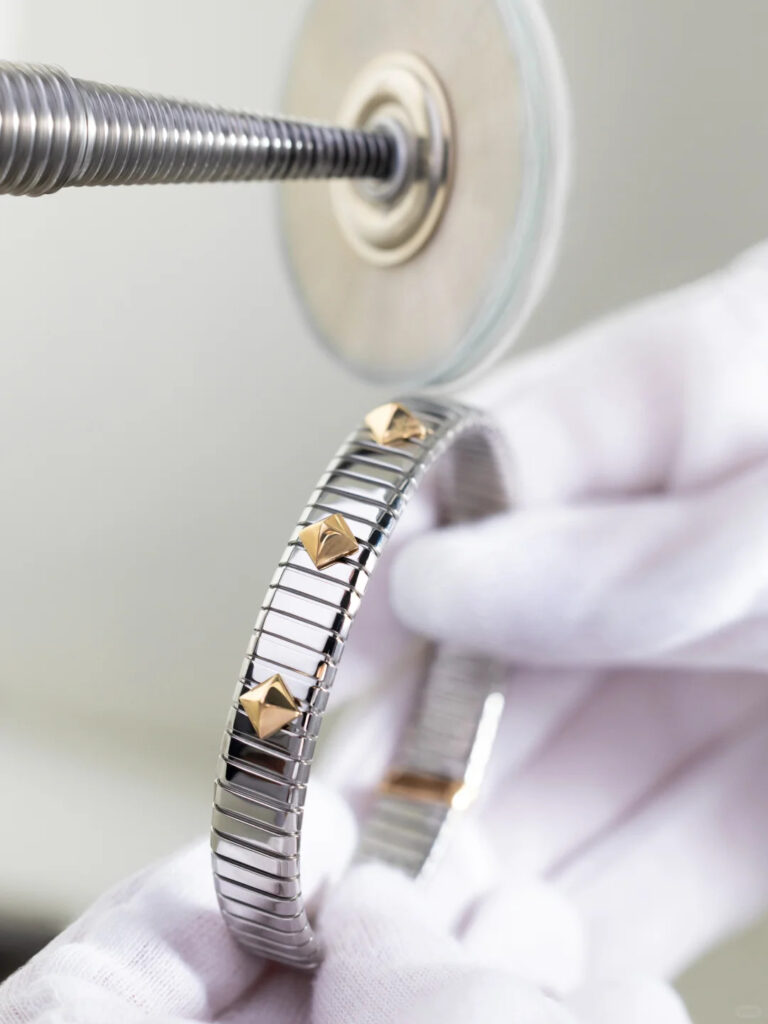
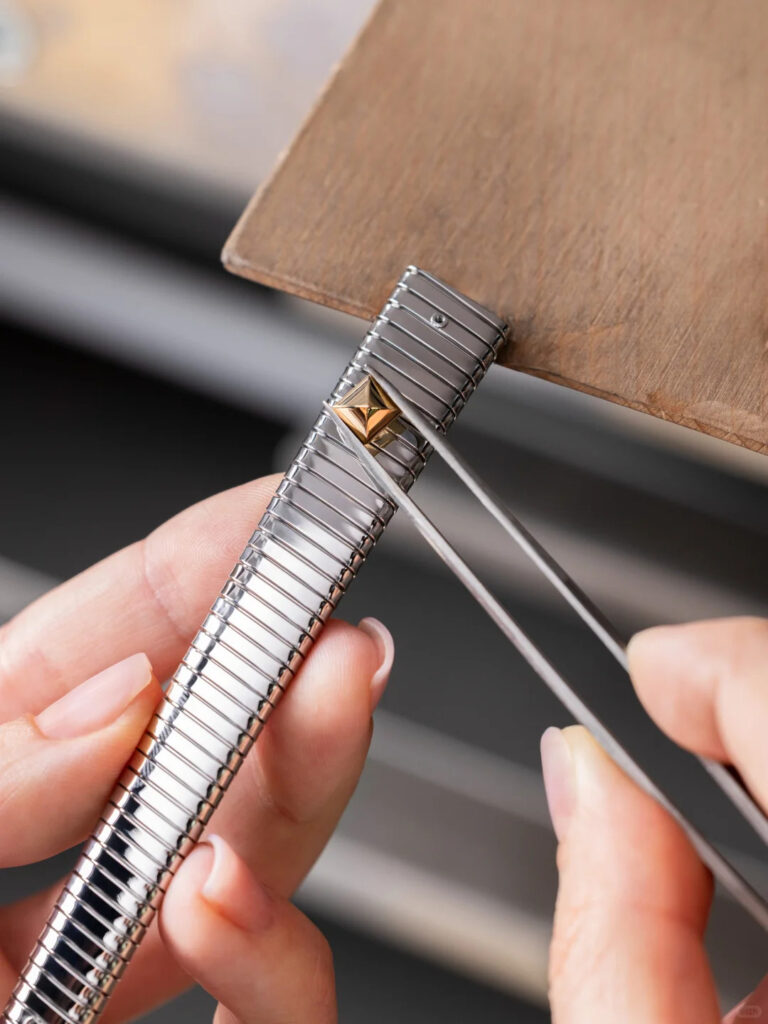
One challenge for international brands is that they cannot compete with Chinese gold brands purely on gold weight or investment logic. Given China’s love for gold, domestic players already dominate that conversation. And so, luxury houses reframe gold as craftsmanship.
Italian brands in particular are leaning heavily into these kinds of heritage narratives. Bulgari’s campaigns have highlighted the process behind its jewellery: molten gold, hand-finishing, and traditional Roman goldsmithing techniques.
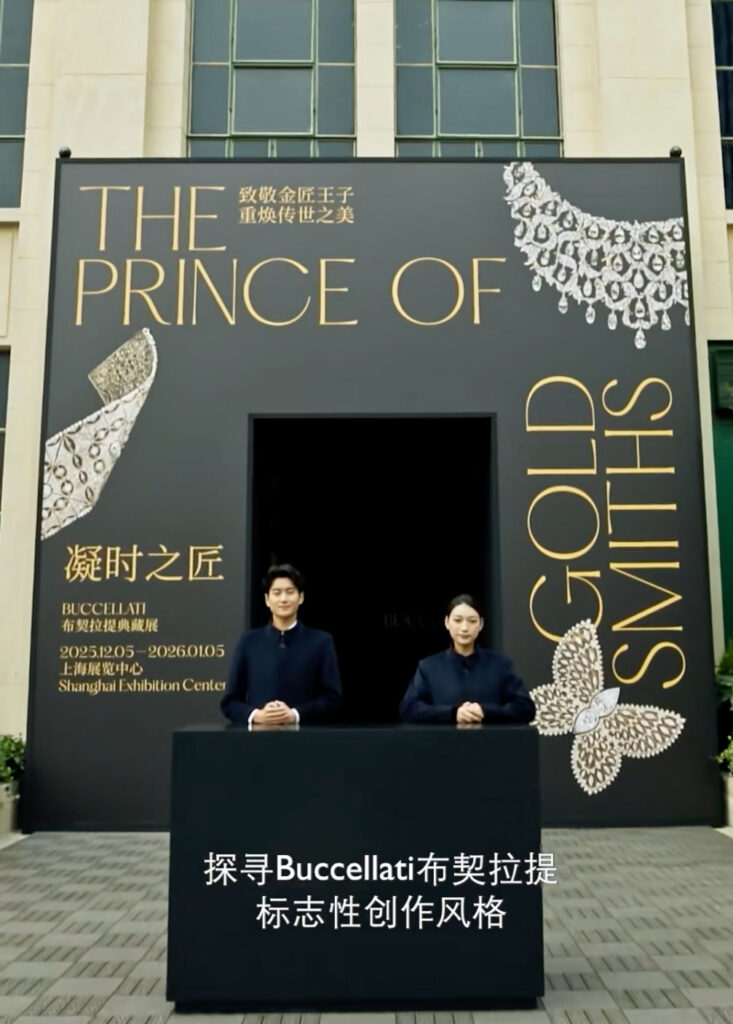
Buccellati recently staged a Shanghai exhibition emphasising its identity as a historic goldsmith house, while Pomellato has been spotlighting its Milan workshop and artisanal techniques across Chinese social media.
China’s new market: fashionable gold


The conversation isn’t totally one sided. International brands have had a strong voice on what gold jewellery looks like. Unlike China’s traditional preference for 24K gold, luxury brands typically use 18K gold. That allows for more experimentation. Shape, colour, and gemstone settings can be toyed around with a lot more. With a range of options, expression becomes a major selling point.

Van Cleef & Arpels’ Perlée collection used gold beads as design signatures. Tiffany’s HardWear and Knot collections give gold a more urban, sculptural aesthetic. Bulgari recently launched a Gold & Steel concept series combining precious metal with industrial materials. Boucheron experimented with gold and black sand through 3D printing techniques.
All this looks like global brands trying to position themselves slightly outside the traditional Chinese gold market rather than directly inside it. Largely because directly inside it, they’re facing stiff competition.
China’s luxury market is becoming more culturally specific
Another big change – and perhaps the most important one – is narrative. Luxury jewellery marketing in China increasingly revolves around symbolism, emotion, and auspicious meaning. Gold’s deep cultural associations with prosperity and longevity in China make that kind of message easy to spin.
Brands are adapting accordingly. Van Cleef frames its gold bead collections around joy and positivity. Cartier’s Grain de Café collection emphasises abundance and vitality. Piaget has leaned into Eastern aesthetics and the idea of ‘turning fortune’ in China-facing campaigns.
This marks an important evolution in global luxury strategy. For years, many international brands approached China as a market that would adapt itself to western luxury codes. Increasingly, the opposite is happening.