

Key Takeaways
- Michael Kors uses travel as its marketing strategy.
- With the opening of Beijing’s Jet Set Lounge, they create a soft entry point for new consumers.
- Through smart pop-ups, the brand puts its message in places where it matters.
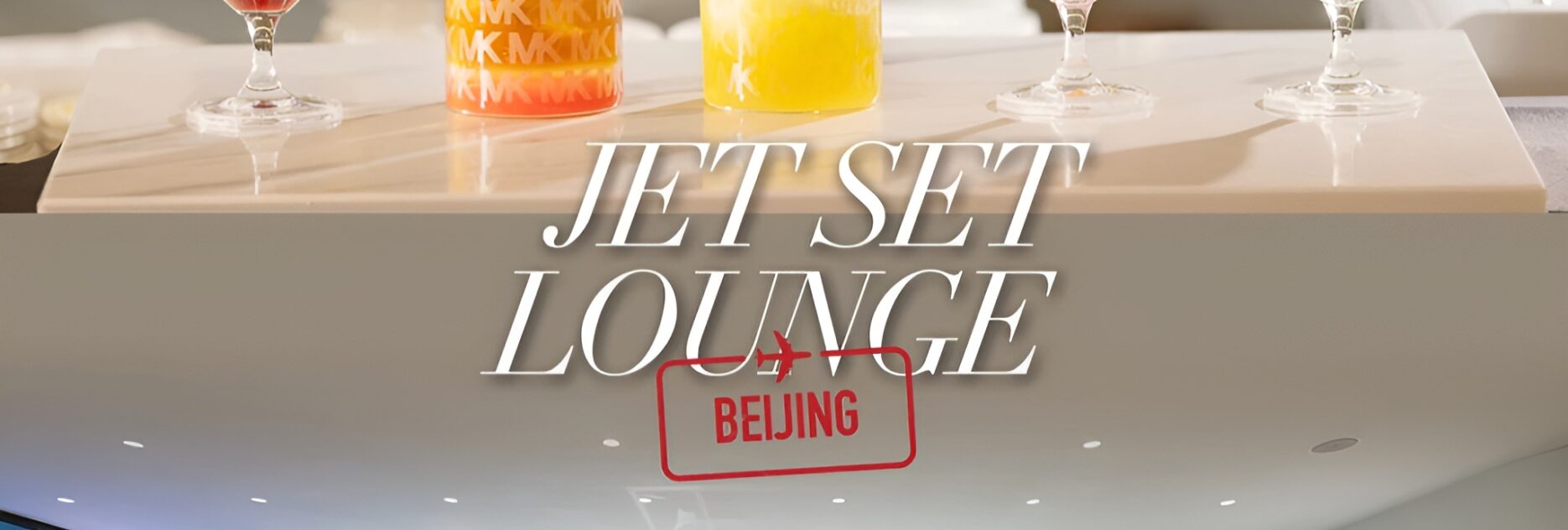
Exploring the role of offline retail space has become a persistent question for fashion and luxury brands in the age of e-commerce. With the opening of its China-first MK Travel Bar (MK旅行吧, also known as the Jet Set Lounge), Michael Kors (迈克高仕) offers a clear answer: turn retail into a lifestyle entry point, and scale it beyond the store.
The concept integrates food and beverage into a luxury retail format, creating a more accessible touchpoint for new consumers. Positioned alongside the launch is a broader strategy — using travel as a narrative system to extend a single location into a multi-city activation.
Travel as a long-term narrative anchor

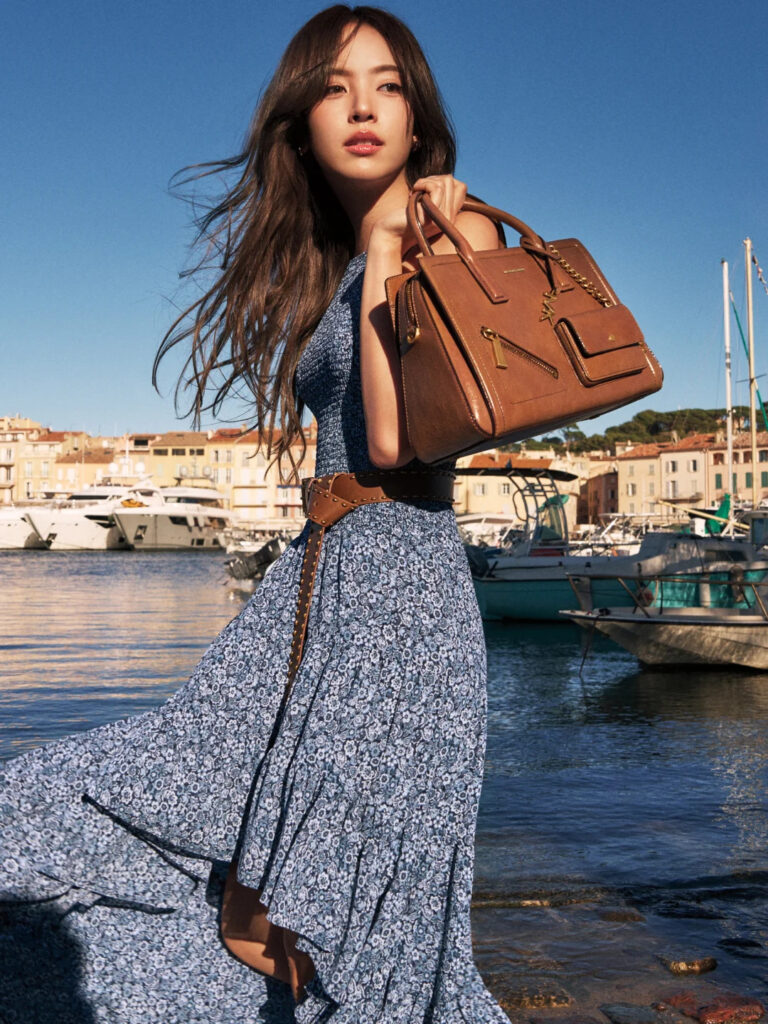
Founder Michael Kors has said that many of his design inspirations come from 1960s and 1970s jet-age travellers who could pick up and leave at a moment’s notice. Over the years, that idea has been expanded into a broader aesthetic positioning: confidence and elegance regardless of location.
This allows travel to function as a strategic anchor. New formats and experiences can extend from it without breaking the brand’s core identity. The Beijing MK Travel Bar builds directly on this, translating an abstract narrative into a physical format that can operate across both retail and hospitality environments.
The Jet Set Lounge as a softer entry point to lifestyle retail
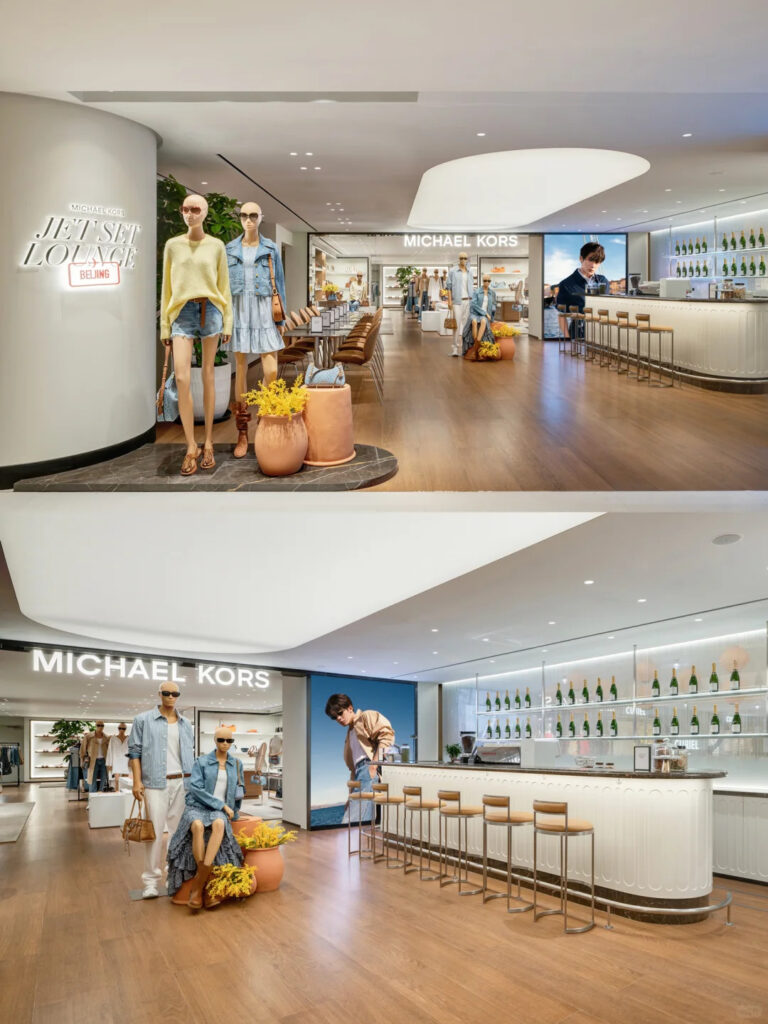
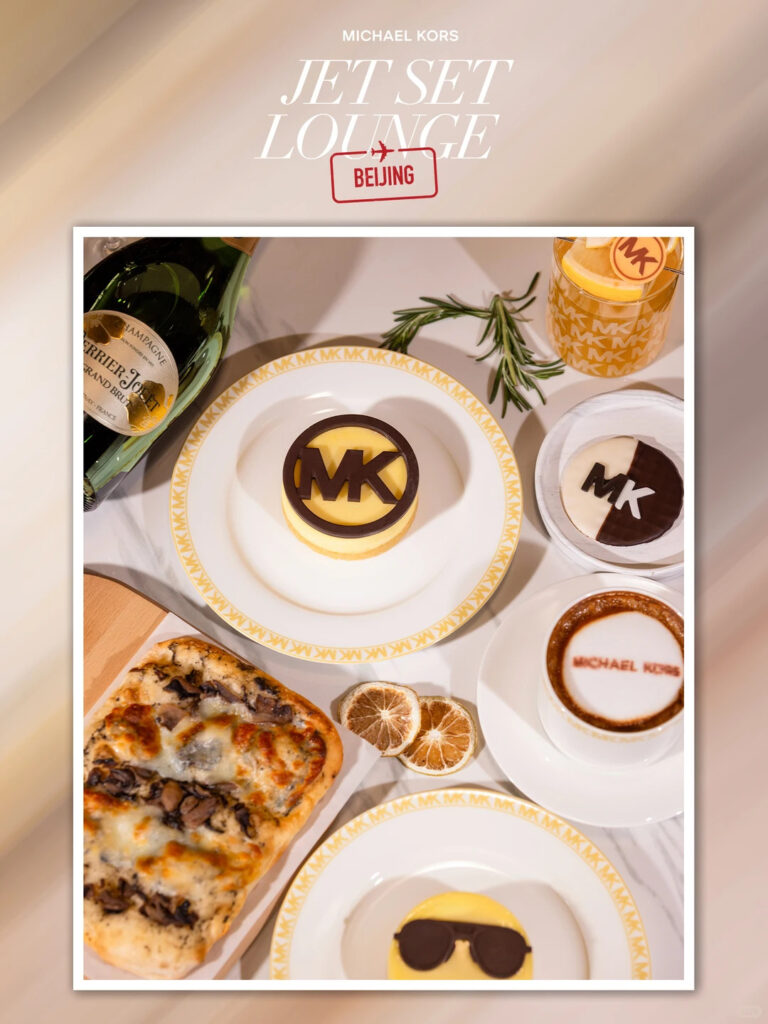
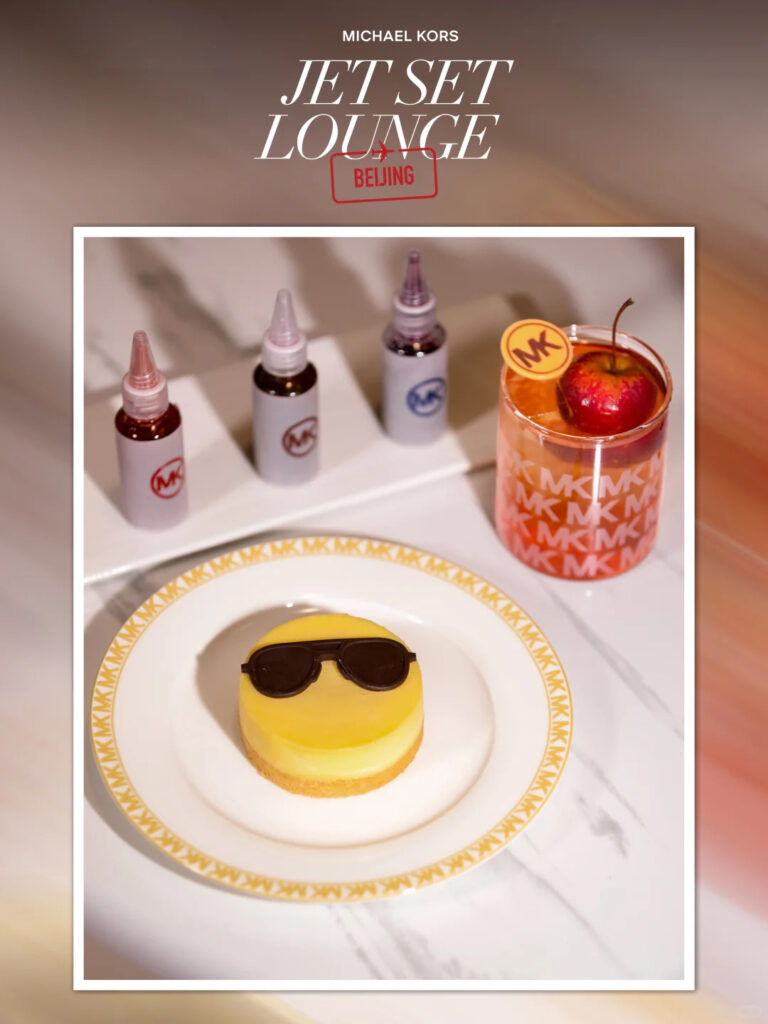
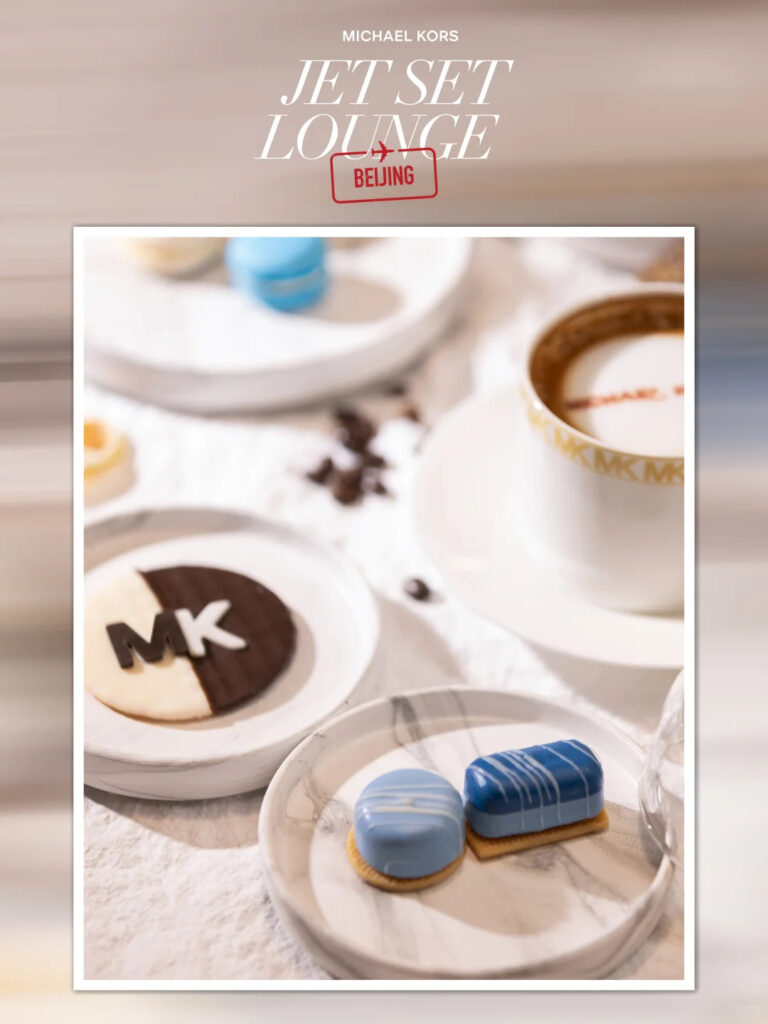
The addition of food and beverage shifts the retail dynamic. Compared to your more traditional shopping formats, it lowers the psychological barrier to entry, offering a softer intro for consumers unfamiliar with the brand.
Inside, visitors can peruse menus of classy drinks and food from around the world. Naturally these are infused with brand identifiers. After dinner or drinks, shopping – should they want to. There’s no pressure to buy. It’s primarily about immersion. Sales – theoretically – will follow in time.
Marketing the Jet Set Lounge across China


A single flagship location comes with inherent limits. Michael Kors addresses this by extending the MK Travel Bar into China’s travel infrastructure through hotel partnerships.
Lounges at The Shanghai EDITION, Niccolo Chengdu, and The St. Regis Shenzhen have been transformed into branded environments for two to three months. These activations run in parallel with the Beijing flagship, forming a four-city network across key Chinese urban markets.
Rather than simple co-branding, the spaces are reconfigured to carry the brand’s visual and narrative system. Details reinforce the travel theme: suitcase-shaped afternoon tea sets introduce ritual, locally inspired menu items connect to regional culture, and the Nolita chain shoulder bag appears as a consistent visual anchor.
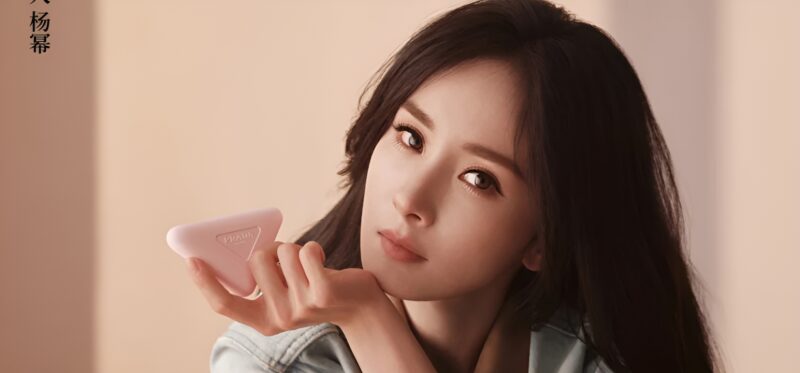
To support the Beijing opening, the brand also partnered with the Mandarin Oriental Qianmen on a campaign titled Take Nolita for a Walk, placing the bag within hutong settings through celebrity-led content.
From hotel storytelling to a repeatable China playbook
The MK Travel Bar builds on a series of China-based activations centred on travel. Since 2025, Michael Kors has rolled out its Hotel Stories narrative across multiple cities, linking brand elements with local culture and specific environments.
Each activation combines scenario design with product placement, turning hotels into branded stages that extend the narrative beyond retail. The result is a system that connects location, culture, and product within a single framework.
The MK Travel Bar represents the latest iteration of this approach – a format that can operate both as a fixed retail space and as a distributed, multi-city experience. In China, that dual structure allows a single opening to scale into sustained, nationwide visibility.