




UNIQLO’s (优衣库) May Day campaign bucks the trend of holiday storytelling. Gone are the usual promises of destination heaven. No images of beaches, ice creams or smiles. No aspiration.
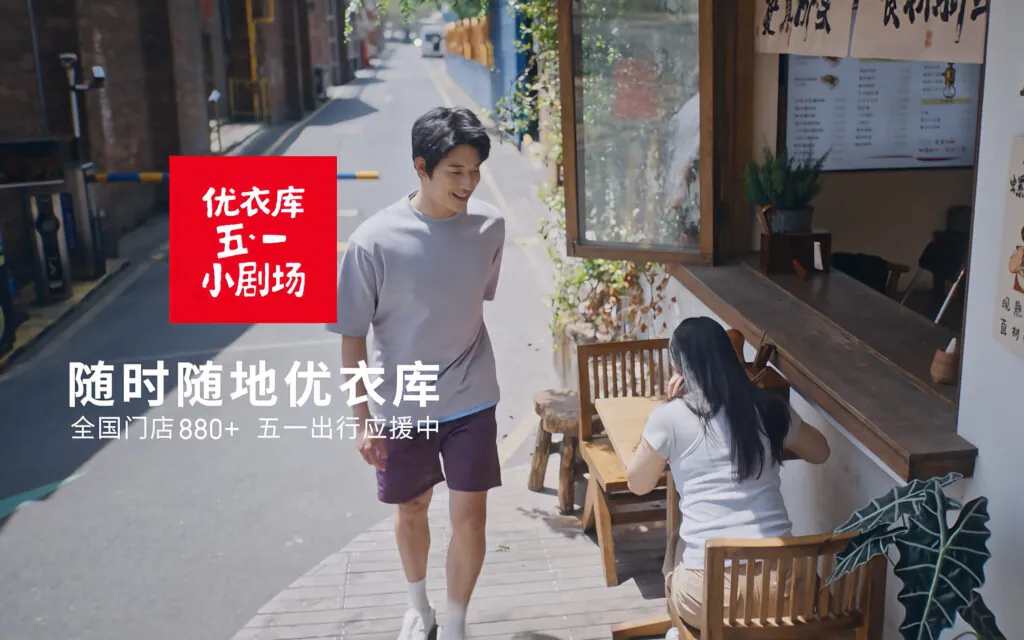
Instead, UNIQLO looks at what goes wrong with three short films that work around minor wardrobe crises. The campaign theme is Anytime, Anywhere UNIQLO. The idea is that when you run into clothing crises on the road, UNIQLO will be there to bail you out.
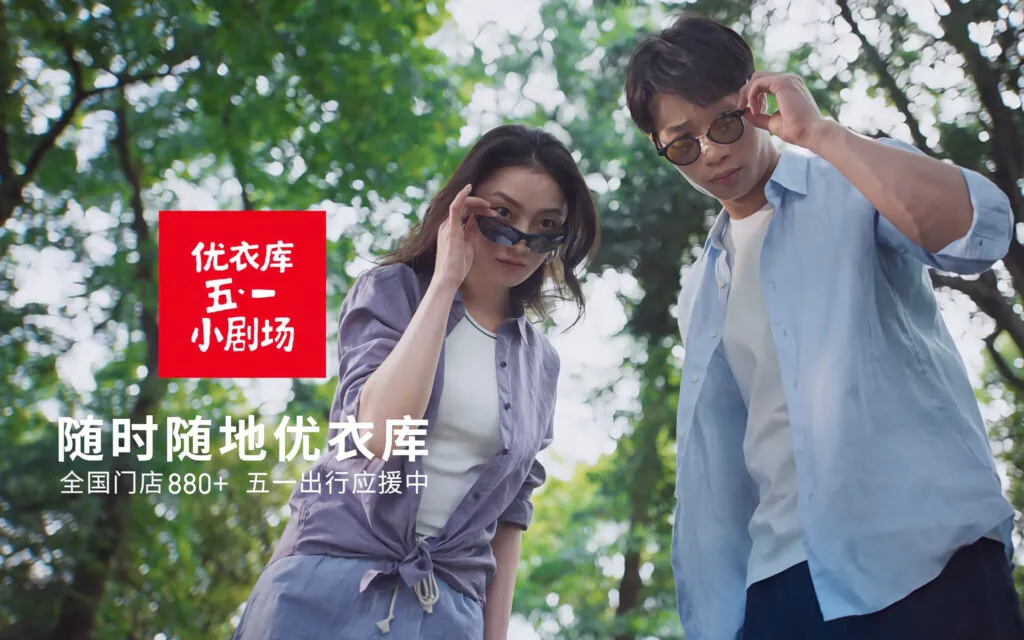
This is only possible because UNIQLO now has a footprint of nearly 900 stores in China. This figure puts them well ahead of competing foreign brands like H&M and Zara. In developing such a footprint, UNIQLO’s China strategy now differs from its usual playbook.
While reliability still plays a central role, the message now comes with a promise that always plays well in the Chinese market: convenience.
How does UNIQLO get this across in their May Day campaign?


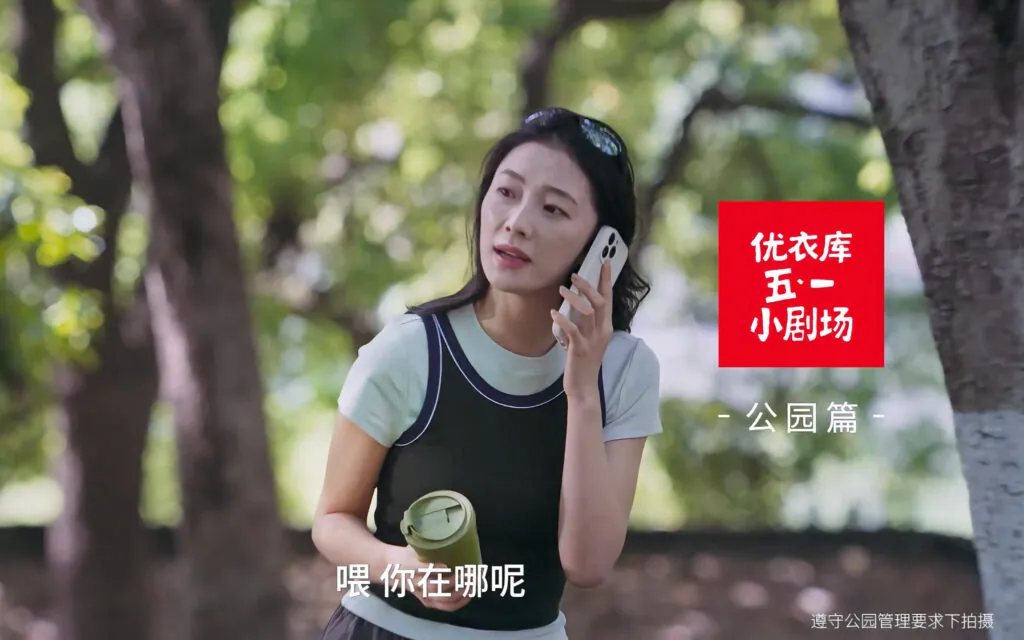
In one film, a shy young lad jumps in a shared ride after eating a pungent bowl of luosifen noodles. The car falls silent at the smell of him before he breaks the silence with a joke that reminds us that a fresh T-shirt is never far away.
In another, a family gets unexpectedly drenched by a plaza fountain mid-photo, only to reset their look with a quick change nearby. The third plays with invisibility: a man dressed head-to-toe in earth tones disappears into the scenery, until a brighter outfit pulls him back into focus.
It sounds somewhat slapstick but it’s not. The tone is flat. Performances are straight-faced, sound design does a good bit of heavy lifting, the humour tends to land in the pause rather than the punchline. Those of you who caught UNIQLO’s campaign with Truls Möregårdh will recognise the tone.
How UNIQLO’s May Day campaign message differs from its traditional tack
Historically, UNIQLO has positioned itself around LifeWear: functional, high-quality basics designed for everyday life. In their native Japan, that translated into reliability and routine – dependable clothing you buy repeatedly. In Western markets, the emphasis leaned more toward design-led basics (fabric innovation, collaborations, minimalism), closer to smart essentials than emergency solutions.
What’s different in China is the scale + density equation. With 881 stores and deep integration into urban retail infrastructure, proximity becomes a credible claim. That allows UNIQLO to shift from planned purchase to situational utility, i.e. something you can rely on when things go wrong – not just a one-stop shop for your clothing basics.
The Dao view: UNIQLO is flaunting a supply chain victory
UNIQLO isn’t changing what it stands for here, more like they’re shifting what shows up. Reliability has always been a core part of their offering. It used to live in the products, but now it lives down the street. Convenience on that level doesn’t leave heads unturned in China. UNIQLO are now sitting themselves in the same mental bracket as convenience stores, late-night pharmacies, and other just-in-case infrastructure.
The May Day campaign skips postcard fantasy for small fails: the spill, the smell, the wrong outfit. Then it offers a fast fix. With a sharp and simple bit of spin, UNIQLO has turned store count into certainty.