



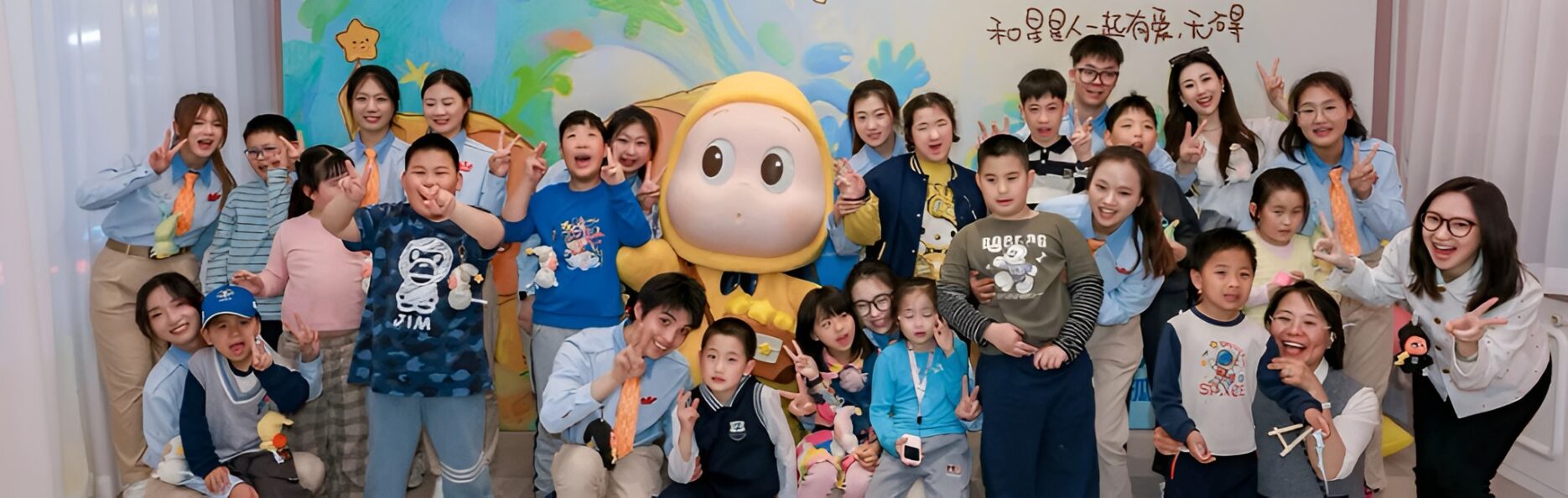
Pop Mart (泡泡玛特) has built its business on collectability, hype cycles, and character IP. Alongside that Pop Mart have developed a robust CSR mission. Using the same tools that sell blind boxes, they’ve leveraged what might be China’s most recognisable IP as a way to deliver social value.
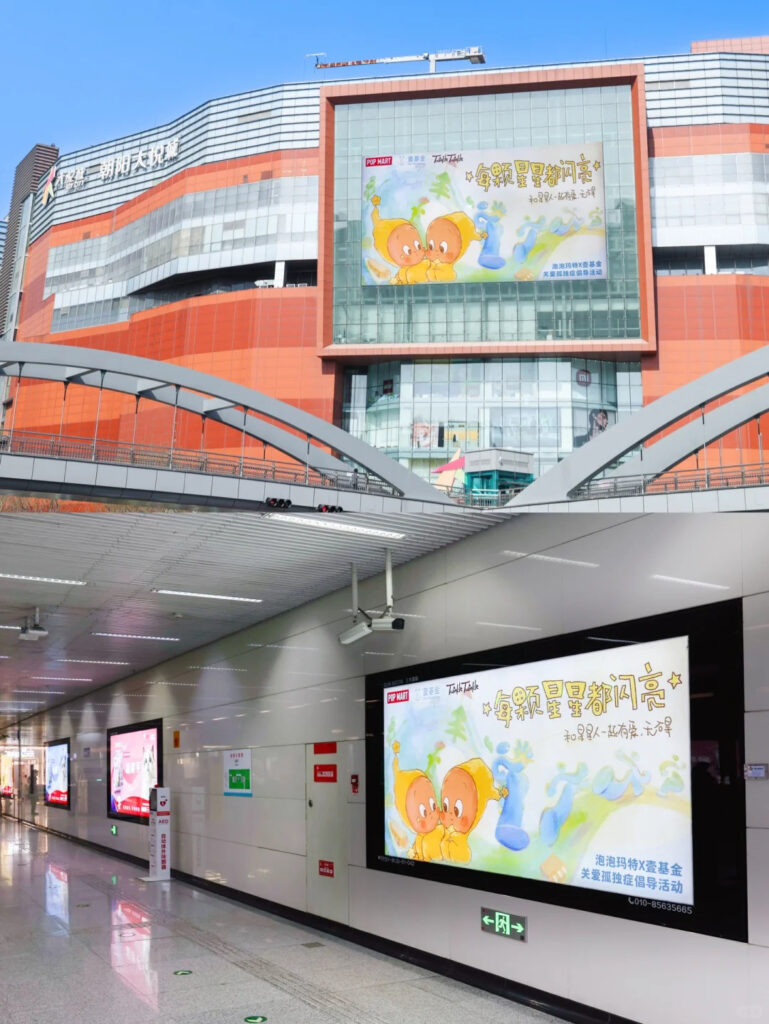
Their latest CSR event, titled Every Star Shines (每颗星星都闪亮), is a prime example. While other brands use fiscal resources or the strength of their logistics to do good, Pop Mart has used its own strength: emotional appeal.
Every Star Shines: From exhibition to engagement
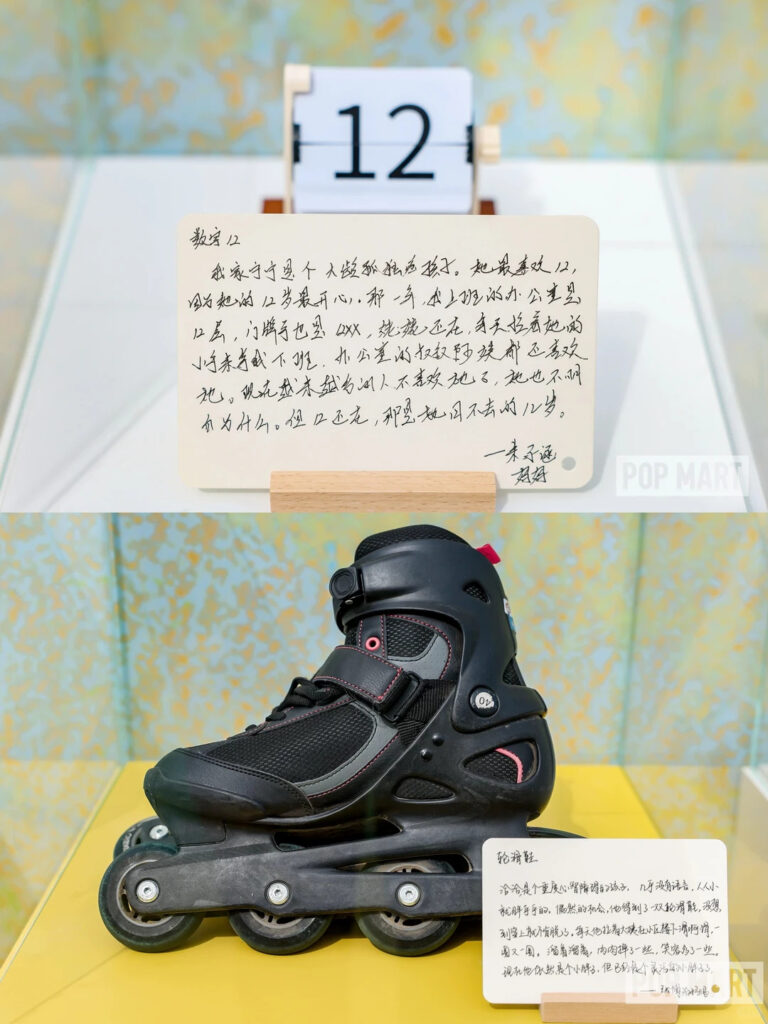
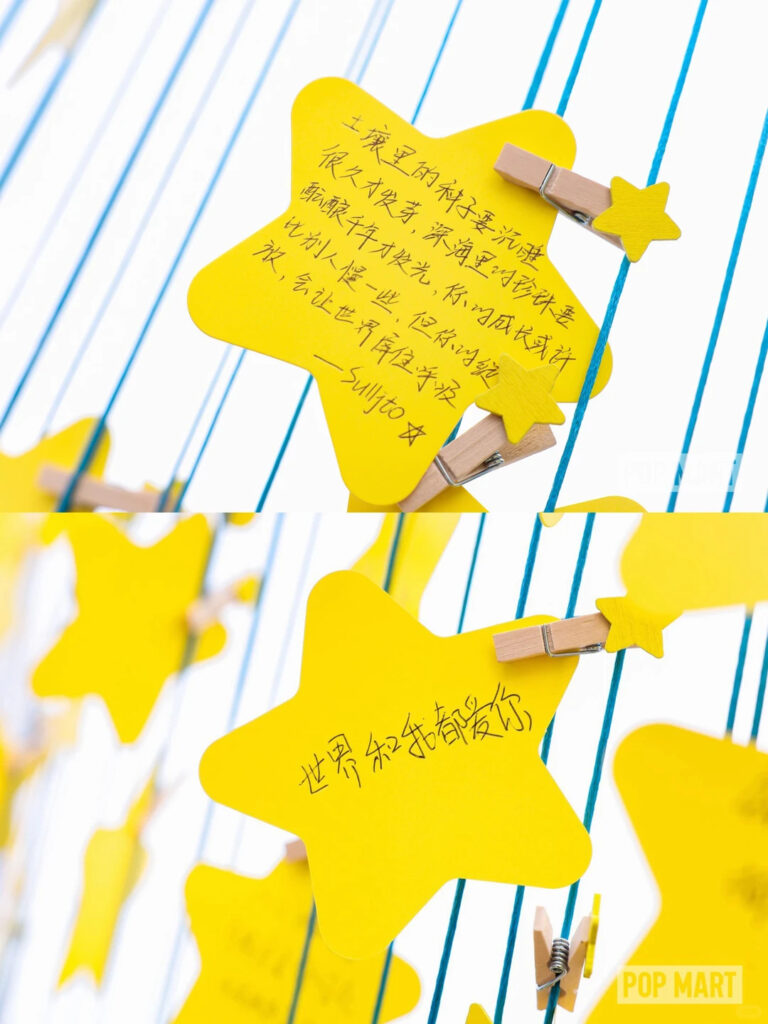
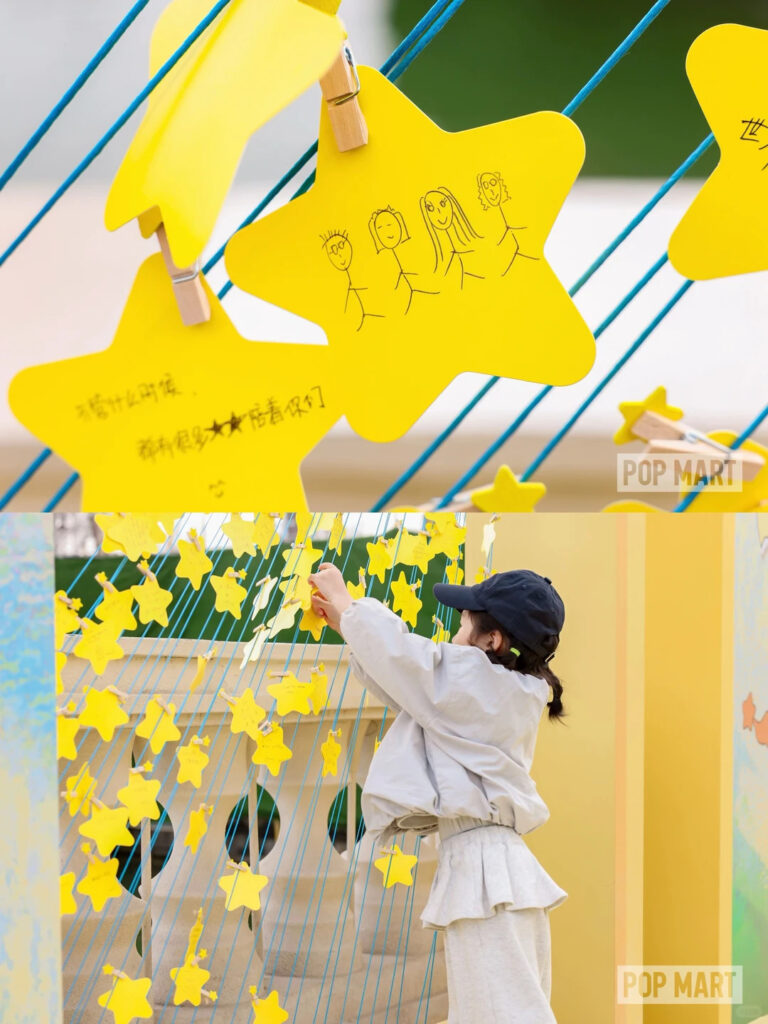
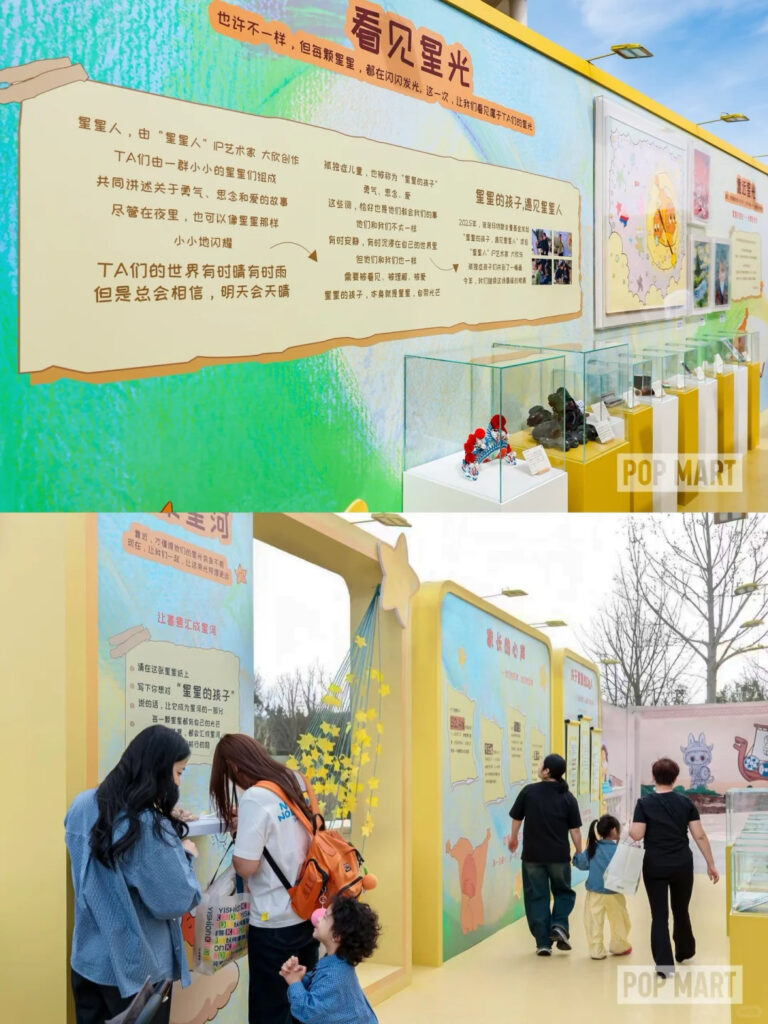
Timed with April’s World Autism Awareness Day, Pop Mart partnered with One Foundation (壹基金) to spotlight 21 families with autistic children. The activation was structured as a three-part exhibition. Everyday stories from autistic children and their families paired with support notes, educational content, and misconception busting were the main thrust. Emotional entry was followed by education, then participation. Passive awareness was turned into active engagement.
The campaign extends beyond the exhibition itself. Pop Mart has committed to a three-year donation programme supporting the One Foundation’s Ocean Heaven initiative, which focuses on inclusive education for children with special needs. That continuity reframes the activation from a one-off campaign into part of a longer-term system.
How Pop Mart CSR uses IP as the delivery mechanism
At the centre of Pop Mart’s CSR strategy is its IP. Characters are not just visual assets, they function as interfaces. It’s a soft entry point for complex or sensitive topics and makes those topics much more accessible to younger audiences. They also enable co-creation, whether through installations, artworks, or charity-linked merchandise.
This shifts CSR from institutional messaging into character-led storytelling. The brand isn’t simply asking audiences to care. It’s arming them with the language to do so.
Offline-first: CSR as spatial experience
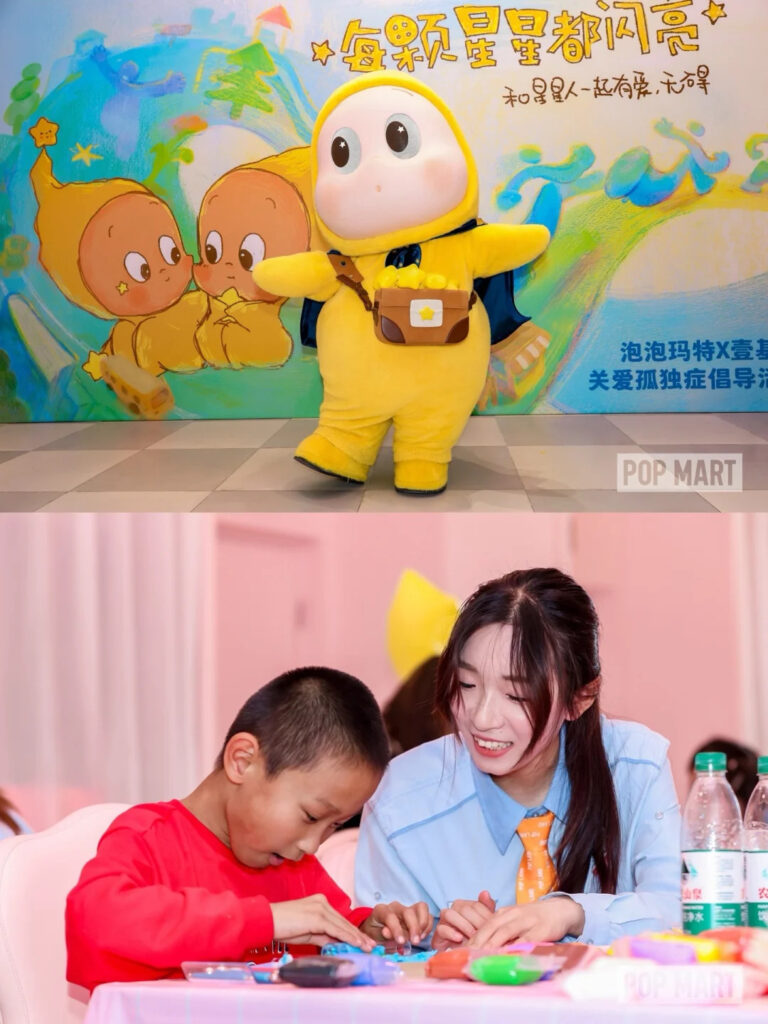
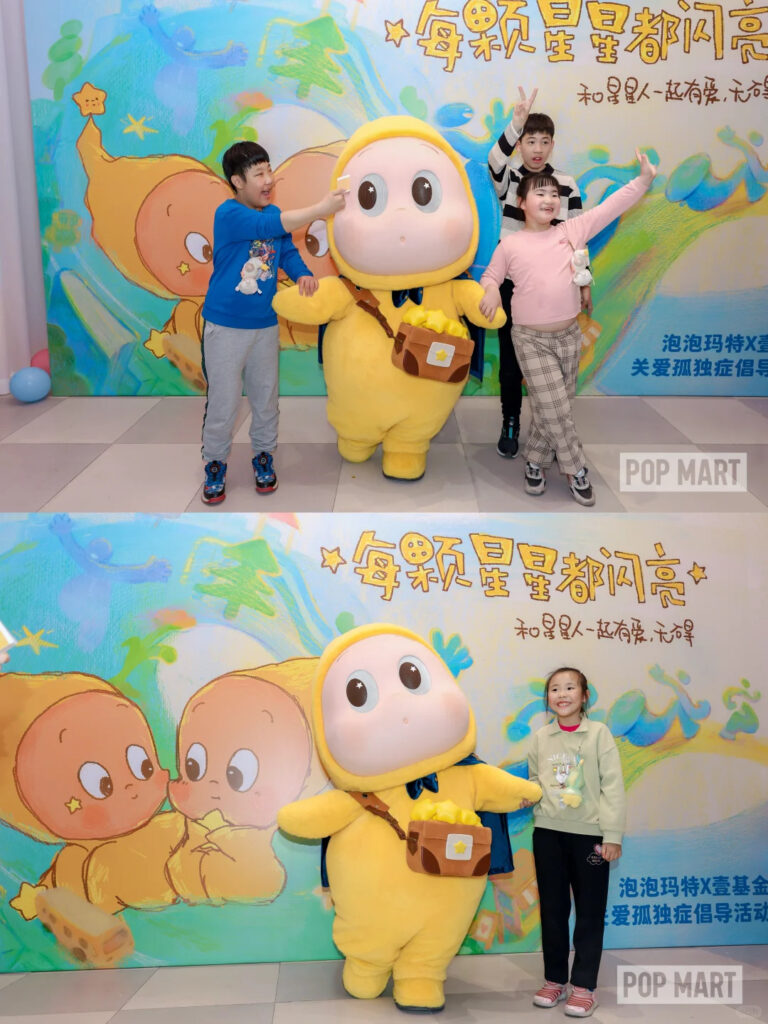
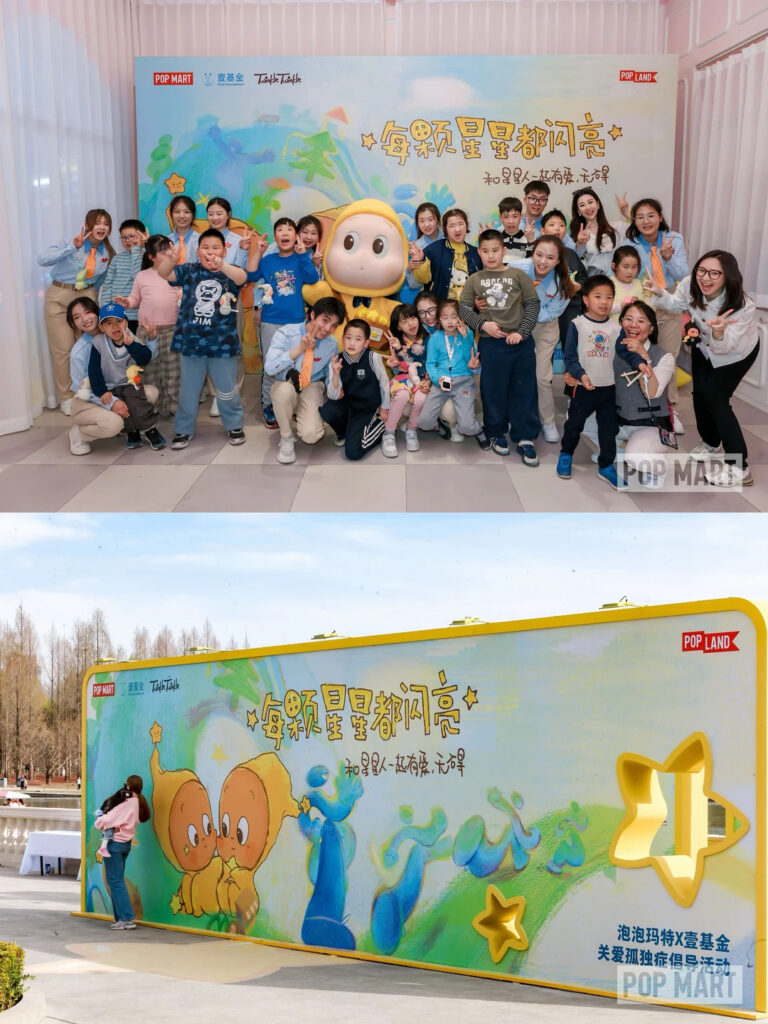
Pop Mart’s CSR is built for physical space. Exhibitions, workshops, and installations form the backbone of its approach, borrowing more from museum design than traditional advertising.
The structure is consistent: immerse visitors emotionally, provide cognitive context, then invite participation. This creates a layered experience that feels tangible and credible. In a market where audiences are increasingly wary of performative campaigns, physical presence acts a bit more like proof.
At the same time, these environments are inherently shareable. Visitors document and circulate their experiences online, turning offline engagement into social amplification. The result is a tight O2O loop, where experience drives visibility and visibility reinforces engagement.
Youth and community as the amplification layer
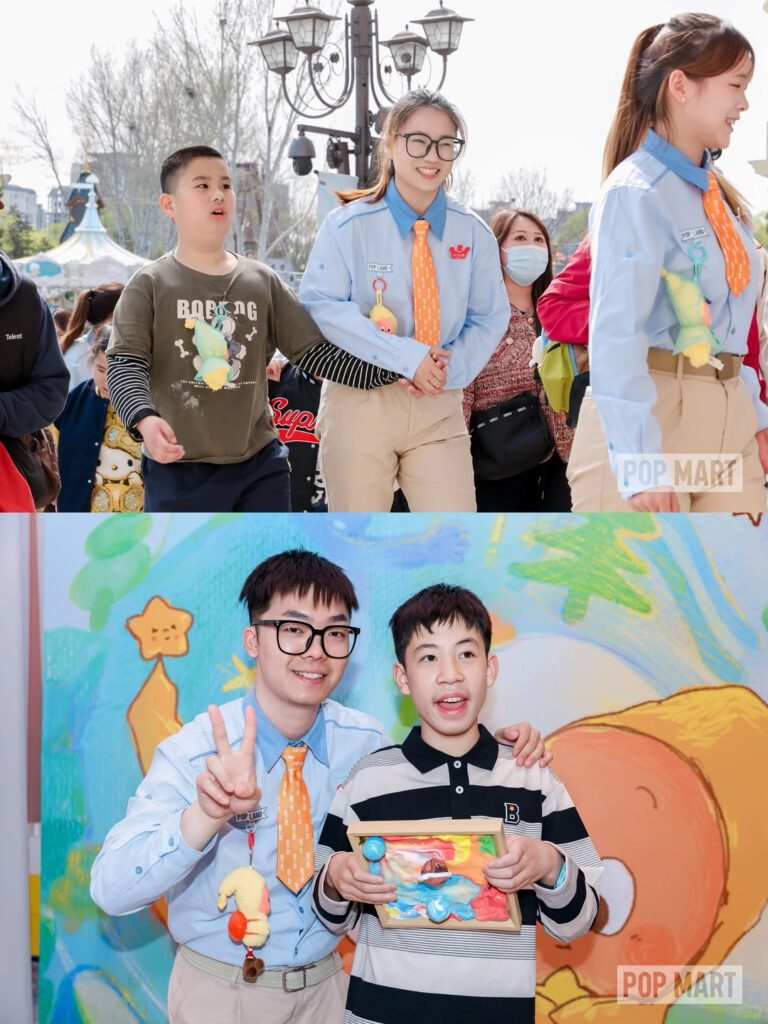
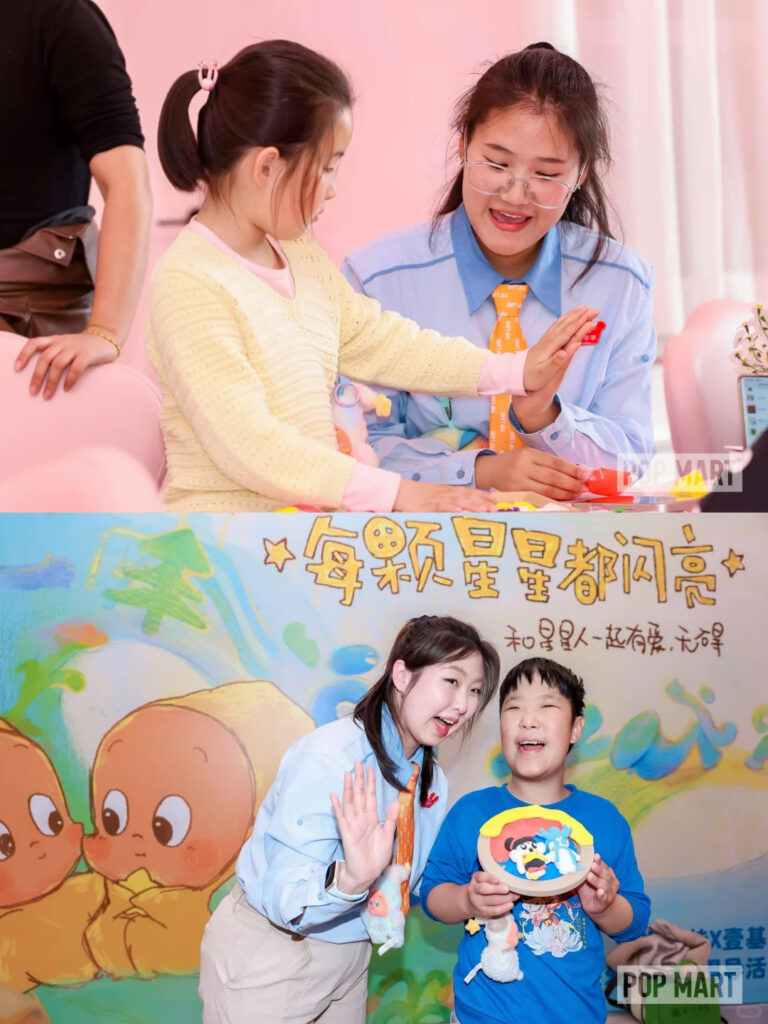
The model operates on a dual audience. On one side are the direct beneficiaries: children and families. On the other are young urban consumers who engage with the experience and extend it through their own networks.
This turns CSR into a form of community participation rather than passive observation. Visitors contribute messages, content, and visibility, becoming part of the campaign’s distribution layer. For a brand whose core audience is Gen Z, this is a natural extension of how engagement already works. Over time, this builds a values-led community around the brand, where CSR is not a single moment but an ongoing social layer.
Why Pop Mart CSR has both logic and limits
What emerges is a form of cultural philanthropy. Pop Mart is not competing with platforms on logistics or funding scale. Instead, it is leveraging what it already has – IP, design, and offline experience – to make social issues legible and emotionally accessible.
Long-term partnerships, such as its ongoing collaboration with the One Foundation, help. Multi-year commitments add continuity and credibility, addressing a common weakness in campaign-led CSR.
But there are limits. Compared to infrastructure-driven CSR models, the impact here is less quantifiable. The strength lies in engagement and awareness. The challenge is translating that into measurable outcomes.
Empathy at scale
Pop Mart CSR campaigns are built on the same principle as its products: emotional connection drives participation. By turning public welfare into something people can walk through, interact with, and share, it aligns social impact with its existing brand mechanics. The model clearly resonates. The next step is whether that emotional engagement can scale into something more durable where storytelling is matched by demonstrable impact.