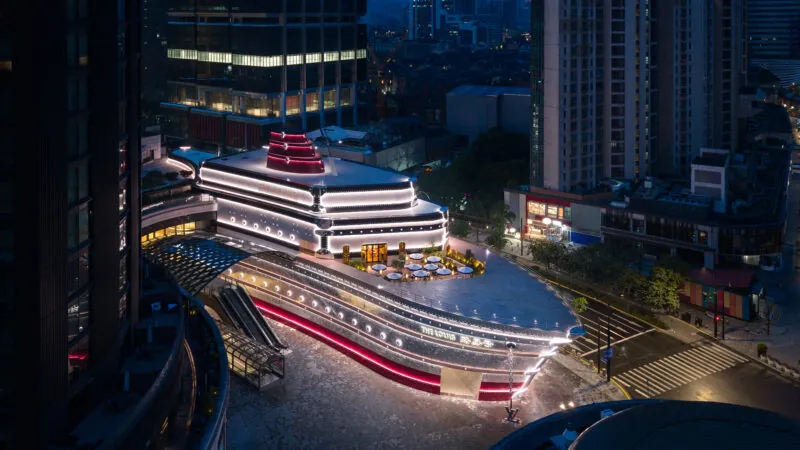



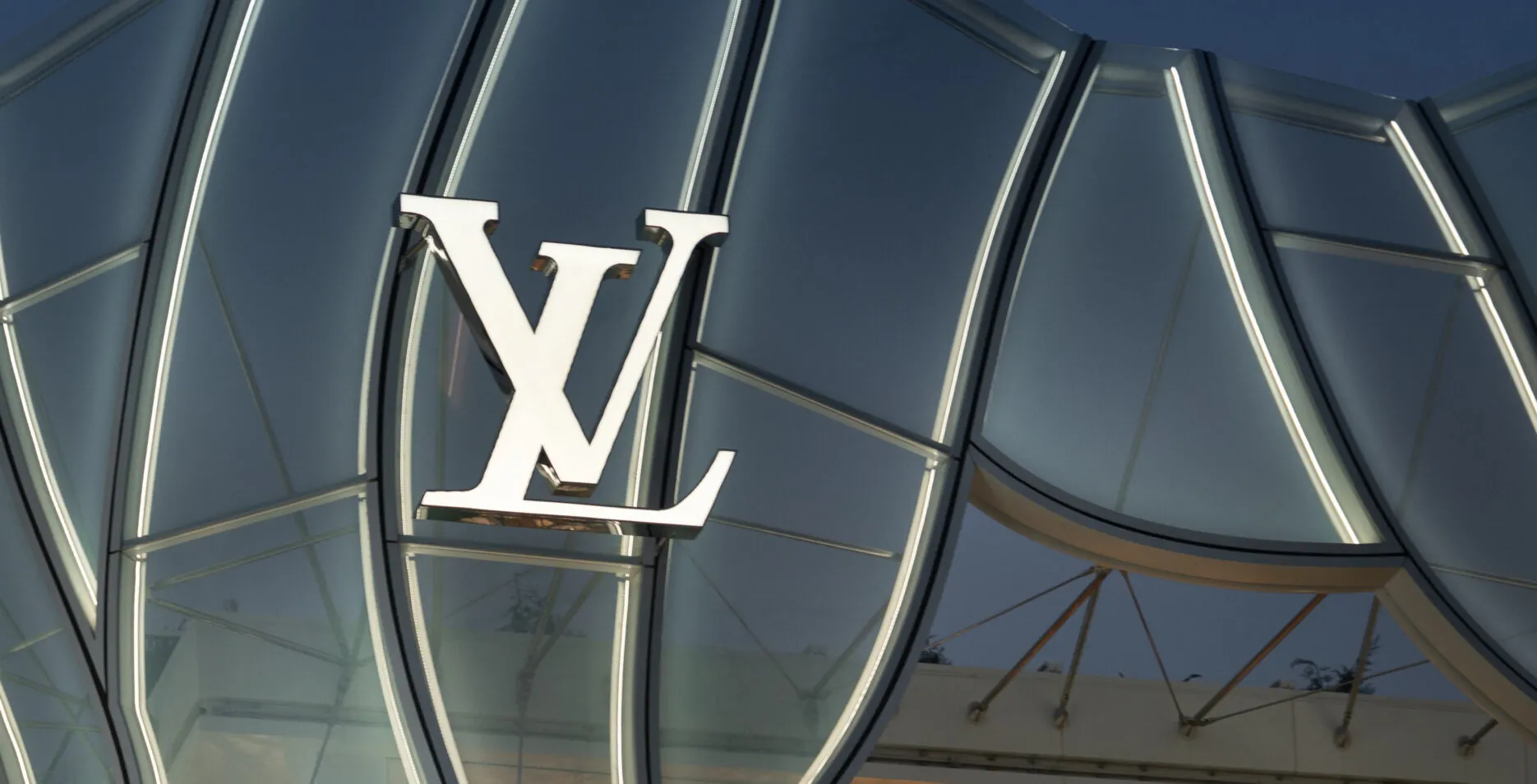
Louis Vuitton (路易威登) has unveiled a Beijing flagship, the Maison Louis Vuitton Sanlitun, positioning it as both an architectural statement and a new cultural destination in the capital. Opened on December 19, 2025, the building is designed by Japanese architect Jun Aoki, a long-time collaborator with the house whose past projects include Louis Vuitton landmarks in Tokyo and Osaka.
From its sculptural façade to its multi-level retail experience and Beijing’s first Le Café Louis Vuitton, the Maison positions itself as both cultural landmark and experiential destination – one that blurs the line between store, gallery and social space.

The strategy
The opening lands at a moment when global luxury brands are recalibrating their China strategies. As foot traffic growth slows and consumers become more selective, flagships like Maison Louis Vuitton Sanlitun are increasingly used to bring customers back into physical spaces.
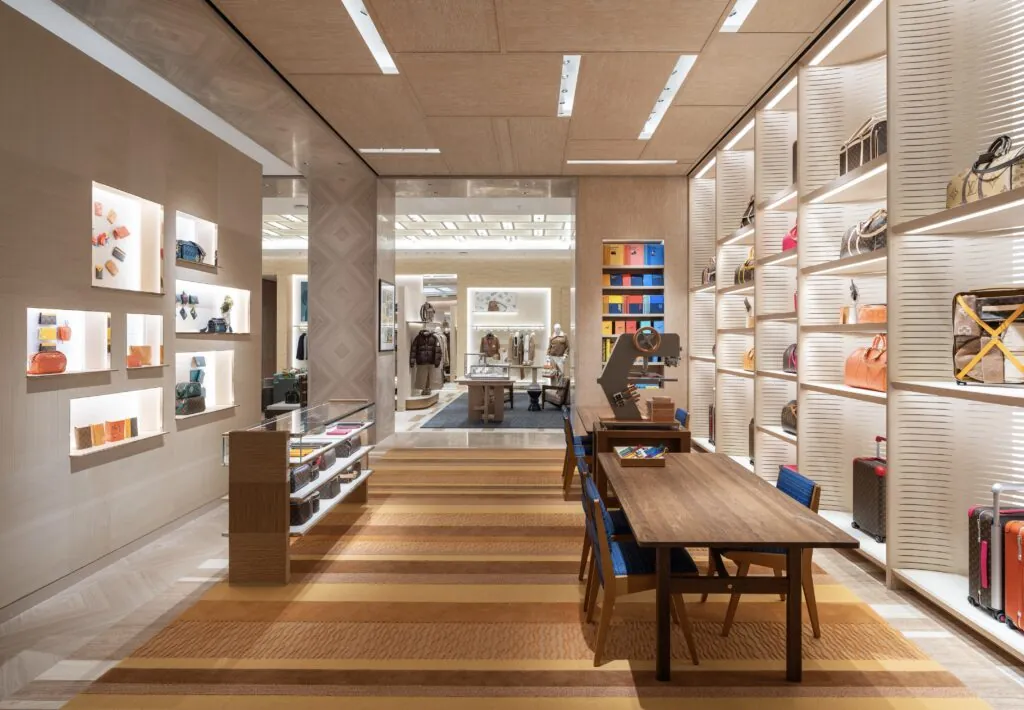
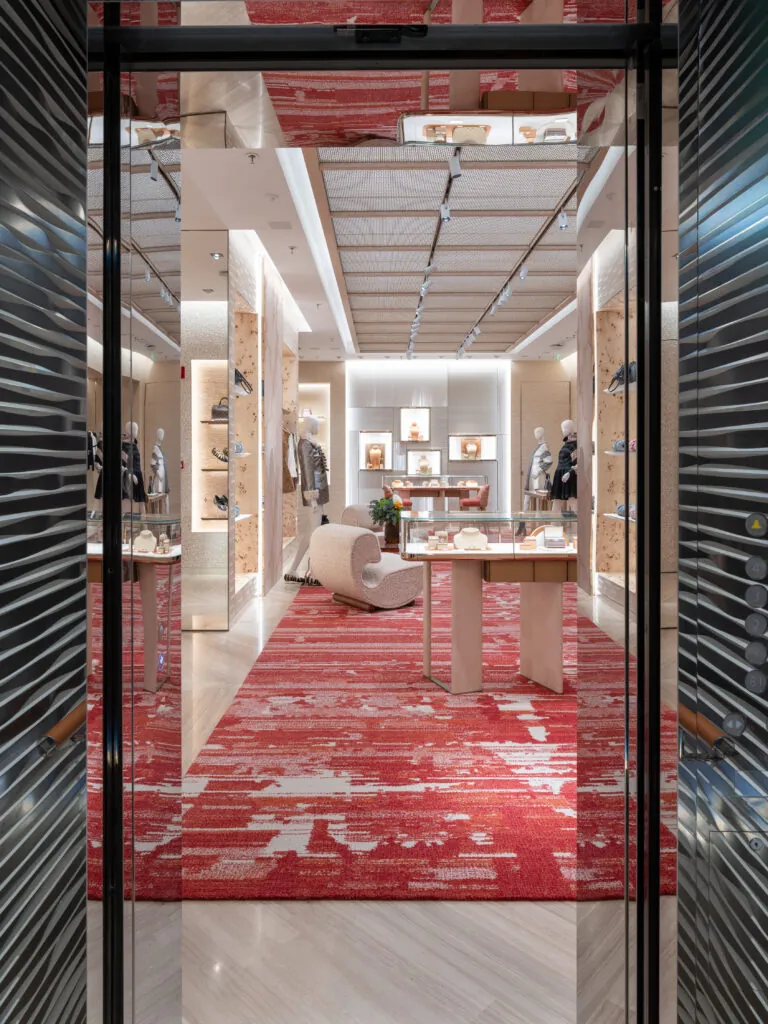
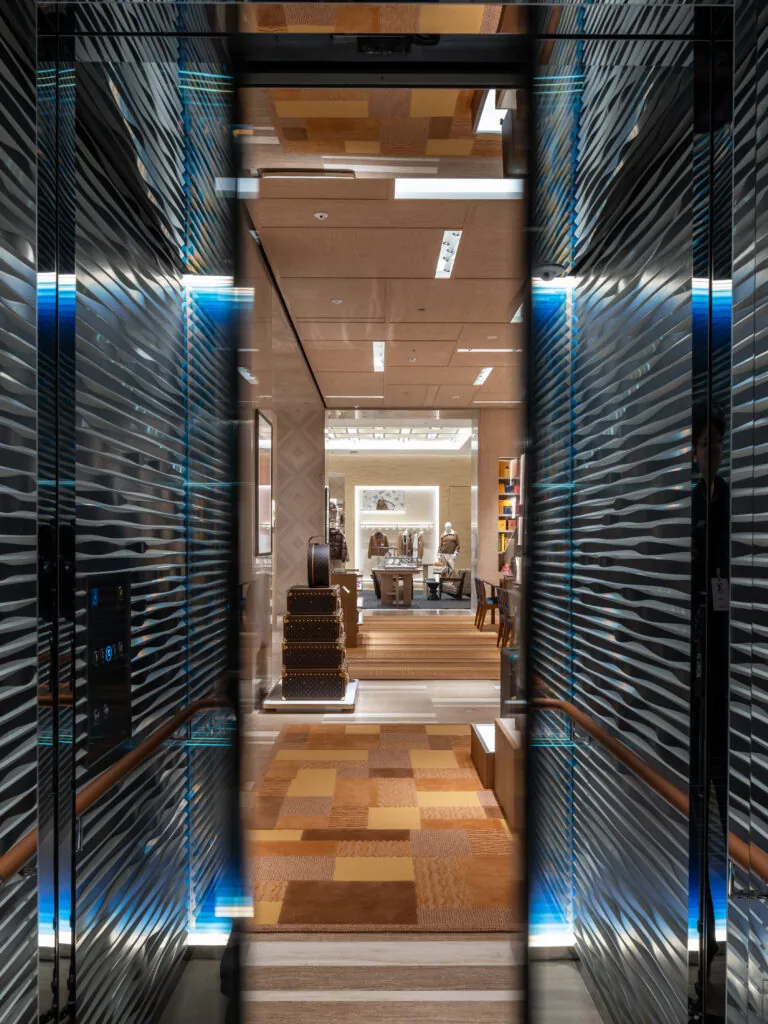
Architecture, food and cultural programming are being used to extend dwell time, reinforce brand narrative and anchor relevance, often in key urban markets like Beijing and Shanghai. In this context, the Beijing Maison reflects a wider shift: from transactional shopping to experiential brand immersion, where stores double as social, cultural and lifestyle landmarks.
Maison Louis Vuitton Sanlitun: Le Café Louis Vuitton
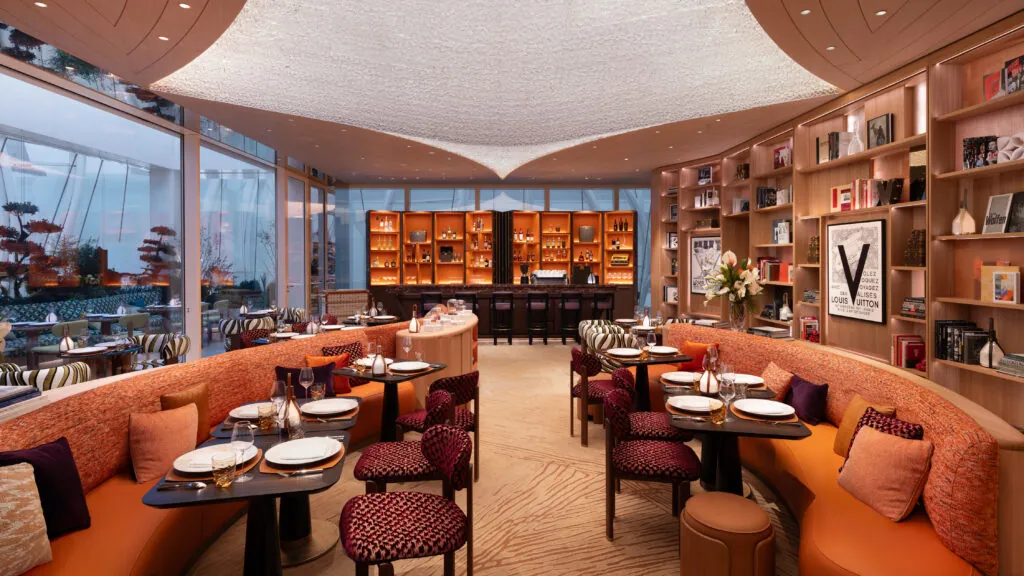
The experiential core of this new flagship rests on Le Café Louis Vuitton. It’s a concept that’s worked for the brand in more than 20 locations globally. Two of those – including their Chengdu location, The Hall – have won cooking’s highest honour: a Michelin Star.
In Beijing, Le Café Louis Vuitton pushes that formula further, positioning hospitality not as an add-on but as a central pillar of the Maison’s cultural ambition. Set on the fourth floor of Maison Louis Vuitton Sanlitun, the café unfolds as a sequence of immersive spaces, from a mirrored ‘infinite room’ entrance to softly contoured dining areas and a terrace that opens the house to the city below.
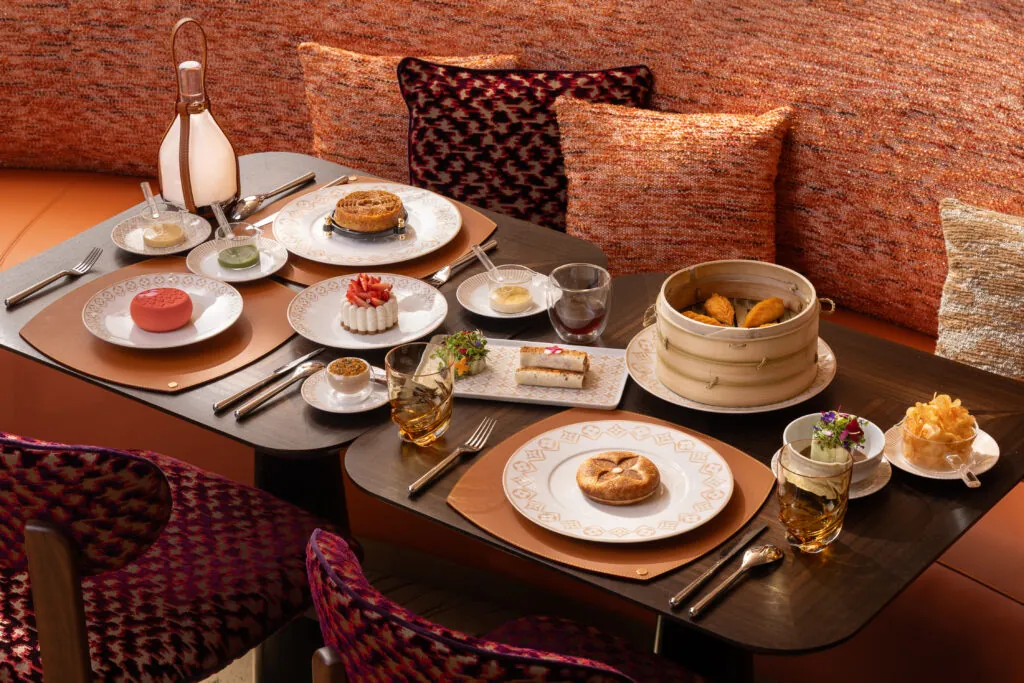
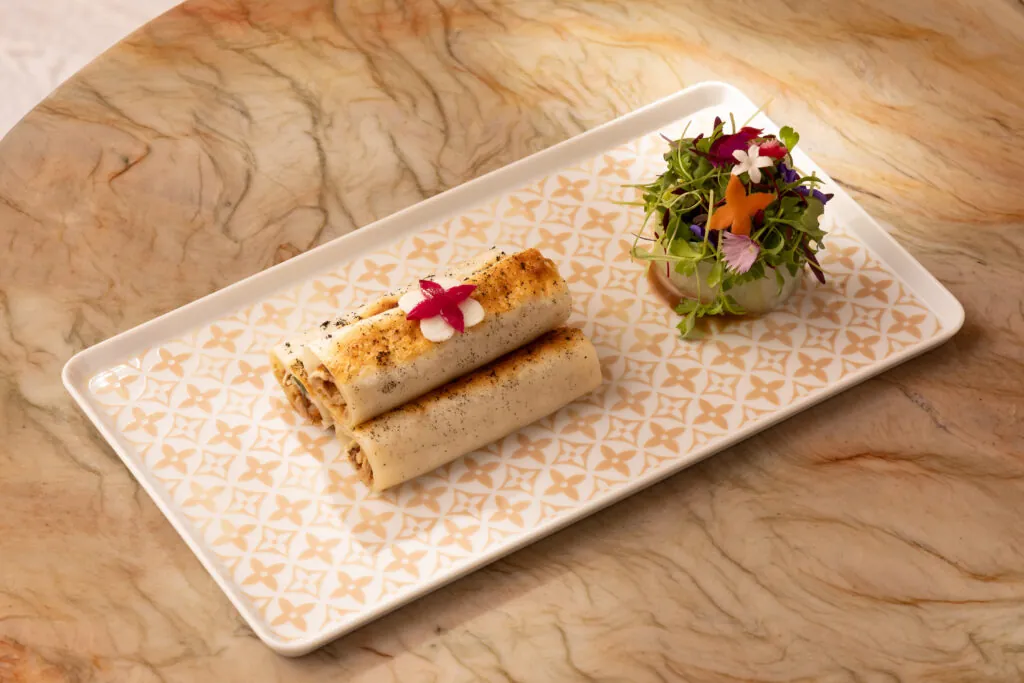
Under the direction of Chef Leonardo Zambrino, the menu blends Louis Vuitton signatures with locally rooted interpretations, pairing global crowd-pleasers such as the Lobster Roll with dishes designed specifically for Beijing, including Monogram jiaozi and a refined take on Peking duck. The result is less a branded café than a carefully calibrated social space, where architecture, food and fashion work in concert to extend the Maison’s idea of travel into everyday urban life.

An interview with Chef Leonardo Zambrino
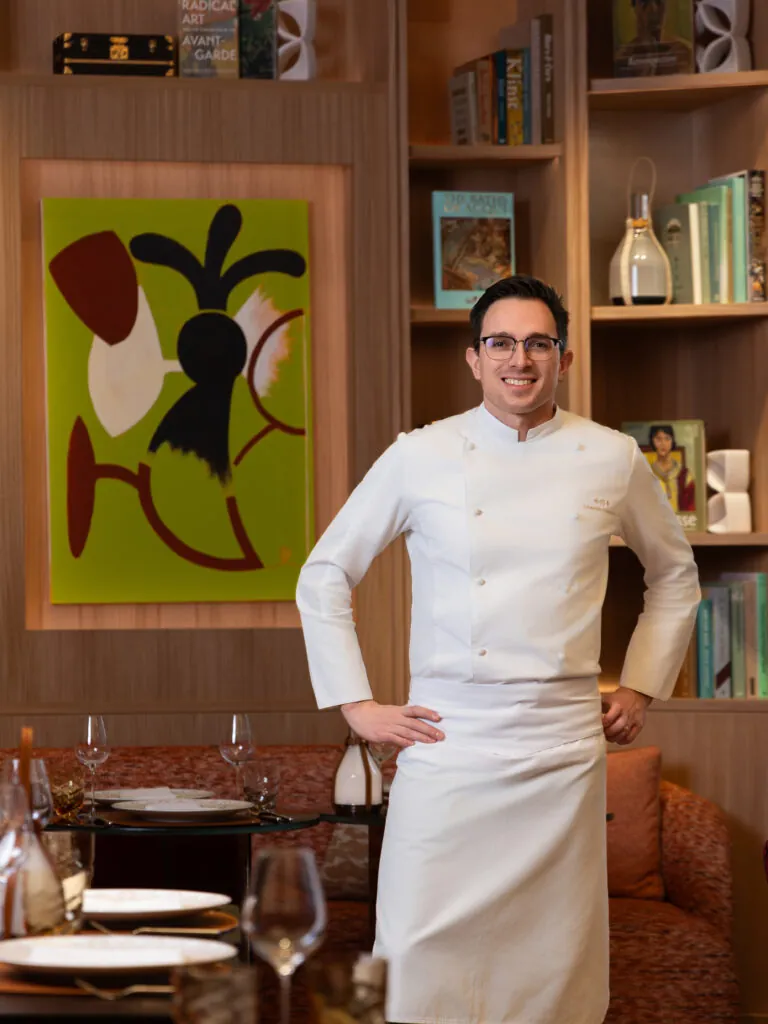
Leonardo Zambrino has worked in the restaurant industry since 2010. After graduating from the ALMA International School of Italian Cuisine, he worked and studied under the legendary chef Massimiliano Alajmo, then spent two years studying at the three Michelin-starred restaurant Da Vittorio.
He participated in the openings of L’Orangerie at the Four Seasons Hotel Georges V in Paris and the three Michelin-starred Caprice restaurant at the Four Seasons Hotel in Hong Kong. After that, he moved onto the Asian market, starting at two-Michelin-starred restaurant The Tasting Room, in Macau.
In 2023, he joined The Hall and led the team to achieve The Hall’s first Michelin star. In the process, he won the Michelin Young Chef Award Chengdu 2025.
Where did you learn to cook?
With my family, we would gather for Christmas, Easter and so on, with all my cousins, and I would spend time with my grandma, because she was the one who cooked during family gatherings. Then this passion became really important to me, and I realised that maybe it was the right path for me.
I was also lucky because I met a lot of chefs who started their careers young and quickly changed their path because cooking for your family is one thing, but doing this job professionally is another. I am lucky this passion has become my profession and my life.
What does a great guest journey look like – from arrival to exit – in a high-traffic retail district like Sanlitun?
A journey is something that must engage every sense. Take the joy of discovering a new place, for example: you enter a Louis Vuitton store and admire the beautiful architecture and interior design. Then, of course, you explore the brand’s products and finally arrive at the café – completing a full, immersive experience.
Along the way, deeper senses and emotions come into play. For instance, we’ve incorporated certain local dishes into our menu, reinterpreted by western chef like myself. What matters is what you see, what you feel, and what you taste. A journey, in essence, is when you truly awaken all the senses.
The intention is not necessarily to evoke traditional local sentiment, but rather to let guests encounter familiar flavors – elements typical of their own cuisine – presented in a refined and contemporary way and bearing the signature of Louis Vuitton.
How does dealing with a fashion brand influence what goes on in the kitchen?
There is a very strong common bond between the creativity of a fashion brand and the way we create new dishes. We are both focused on delivering the most unique, creative, and innovative moments to share with our clients.
With the guidance of Arnaud Donckele and Maxime Frederic, mentors of the LV culinary community, we reinterpret the codes and spirit of travel through our international and local recipes. From the French craftsmanship in our dessert to the Chinese-inspired jiaozi [dumpling], we learn from the creativity of the brand positioning our culinary experience as another way for Louis Vuitton to promote its talents and savoir-faire.
In planning, was there anything you thought worked well in Chengdu or Shanghai that you’re bringing to Beijing?
We are proud to bring to Beijing some of our signature dishes we have specific crafted in Chengdu. Such as the Crab Angel Hair and the signature Jiaozi.
What surprised you most about running restaurants in China?
In my many years in China, I’ve always been astonished by the incredible dynamism and creativity in the country. The food scene has reached an unparalleled level. From unmatched flavors in Chengdu to Louis Hao in Shanghai and now this magical new building in the capital city, Beijing, we’ve managed to tap into something really wonderful about China and its rich food culture.
You trained and worked in Michelin-level kitchens in Europe before moving to China. When you first started operating here, what did you discover about the restaurant industry in China?
The thing you learn once you move to China is to cope with the other people, cultures, educational backgrounds and also work ethic, so it doesn’t come only to the cooking skills, but it comes also to the management of people who speak another language and, you know, 80% of the time if you speak the same language – which is usually English – there are still barriers that you know you must push through.
As a chef you also have to learn to cope with different seasons, as well as with different ingredients and produce. Then of course the palate is completely different to Europe. Having a different management style for this market is a must.