


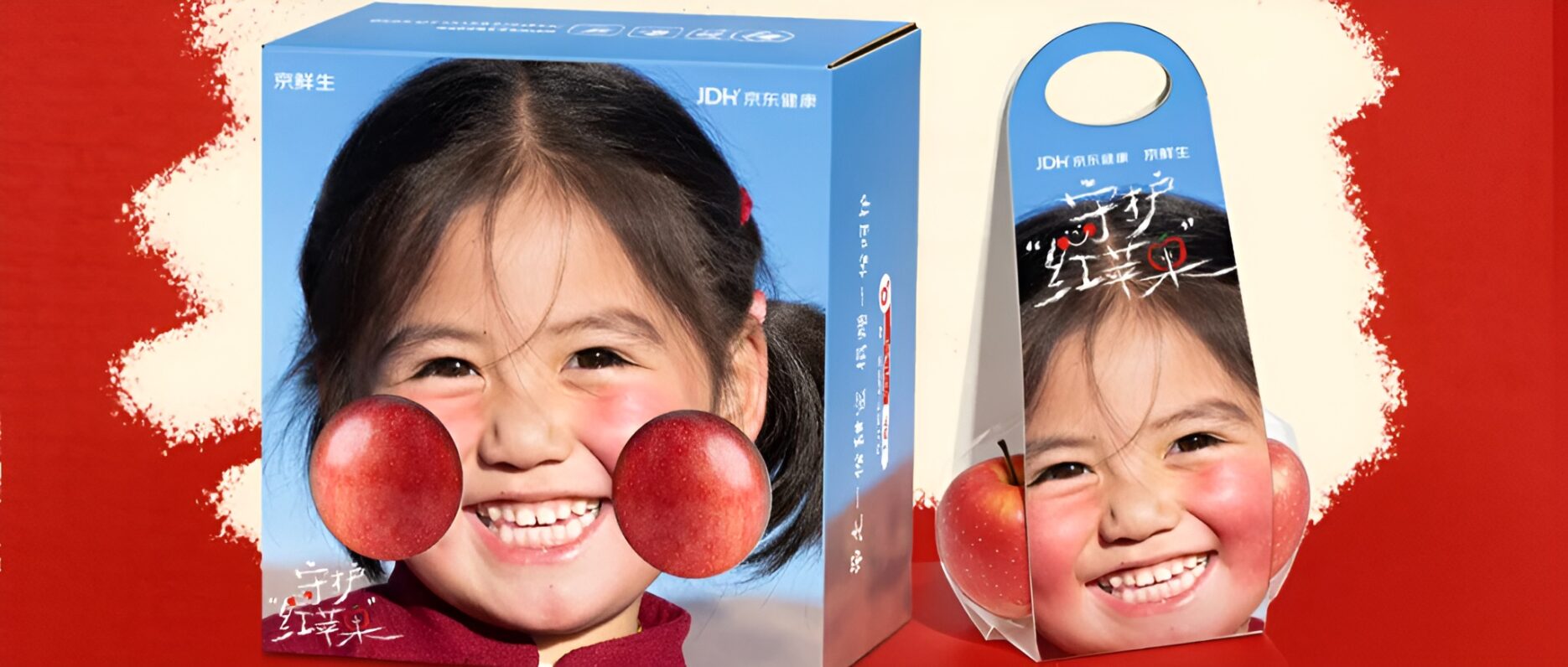
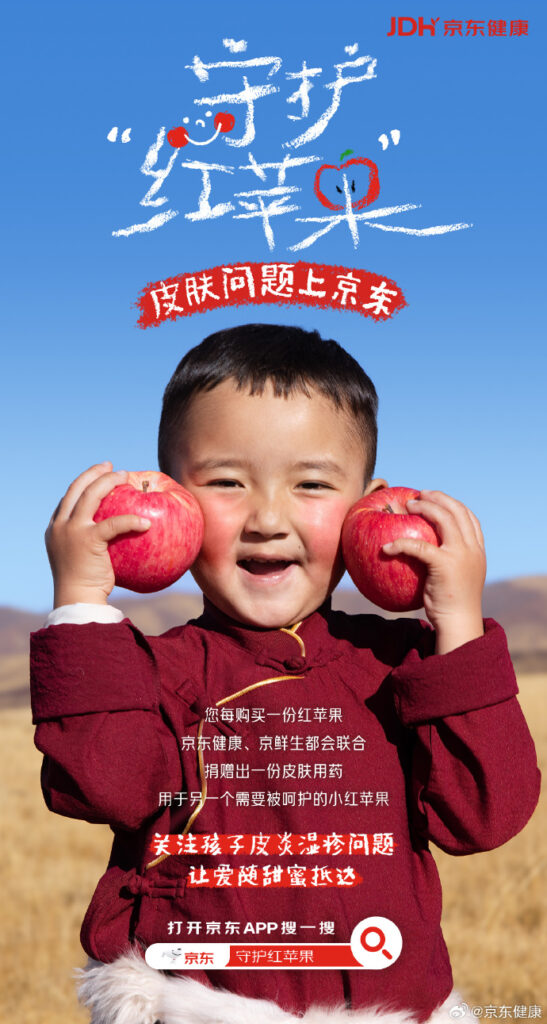
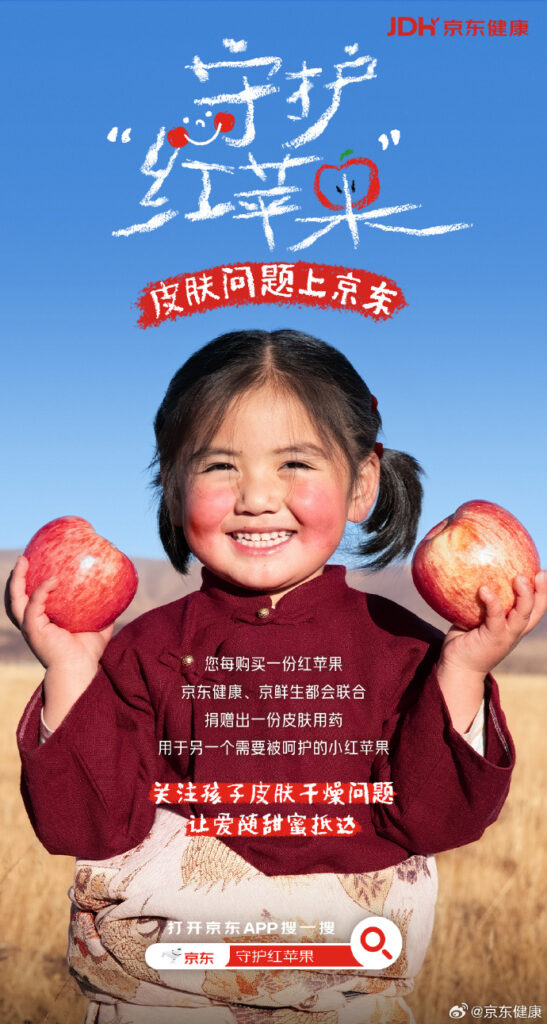
Rosy-red, apple-coloured cheeks are thought to be the mark of a healthy child. JD Health’s (京东健康) latest campaign – titled Protect the Red Apple (守护红苹果) – warns that may not always be the case. In a feat of CSR, they’ve launched a rural outreach program that sees skin medicine donations tied to the sale of apples: buy a bag of Gansu apples at JD Fresh, clinics in Gansu receive medicine courtesy of JD Health.

Location is important here. Gansu (甘肃) is a dry, and often bitterly cold region of China – a climate where rosy cheeks are the norm in winter. But what this campaign reflects is an era when brand storytelling in China is mature enough to challenge familiar visual tropes rather than celebrate them, to speak authoritatively without sounding alarmist, and a phase where performative charity gives way to CSR that plays on brand strengths.
JD Health’s red apple campaign: CSR built on logistics, not sentiment
JD Health’s business is built around the same supply chains and last-mile logistics that made its parent company so successful. When it comes to pharmaceuticals, JD Health adds to that playbook regulated, reliable medicine and partnerships with licensed manufacturers and medical institutions.
Those partnerships are the tip of the spear in Gansu. Protect the Red Apple’s savvy moment is that by empowering these local clinics, JD Health reinforces its position as a health infrastructure provider rather than a symbolic donor.
By coupling delivery capability with JD Fresh’s agricultural sourcing and fulfilment, the campaign links up at JD’s greatest strength: logistics.
Playing to your strengths is something we see in how JD’s rivals handle CSR too. Tencent (腾讯) lean into their technological prowess, leveraging AI to help the elderly and aid diagnostics. Alibaba (阿里巴巴) wield the weight of their tech ecosystem to position Alibaba Health (阿里健康) as a one-stop shop for healthcare solutions.
Why healthcare CSR is judged differently
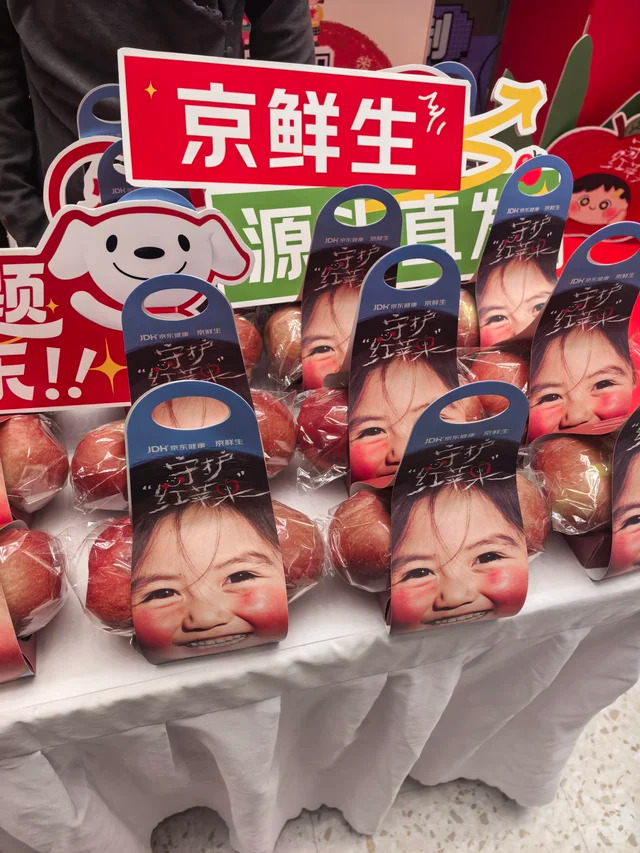
What carries Protect the Red Apple’s weight is not a vague cash drop, performative handshake, or abstract act of generosity – it’s in the very fact that it positions JD as an institutional authority.
As usual, localization matters. JD Health have named places, defined beneficiaries, and made delivery visible. So, specificity matters too. It frames JD less as a company sharing profits for public good and more as an authority that has identified a problem and used its apparatus to solve it. As an approach this is a whole different ballgame to run-of-the-mill philanthropy. It’s philanthropy that strengthens your brand message.
Why food leads and medicine follows in JD Health’s red apple campaign
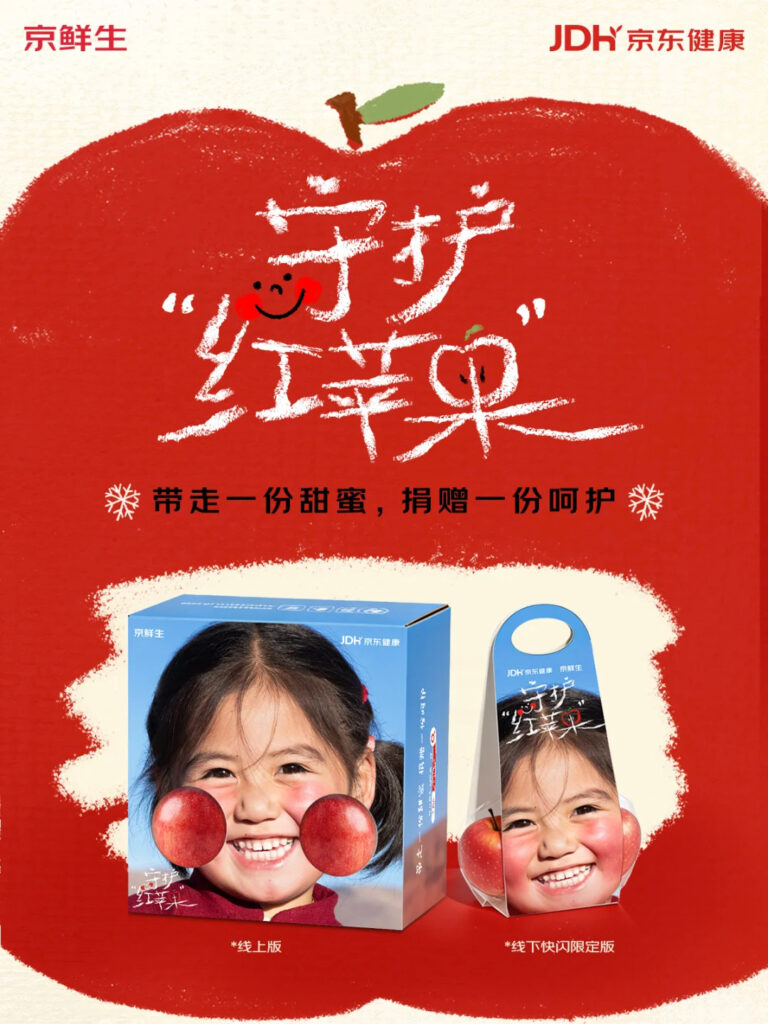
It’s notable that apples take the spotlight in this campaign, not medicine. Of course, food is the more approachable, emotionally positive element in that duo, but there’s another element at play that’s worth pointing out: the apples are sourced in Gansu.
And so, in a rare twist, philanthropy can be framed as a two-way street. There’s no something for nothing. The people of Gansu are trading something you need, for something they need. Who’s aiding the trade? JD’s logistics.
From gesture to capability
What JD Health’s red apple campaign ultimately shows is how far CSR in China has moved from gesture to capability. This is not charity designed to be seen, but charity designed to work – rooted in logistics, compliance, geography, and reciprocity.
By tying rural production to urban consumption, and consumption back to rural healthcare delivery, JD is sketching out a model where responsibility is no longer something companies add on, but something they operate. In that sense, Protect the Red Apple is less about apples or skin medicine than it is about credibility. It reflects a moment when Chinese brands are no longer rewarded for saying the right things, but for building systems that hold up under scrutiny.