




A new report has granted members of the public a view into the interests of Rednote (小红书, Rednote) communities – what has held, lost and briefly piqued attention over the past year. It’s Rednote’s 2025 Annual Interest Report (小红书 2025 年度兴趣报告), and it throws up some curious insights.
The broad strokes show Rednote as a flourishing ecosystem of passions, subcultures, and self-expression. According to the report, more than 3,000 distinct interest circles now exist on the platform, with over 300 operating at a sustained, organised level.
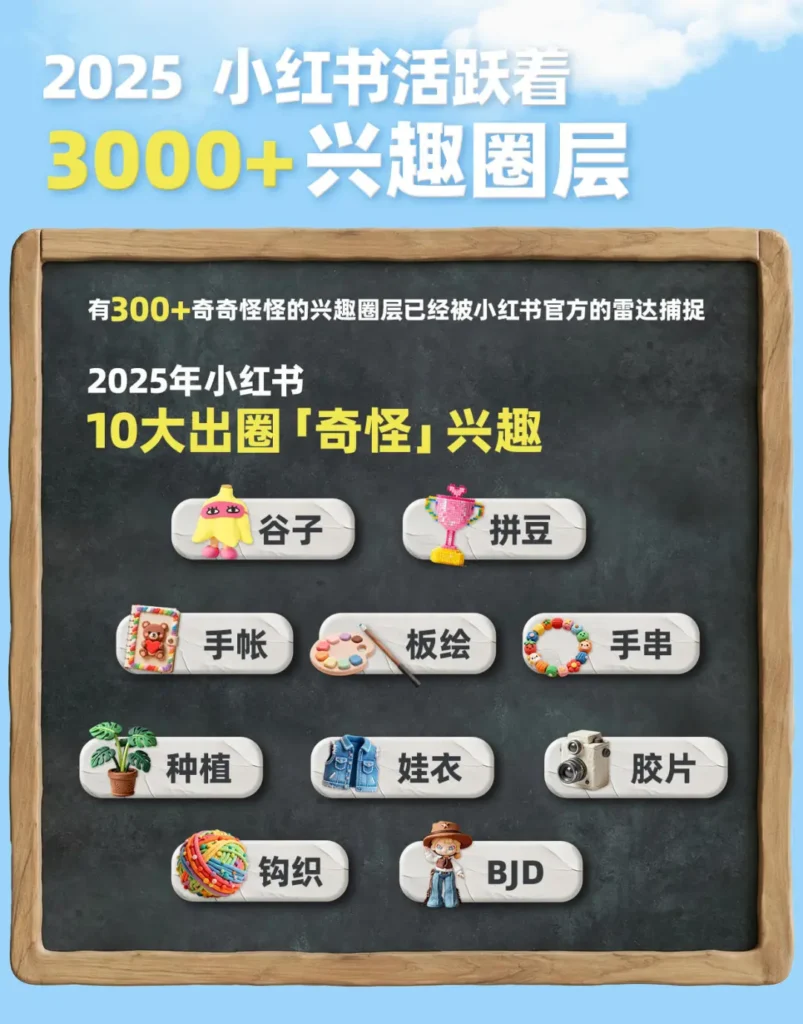
The trends Rednote highlights are revealing. One is the appeal of creativity. Handicraft hobbies – from pixel bead art and doll clothing – are surging. Anime, comics and games (ACG) are hitting new highs too, powered by fans collecting guzi (谷子) merchandise. These often come in the form of figurines of popular anime characters but could also be anything from badge collections to posters.
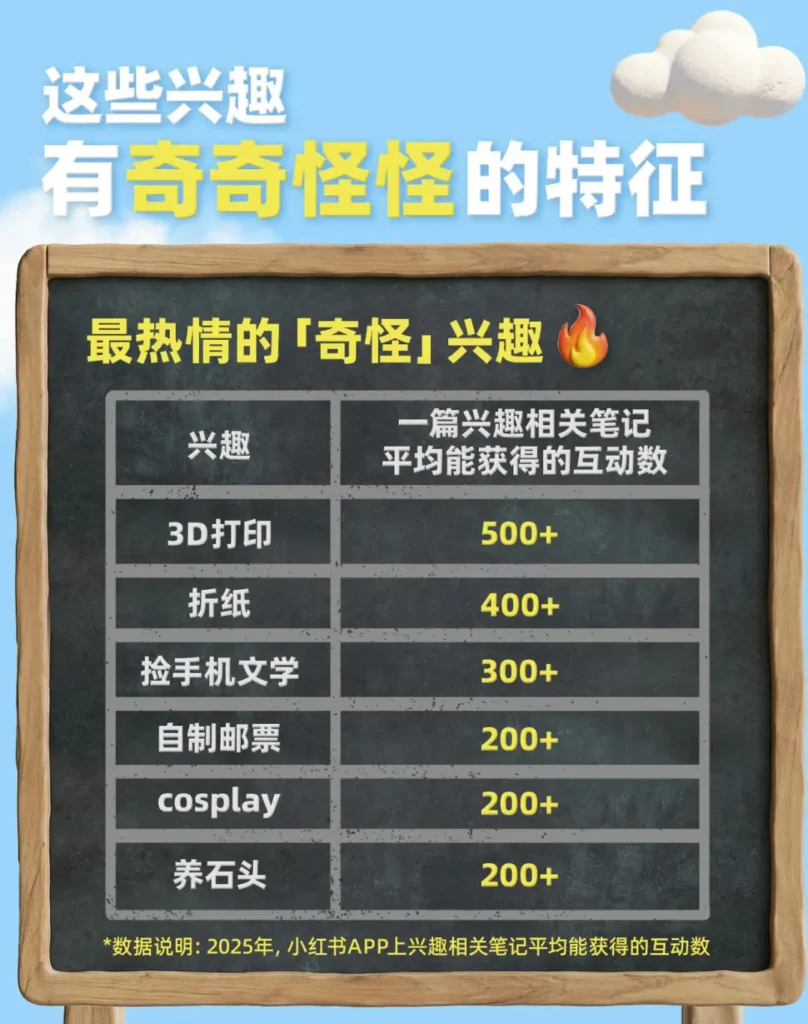
Another shift is how interest has become an emotional proxy. From lost phone literature – a short-form storytelling genre that’s fictional narratives are written from the perspective of someone who finds a stranger’s lost smartphone and scrolls through its contents – to deliberately abstract, citation-style writing, young users are using niche formats to say what feels difficult to articulate directly.
Outdoor interests show a similar logic. Rather than grand adventures, Rednote’s 2025 Interest Report notes a move toward fragmented, lightweight encounters with nature: watching clouds, observing birds, collecting leaves, interactions with nature reduced to its smallest units.
What we can gleam from Rednote’s 2025 Interest Report
So what does all this mean taken as a whole? The report arrives after Rednote’s strategic repositioning last July, when it formally upgraded itself from a ‘lifestyle guide’ to a ‘lifestyle interest community.’ The shift was meant to capture a generational change: young users are no longer simply browsing for tips or recommendations, but stitching together countless micro-interests into something closer to a personal operating system for daily life.
For brands, these circles are framed as ideal entry points into emotion-driven consumption. But beware: These communities are not neutral media channels. They are emotionally charged spaces where users are charmed by escapism and a little of life’s quiet magic. Brands that enter too loudly, too instrumentally, or with overly polished narratives risk breaking the spell.