



Luckin Coffee’s hidden menu: Key takeaways
- A four-second video announcing a new Luckin store received more than 150,000 likes and brought customers to the neighbouring shaobing bakery
- Luckin has turned snacks recommended by small businesses near its stores into a nationwide ‘hidden menu’
- The campaign presents chain-store expansion as a boost to local commerce rather than a threat to independent traders
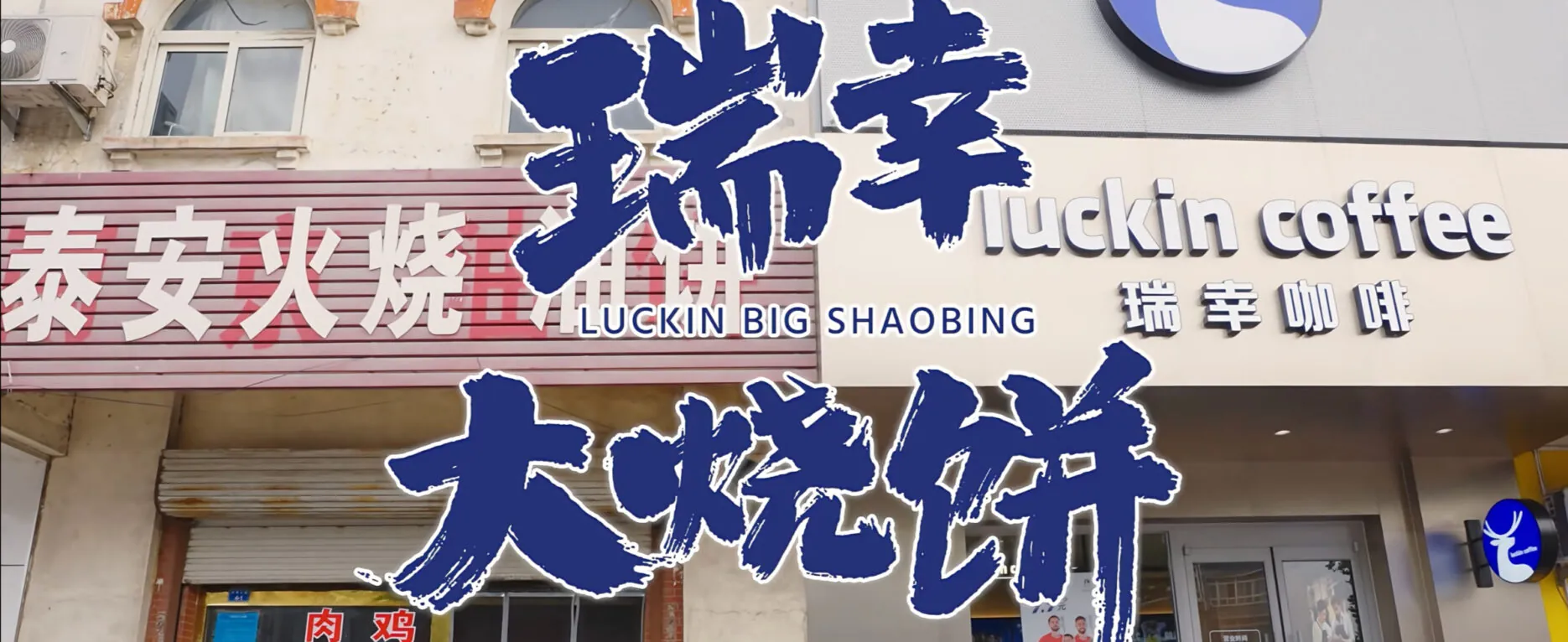
The opening of a new branch of a chain coffee shop is an occasion synonymous with gentrification. Luckin Coffee (瑞幸咖啡) is pushing back on that idea with its latest campaign. The resulting campaign film – Luckin and the Big Shaobing (瑞幸大烧饼) – has pushed a small baked bun business into viral territory.
The clip received more than 150,000 likes
It takes place in Puji Town, Jinan, where a long-running shaobing bakery sits beside a newly opened Luckin store. Before the opening, the bakery owner posted a four-second video announcing that Luckin was moving in next door. The clip received more than 150,000 likes, while the prospect of pairing iced coffee with the sesame-topped baked flatbread prompted discussion online.
Once the café opened, the attention translated into real-world footfall. Customers visiting Luckin began stopping at the bakery to pick up shaobing. The film includes a more sentimental detail too. During the Luckin store’s renovation, contractors used leftover wood to build a sturdier nest beneath the bakery’s eaves for a family of swallows that had previously lived there.
Luckin has the good-neighbour theme across its national network. The brand has visited merchants close to its stores in Cangzhou, Huangshan, Xinmi and Shanghai, each time asking them to recommend local snacks to accompany its coffee. Lamb skewers, spicy pepper soup and crispy fried chicken strips appear in what the campaign calls a nationwide ‘hidden menu’.
The Dao view: Luckin’s hidden menu solves a chain-store problem
The campaign is a neat response to a familiar tension around chain-store expansion: the fear that big brands displace smaller local operators. Luckin instead casts its outlets as complementary anchors within neighbourhood commerce, able to bring passing trade to nearby food businesses while gaining a more distinctive local identity in return.
For consumers, it also makes the coffee run feel less standardised. Rather than simply selling a drink, Luckin is connecting its stores to the flavours, routines and street-level character of the places they enter and thereby embedding themselves in the fabric of everyday life.