


Aesop paw wash: Key takeaways
- Aesop has extended its signature in-store hand care ritual to dogs through its Paw Parlour activation
- Free paw washes, treats, Polaroid portraits and branded accessories turn a product trial into a social experience
- The campaign revives a 27-year-old pet cleanser as Chinese consumers increasingly treat pets as family
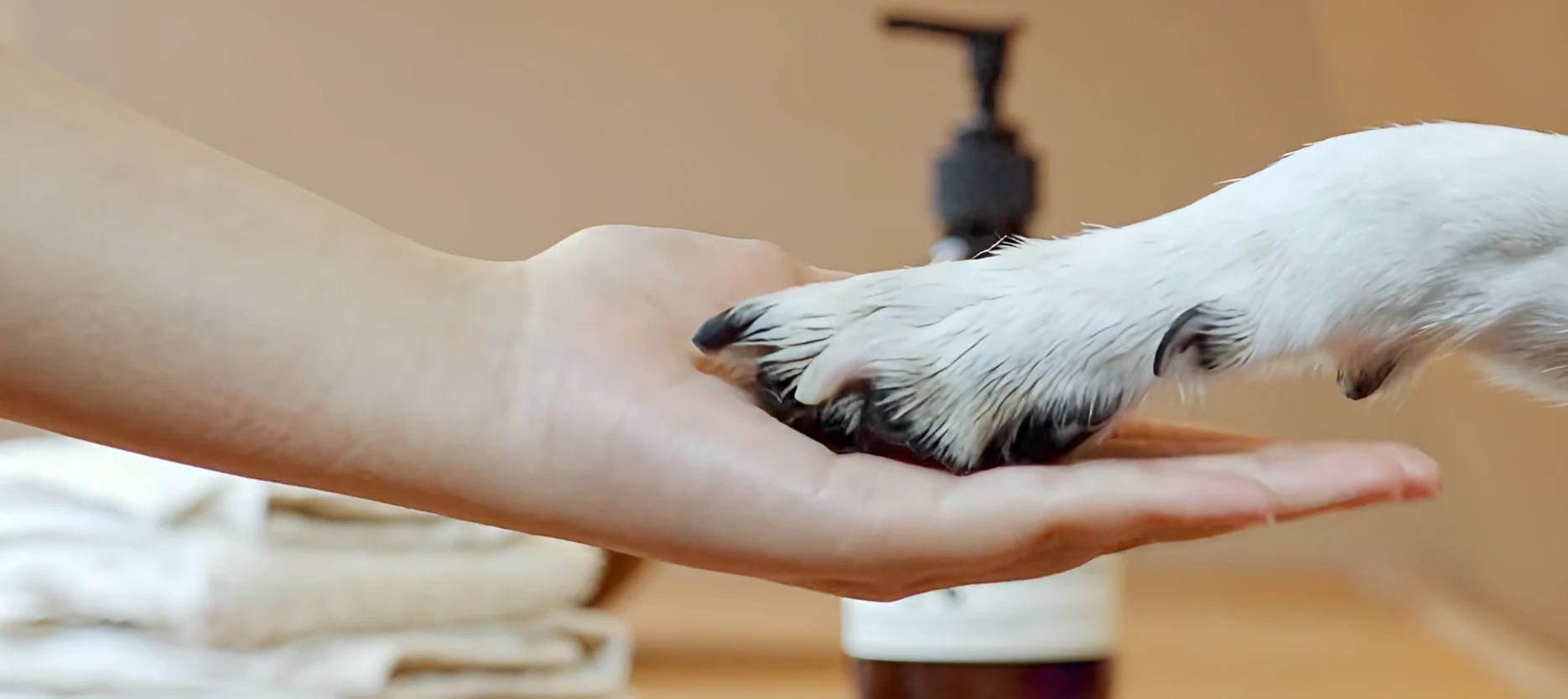
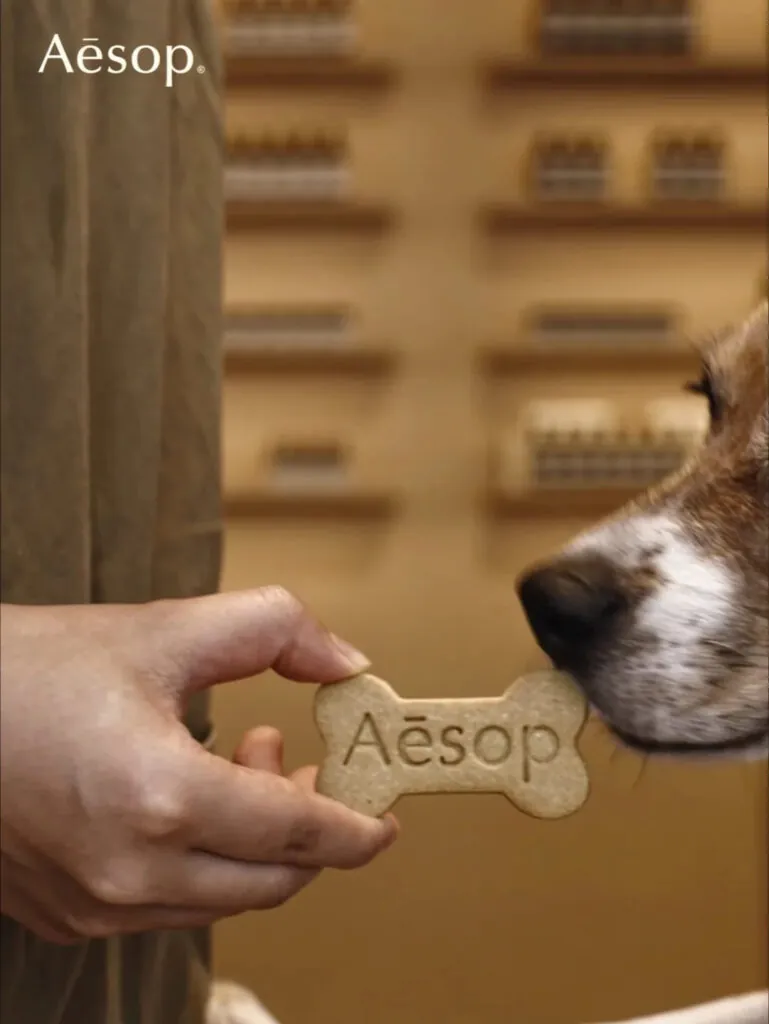
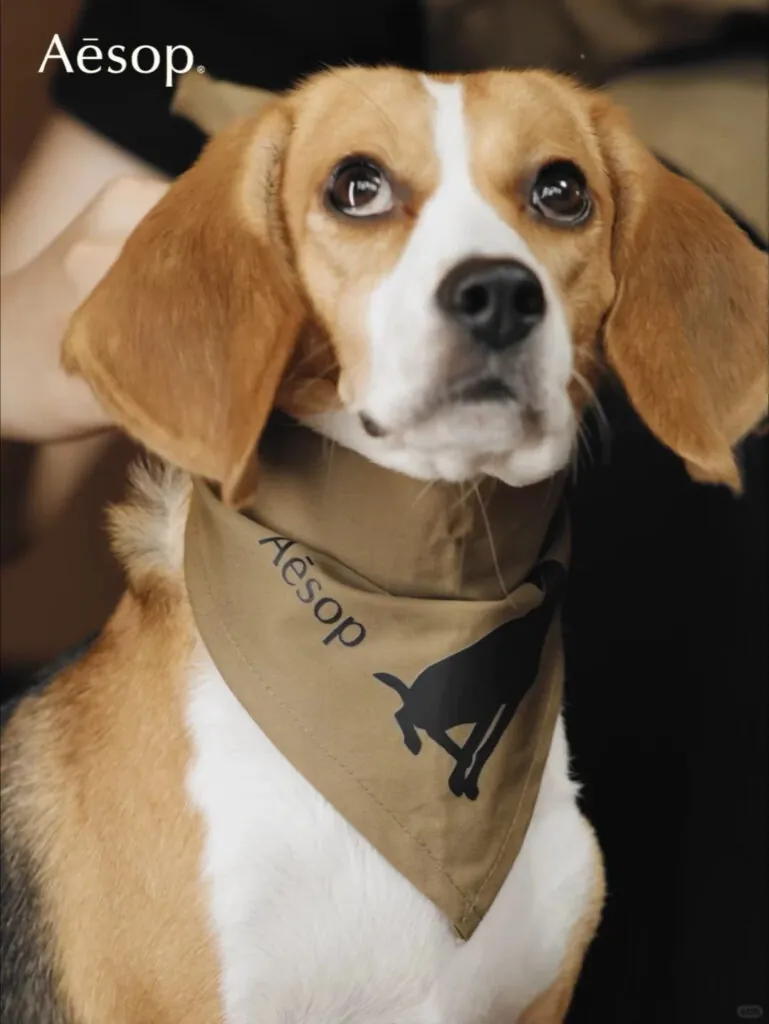
Aesop (伊索) is inviting a new kind of customer into its mainland China stores: dogs. Selected locations are hosting what the brand is calling a Paw Parlour. Customers can bring their dogs in for a complimentary paw-cleaning appointment, collect treats, and have a Polaroid portrait taken. Human shoppers can also receive customised accessories for their four-legged friends when they buy from Aesop’s pet care range.
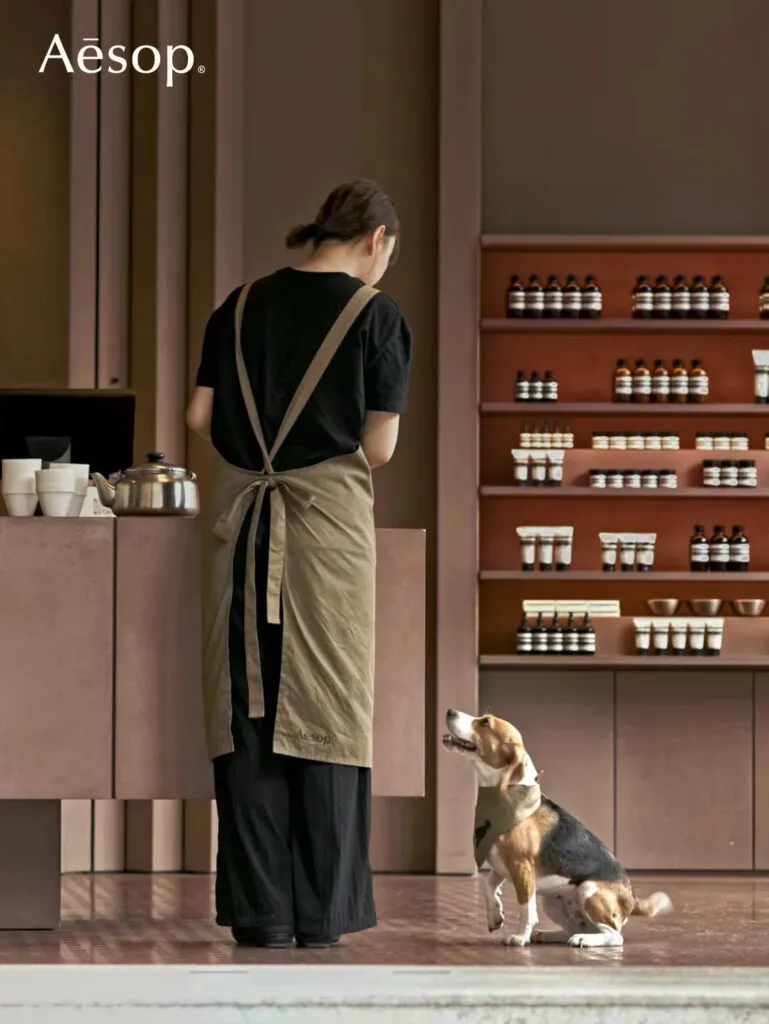
This is all a play on one of Aesop’s most recognisable selling techniques. They are known for in-store sinks that allow customers to try before they buy. For us humans, that’s a chance to sample the various hand washes and balms. Paw Parlour applies that format to pets.
China’s pet industry was worth RMB 312.6 billion (US$43.5 billion) in 2025
They’ve done this to bring fresh attention to Animal. This is a branded pet cleanser Aesop launched in 1999, using a lower fragrance concentration to accommodate dogs’ sensitive sense of smell. It’s a campaign push that’s being rolled out across Asia too. Dogs in Tokyo and Singapore have already experienced the special treatment.
To back up the physical activation, they’ve (Aesop, not the dogs) done some online storytelling. Writer Chen Lu was brought on to write Life Advice from a Dog, a work that imagines sniffing, rolling and bathing from a dog’s perspective.
The Dao view: Aesop paw wash cleans up in China’s pet economy
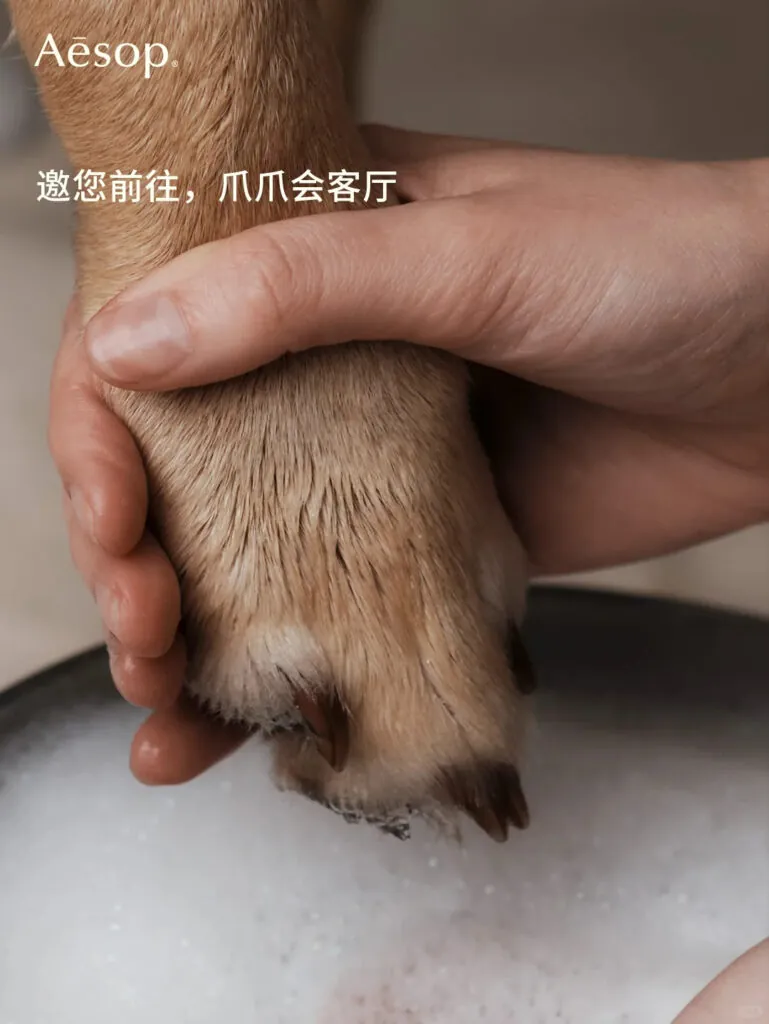
Paw Parlour turns a practical product demonstration into an emotionally engaging store visit. When they treat dogs as customers, Aesop has found a clever way to breathe life into a decade-old product. The result is an understated route into China’s very lucrative pet economy – one that in 2025 was worth RMB 312.6 billion (US$43.5 billion). Talk about fat cats…