


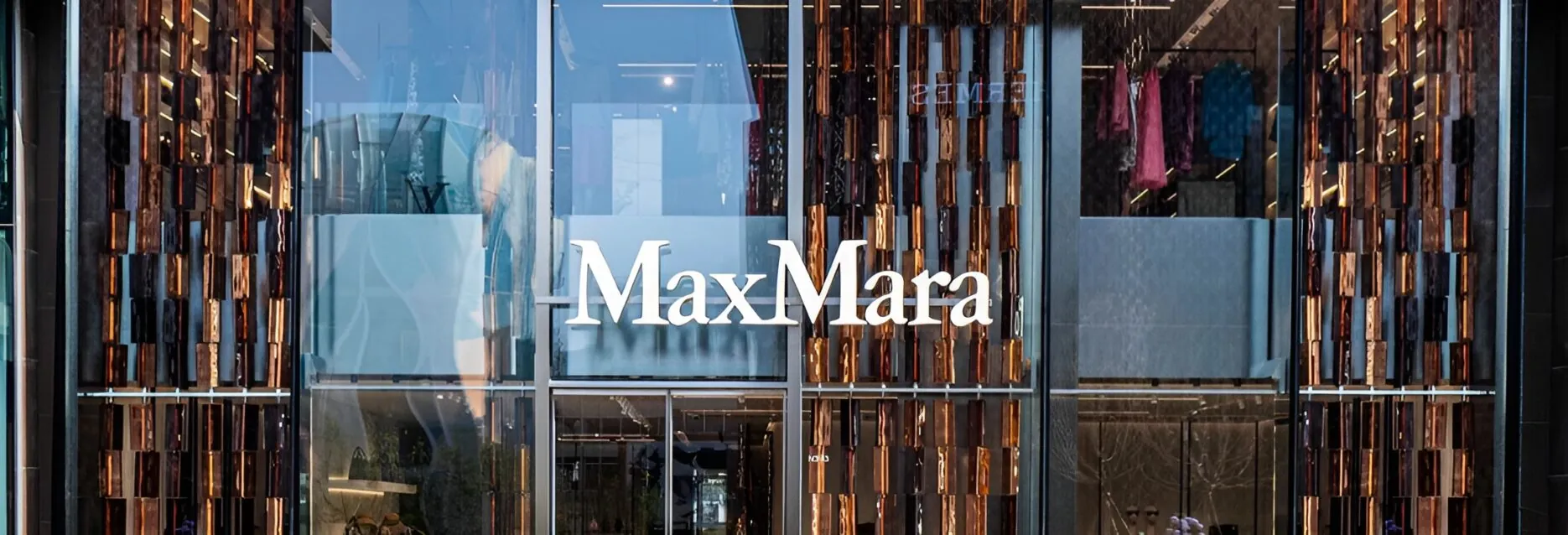
It was once a truth in China, universally acknowledged, that European heritage and western aesthetics came with promise of status. In those simpler times, Chinese consumers bought in enthusiastically. Today, that truth is under scrutiny. Foreign brands can no longer waltz into China and expect to be a hit. Now they must play to the crowd. Max Mara has recognised this.
To mark its 75th anniversary, Italian fashion house staged a runway show at Shanghai’s Long Museum. The collection featured cheongsam-inspired silhouettes, standing collars, side-fastening jackets and traditional pankou buttons. It was all reinterpreted through the brand’s signature tailoring, but it was an overt play to a crowd that’s shaping luxury’s relationship with China.
Luxury’s new balancing act


Chinese consumers remain one of the most important forces in global luxury. They account for roughly a quarter of worldwide spending. It’s also a market of rapid and radical change. The consumer of the 90s is a very different beast to the consumer of now. The young increasingly expect brands to demonstrate cultural understanding. That’s what makes Max Mara’s Shanghai collection noteworthy.
Rather than treating Chinese design elements as decoration, the brand attempted to integrate them into its existing visual language. Cheongsams were reworked in pale wool, not silk. Traditional tailoring references were present with the camel coats and sharp suiting that define Max Mara globally.
Luxury brands today face a delicate challenge: localise too little and risk irrelevance, localise too much and risk accusations of tokenism or cultural appropriation. Max Mara walked that tightrope with poise.
The guochao factor
The backdrop to all this is the continued rise of guochao (国潮), or what you might call China chic. It’s often misunderstood as consumer nationalism. Actually, guochao is better understood as a growing confidence in Chinese culture and identity.
Younger consumers increasingly want products and stories that reflect their own experiences rather than imported aspirations. The trend has fuelled the rise of domestic brands across fashion, beauty, sportswear, and technology.
For international luxury houses, the challenge is obvious. They cannot become Chinese brands, but to be relevant they need to demonstrate an understanding of the cultural forces shaping Chinese consumers’ outlook.
Max Mara’s answer was to focus on a value that transcends national boundaries: female ambition. For years, the brand has positioned itself around professional women. Independence and self-confidence have been a large part of their image in respect to that. These are themes that resonate strongly with a generation of educated, urban Chinese consumers – a demographic navigating pressure around career, family and identity that often feels at odds with the independent lives they aspire to.


To tap into something deeper, brands are also moving beyond the usual celebrity endorsements and seasonal campaigns. Max Mara recently partnered with a Chinese production of Prima Facie, aligning itself with conversations around gender, power and female empowerment rather than simply showcasing products.
The result is that foreign luxury brands are becoming cultural participants, not just cultural broadcasters. We can see it across the luxury market. Miu Miu’s recent Shanghai exhibition plays on many of the above themes of womanhood too. New Balance picked up-and-coming bag brand Songmont for a collaboration. Lululemon now designs whole product ranges with China in mind.
The Dao View: China has shifted the goal posts
The winning brands today are no longer those that simply export European prestige. And so, Max Mara’s Shanghai show wasn’t really about cheongsams or camel coats. It was about demonstrating that the brand’s relationship with China has matured.
That is a far harder challenge than opening stores or signing celebrities. It may also be the defining luxury skill of the next decade. China’s luxury shoppers are no longer looking to borrow cultural identity from the west. Increasingly, they expect global brands to engage with their own. They want recognition, not validation.