



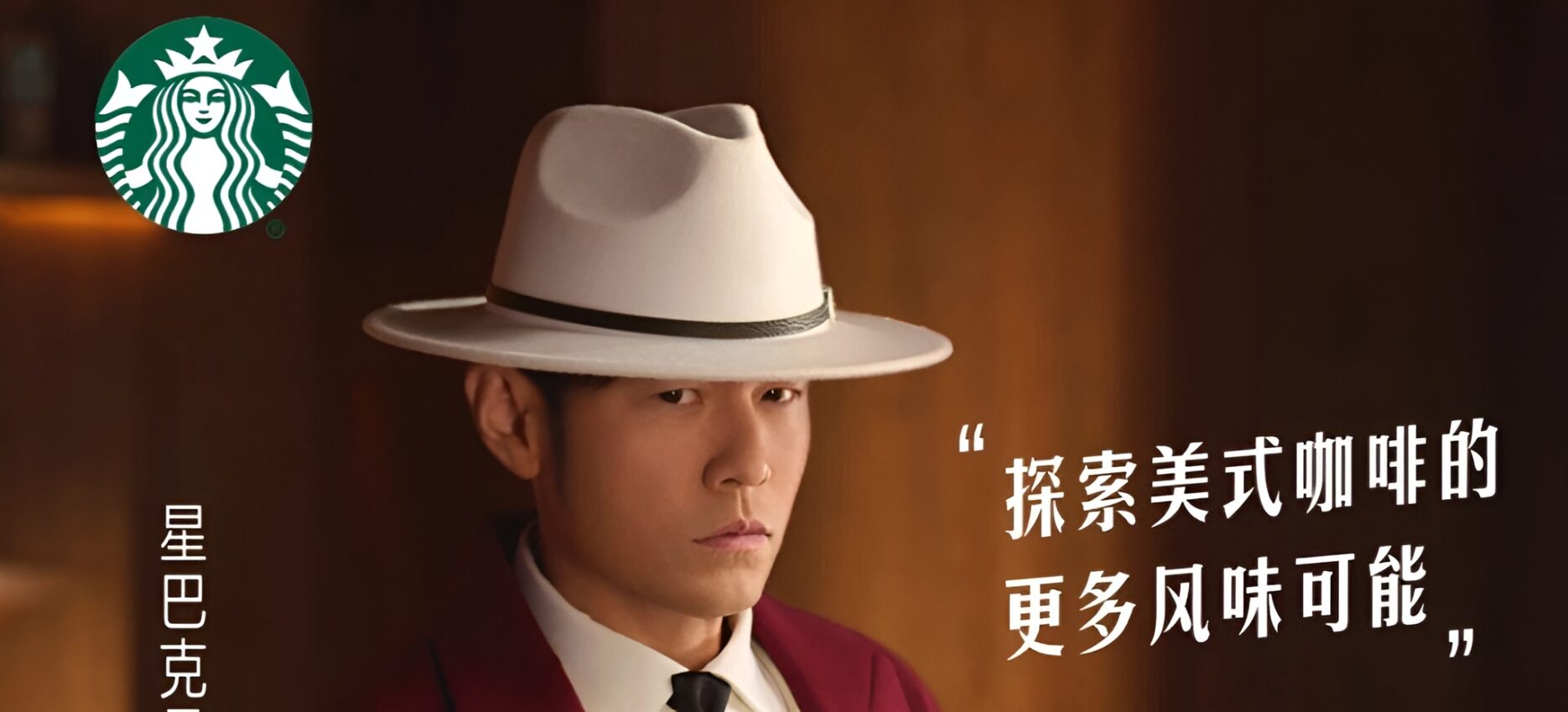
Starbucks (星巴克) China has named Mandopop icon Jay Chou (周杰伦) as its inaugural brand ambassador – the first in the Chinese arm of the company’s history. It’s a move that marks a new strategy, an image refresh for a brand that’s been battling ups and downs in the Chinese market.
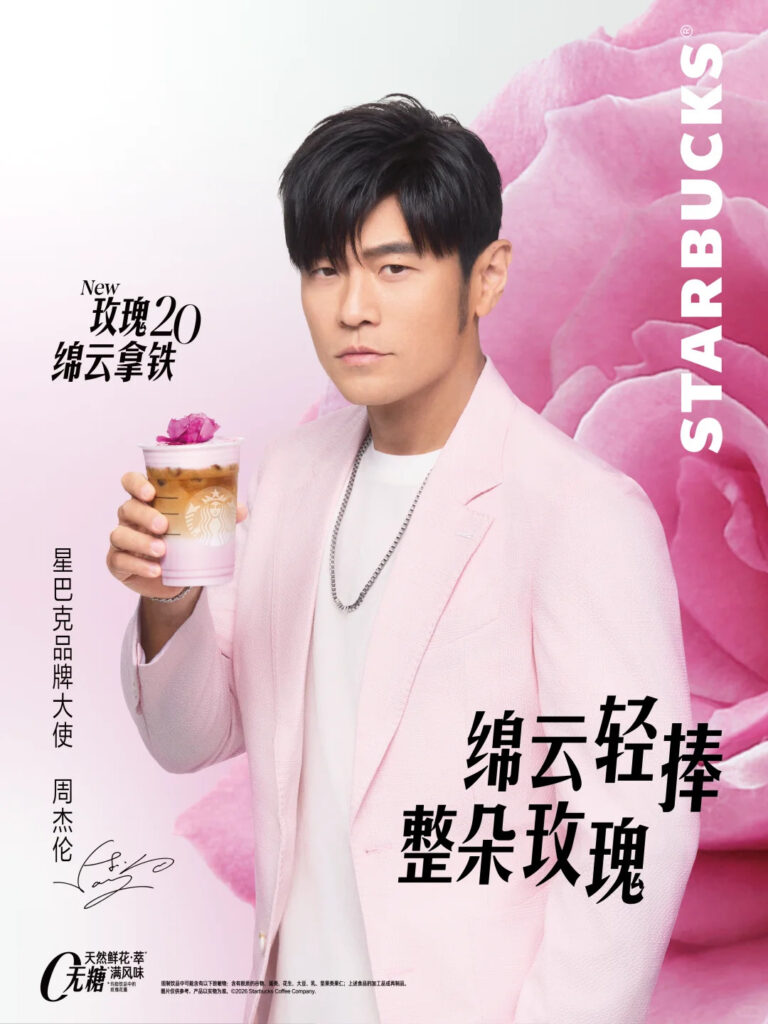
This isn’t just another celebrity tie-up. At a time when coffee in China is being aggressively repriced and stripped down to function, Starbucks is leaning hard in the opposite direction – turning stores into stages, drinks into narratives, and fandom into footfall. If they can’t win on price, they intend to win on meaning.
Jay Chou: Flavour Detective


The campaign introduces Chou as Flavor Detective Jay, fronting a push for Starbucks’ True Taste, No Sugar range. Two drinks take centre stage: an unsweetened vanilla latte and a sugar-free sea salt caramel Americano. Originally launched in April 2025, the line builds on Starbucks’ long-standing strength in customisation. It also aligns with a broader consumer pivot toward lower-sugar options, allowing Starbucks to frame this as part of a wider health-driven innovation strategy.
Beyond the cup, Starbucks is scaling the collaboration into a full experiential rollout. From 15 May, more than 8,000 stores across China will be decked out with themed visuals, curated playlists, and dedicated product displays. Even for a brand with a footprint as big as Starbucks, that’s no small number. What we’re looking at is a massive, nationwide attempt to turn passive retail into an immersive environment.


Two flagship Reserve locations – in Hangzhou’s Xiaohe Park and Nanjing’s ISUN Mall – will gun even harder. From 20 May, they’ll be recast as Flavor Detective Agencies. Here, customers can follow music-inspired clues to unlock different taste profiles within the no-sugar range – gamifying the push for sales on this new range of drinks, while keeping Chou’s reputation and musical identity tied in.
Merchandise plays a role too. Lyric-themed cups, tote bags, vinyl-style photo cards and collectible receipts are reinforcing repeat engagement.
The Dao View: Starbucks is tidying up unfinished business
The past few years have been challenging for Starbucks’ Chinese business. Companies like Luckin’ (瑞幸咖啡) and Cotti (库迪咖啡) have pulled the price floor down to a level Starbucks hasn’t wanted to – or couldn’t – match. Market share fell from 34% in 2019 to around 14% in 2024, while same-store sales declined 1% for full-year FY2025, dragged down by weaker ticket values.
Performance figures for recent years have been looking a lot stronger: Starbucks China has delivered three consecutive quarters of growth: 7% same-store sales and 11% revenue growth in early FY2026, with gains driven largely by rising transaction volumes and a modest recovery in that aforementioned ticket value. Customers seem willing, once again, to pay a little more for what Starbucks is offering.
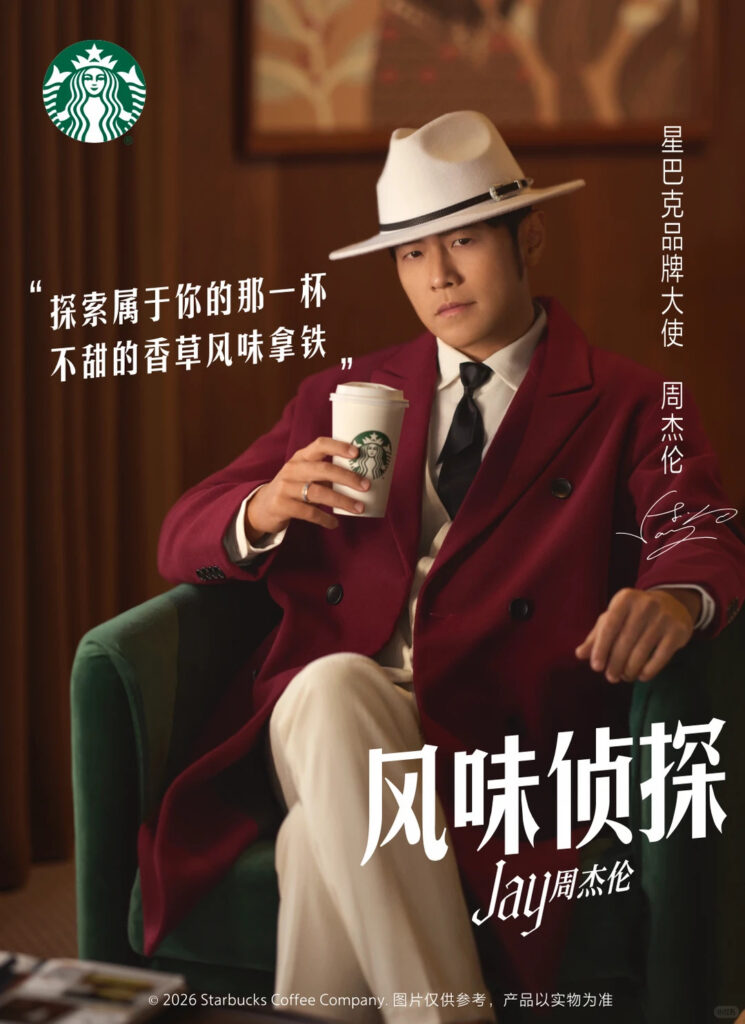
So, the brand’s China business is no longer in the red. But it has not fully rebuilt premium status that once commanded block-circling queues of customers. Consumers are re-engaging, but cautiously. The Jay Chou collaboration is an attempt to close that gap, to shift the battleground away from price and back towards something intangible, memorable: culture, experience, brand meaning.
Jay Chou is a solid casting for the job. He’s a cultural constant. His music cuts across generations, carrying both nostalgia for older consumers and relevance for younger audiences raised on his 范特西 (Fantasi/Fantasy) universe.
If the goal is to rebuild premium through emotion and memory rather than price, few figures in the Chinese market offer a stronger bridge between past loyalty and present-day cultural pull.