



On the mist-soaked slopes of Qixing Mountain (七星山), contestants squat around campfires, boiling river water and cooking insects. In a few hours they’ll turn in, but not to a cosy Zhangjiajie (张家界) hotel – to a shelter they built by hand. They will be cold. They will likely not be happy. And across China people are tuning in to watch.
七星山荒野求生挑战赛 – which has no English name, but could be translated as the Qixing Mountain Wilderness Survival Challenge – has no dramatics. There are no confessionals. No camera crew or clear narrative arc. It is reality TV at its purest and it has gripped Chinese viewers.
More than 18 billion views have been clocked, and viral moments have spilled across social media. The show – if you can call it that – is a resounding hit. What is it about this brutal, low-tech endurance contest that captured mass attention?
What is the Qixing Mountain Wilderness Survival Challenge?

At heart, the Qixing Mountain Wilderness Survival Challenge is a real-world survival challenge and not a television programme. Contestants are given basic survival equipment such as cooking pots and machetes, and sent up a mountain to hack out a life for as long as they can. Once in the field, participants are given no phones, no outside food and no scripted tasks to complete.
For Western audiences, the closest comparison is Alone or the earliest seasons of Survivor – but stripped back further. No TV crew follows the contestants, there’s no one else embedded with them. There are no production teams shaping a storyline, no weekly eliminations and no episodic release.
What makes the format even more unique is who runs it and how it spreads. The challenge is organised by the Zhangjiajie tourism board and its audience is built through livestreams, short clips and social reposts, not scheduled television.
Platform dynamics and attention mechanics
The challenge did not spread as a finished programme but as a steady flow of fragments. Livestream segments, clipped moments and reposted footage circulated across Douyin (TikTok), WeChat and China’s short-video aggregators, picked up by commentary accounts and remixed into memes. Viewers rarely encountered the event from the beginning. They dropped in mid-story, caught up through highlights and followed individual contestants across platforms.
What drove virality was not plot, but exposure. Scenes of hunger, pain, boredom and emotional collapse carried more weight than any structured narrative. Over time, the challenge shifted from a competition into a shared social event, with audiences tracking contestants as recurring characters in an unfolding drama shaped as much by comment threads as by the footage itself.
The big viral moments of the Qixing Mountain survival challenge
Cold Beauty

A contestant who became known as Cold Beauty (冷美人) and her trials emerged as the most powerful storyline. As the only woman to reach the final stages, she endured weeks in isolation before withdrawing due to malnutrition. Images of her physical decline, followed by hospital recovery footage, became a viral epilogue. Ultimately it reframed the contest from spectacle to human cost, and sparked debate about endurance, risk and limits.
Bizarre eating habits
Insect-eating and foraging clips travelled just as widely. Contestants calmly eating locusts or boiling wild plants stripped survival back to basics. Their matter-of-fact attitude – treating anything edible as fuel – clearly creates sharable value.
Monkey man and friends
Charismatic male contestants also broke through. A medical student known for agile tree-climbing, and a scarred, stoic older competitor, attracted large followings. Their individual livestream moments drew millions of concurrent viewers.
A premature ending
Finally, an abrupt weather-driven ending, when a cold wave forced organisers to halt the challenge, turned the finale itself into controversy. It also drove home the sense that the show, and its outcome, was shaped by nature, not production.
Tourism as media producer
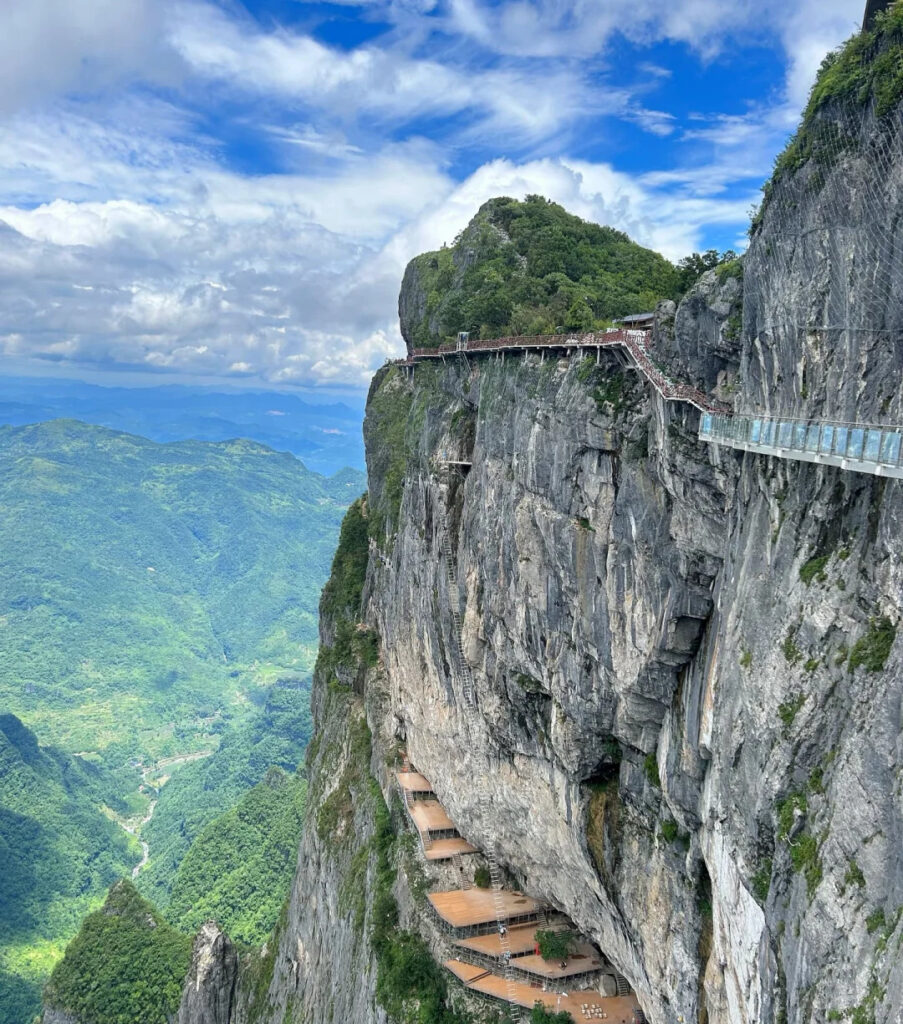
Unsurprisingly, there has also been backlash against the show. Critics point out the danger involved in such an undertaking. Cold Beauty’s hollowed cheeks, after all, aren’t the work of a makeup team, but her body’s response to serious malnutrition.
The organisers have pointed out that participation is voluntary, and they did withdraw the contestants when harsh weather risked the lives of all. What’s really interesting here though is that in reality, this is all one big advert for Zhangjiajie scenic area.
And wow, has it worked. By doing away with the traditional billboards of rolling mists and green mountains, the organisers have found a way to draw the attention of literally billions.
The Qixing Mountain challenge has become a sensation. It would be hard to imagine that attention not translating into the footfall of curious hikers. It remains to be seen whether they’ll take up the insect diet.