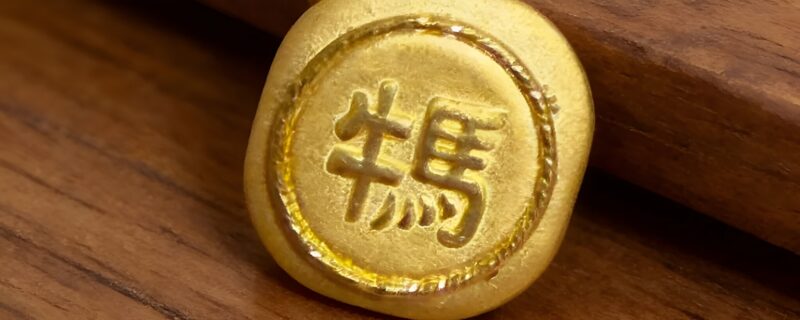




The horse carries familiar symbolism in Chinese culture – one associated with resilience, momentum, and forward drive. Its meaning aligns neatly with Levi’s (李维斯) heritage. The brand has been using horse motifs since 1886. Now, nearly 140 years on, that image has become the conceptual core of Levi’s Lunar New Year release.
The 2026 drop folds zodiac symbolism into everyday denim rather than producing overtly ceremonial pieces. Levi’s famous Two Horse patch – an image of two horses pulling a pair of jeans in opposite directions as a show of durability – is recoloured in festive red, drawing on Lunar New Year visual codes while also signalling good fortune and wealth. Gold horseshoes appear across a range of jackets and jeans, while paisley linings keep a touch of American vintage flair.
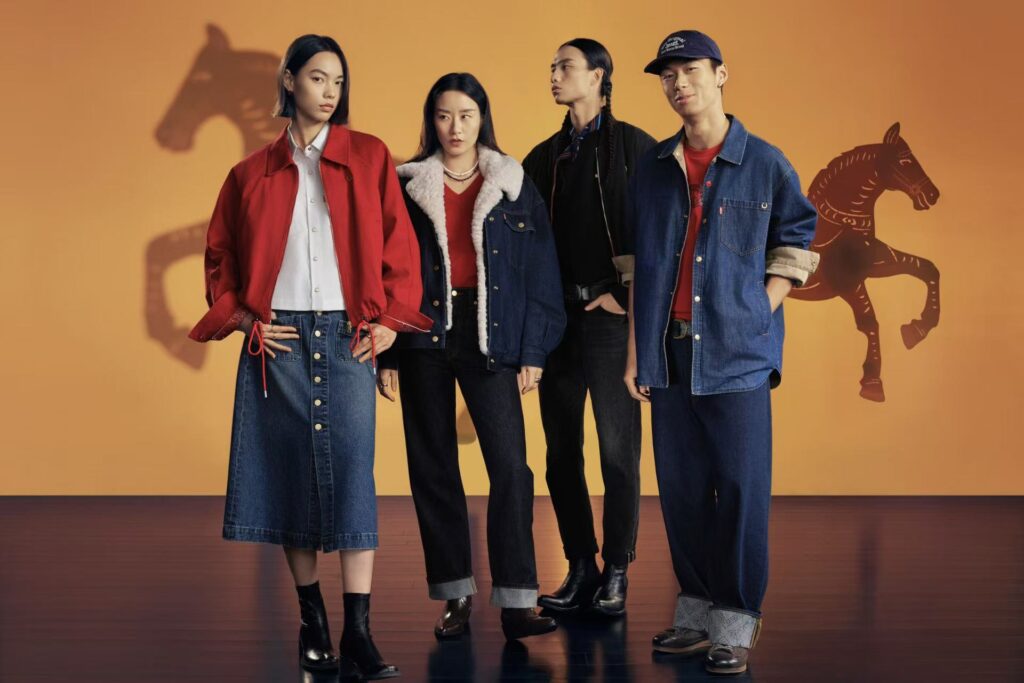
The range extends beyond denim staples. Alongside jeans and trucker jackets, the collection includes reversible outerwear, knitwear, shirts, and casual tops, spanning both men’s and women’s silhouettes.
What Levi’s Lunar New Year release tells us about the wider market
The emphasis is on wearable updates rather than limited-run novelty items. This is a smart move for Levi’s Lunar New Year release. Chinese consumers are increasingly showing a preference for practicality over flash, substance over style.
Another trend that Levi’s have been smart to follow is the increasing relevance of Chinese themes and motifs in fashion. As China shifts from trend follower to trend setter, domestic consumption places less value on foreign goods that used to be perceived as luxury.
Levi’s aren’t the only brand to take notice. Across the fashion and retail world, western brands are increasingly seen collaborating with Chinese partners or tailoring whole product offerings to the Chinese market.
Through this lens, Levi’s Lunar New Year release isn’t so much an expression of routine festival product cycles, but a chance to engage in a market that’s increasingly setting the rules in fashion and retail.