



Holiday backlash: Key takeaways
- Backlash against make-up working days is prompting some Chinese workers to threaten a boycott of holiday spending
- A WeChat account encouraged consumers to favour businesses offering two-day weekends
- Jinzai and other Chinese brands show how marketing tangible employee benefits can work for a brand
China’s National Day holiday runs from 1-7 October. It’s one of the longer holidays in a Chinese employee’s calendar. This year – as Yili pointed out – it can even be strung together with the Mid-Autumn Festival to make a full 13 days off. But some are questioning just how much of a break they’re getting.
In China, working days are often rearranged to create consecutive days off. It’s called the tiaoxiu (调休) system and it means this year’s holiday comes with two weekend shifts: Sunday 20 September and Saturday 10 October.
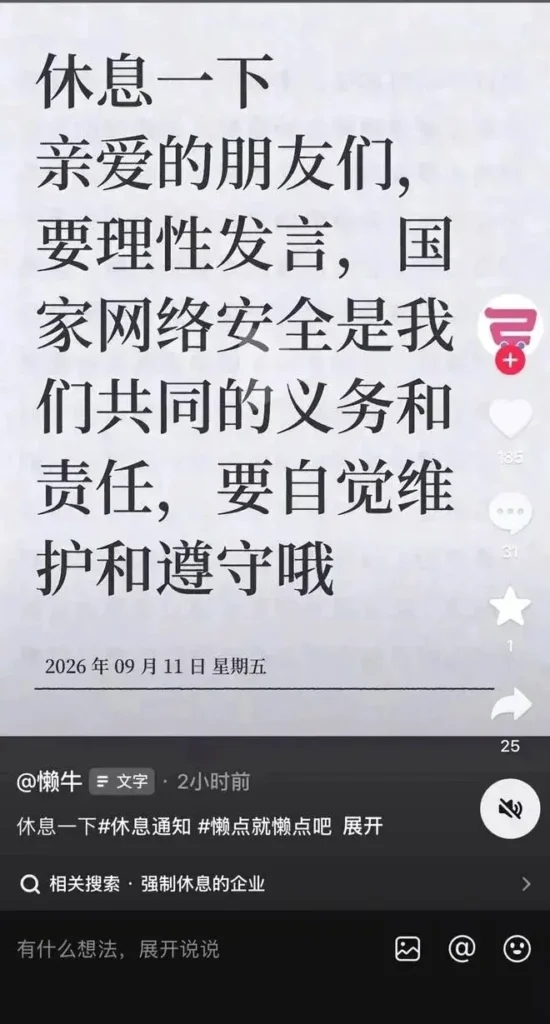
Online, people aren’t happy. A Weibo topic opposing make-up working days attracted 360 million views. Some workers say they will withhold holiday spending in protest. Now their anger is beginning to reach brands.
A WeChat service called Weekend Off Shopping (双休购) surfaced, letting users check whether a business gave employees two-day weekends as a basis for choosing whether to buy from it or not. It drew 150,000 contributors before authorities stepped in and suspended it.
It drew 150,000 contributors before authorities stepped in and suspended it
But there’s clearly something in the air. Drinks company, Lu Xiyi (陆喜依) posted a notice announcing 13 consecutive days off over the holiday. Its orders doubled. Snack brand Jinzai (劲仔) offers an example of another approach.

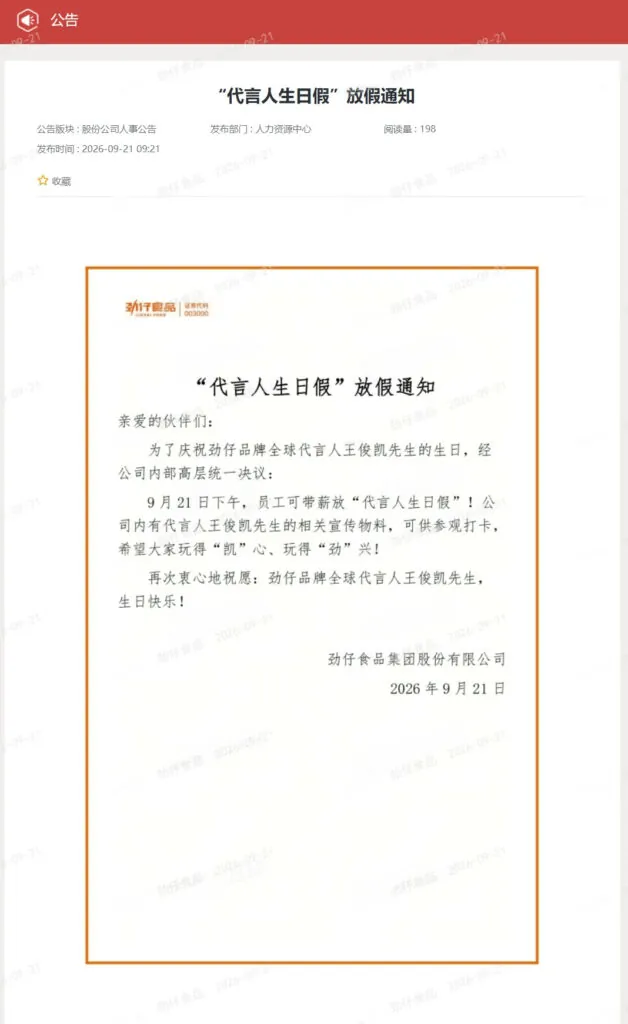
To celebrate ambassador Wang Junkai’s birthday (and to much praise) it gave all employees a paid half-day off on 21 September – immediately after that designated working Sunday. It may have been a savvy part of a fan campaign, but it also spoke to a feeling that extended beyond Wang’s followers: people want time away from the grind.
Dao view: When workers’ time off becomes a brand issue
Jinzai isn’t the only brand to pick up on China’s culture of exhausted workers. The aforementioned Yili uses office workers in its campaign films regularly. Other brands employ similar methods.
Overwork is a problem in China. It doesn’t look like it’s going to go away
Overwork is a problem in China. It doesn’t look like it’s going to go away. Often when brands address it, the address comes in the form of marketing. Cynical, you might say, to turn workers’ stress into sales. But in this case the script has been flipped. Now it’s companies that are feeling the pinch.