


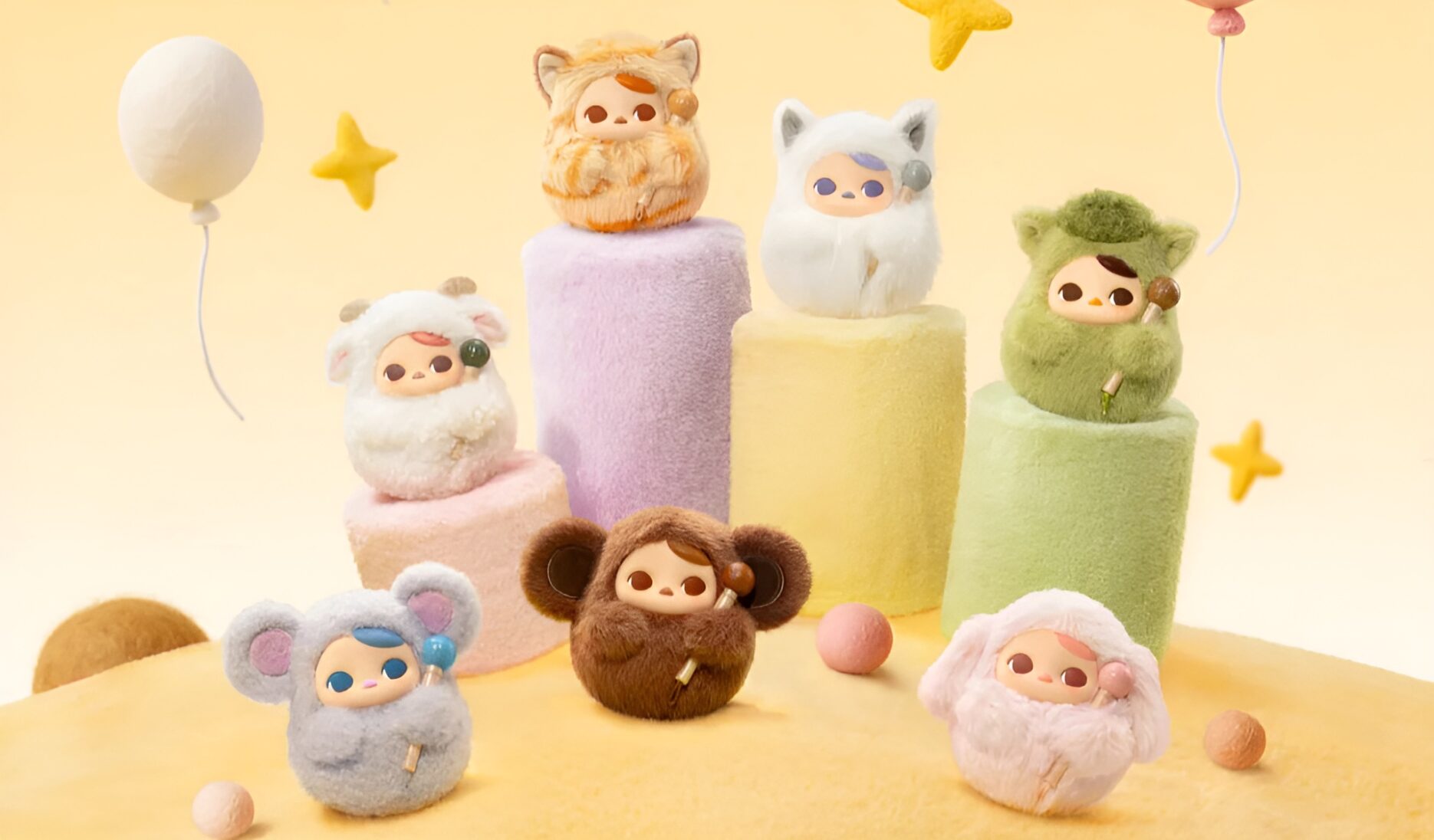
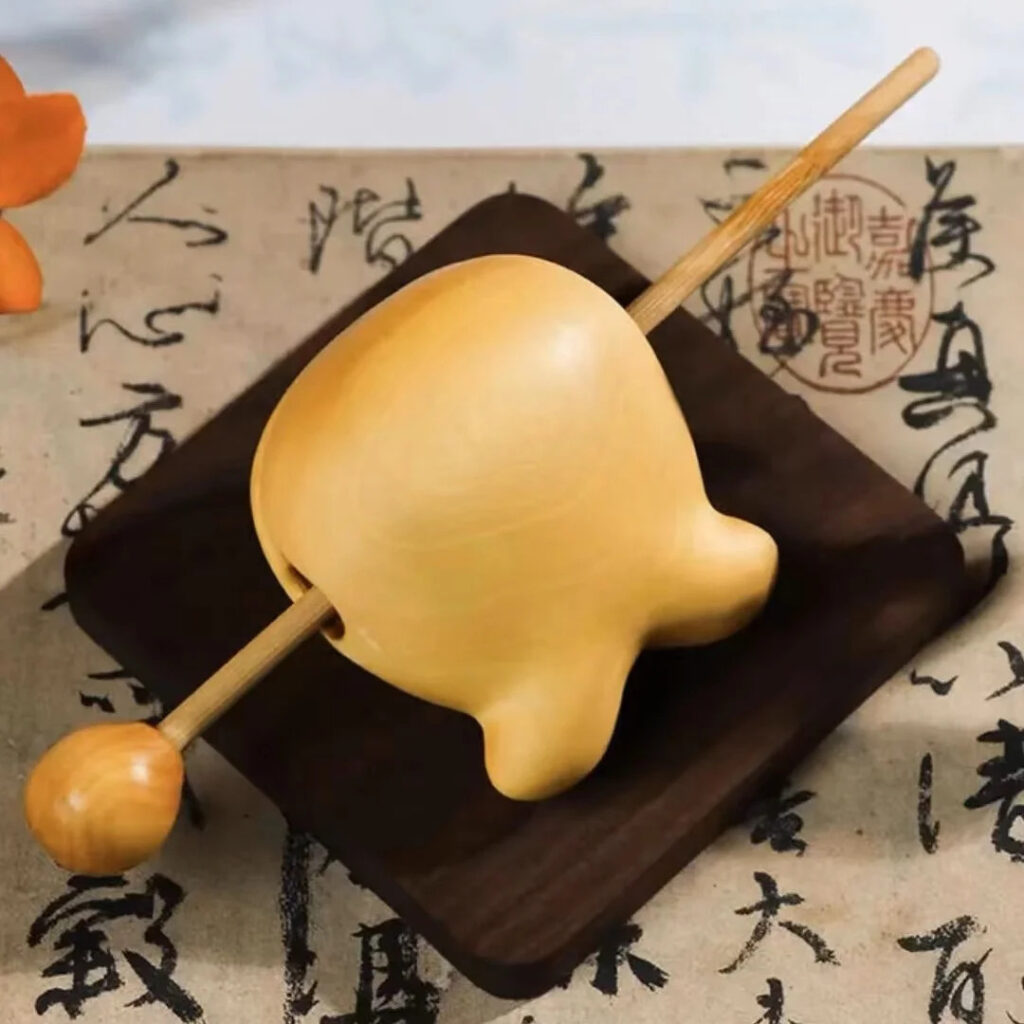
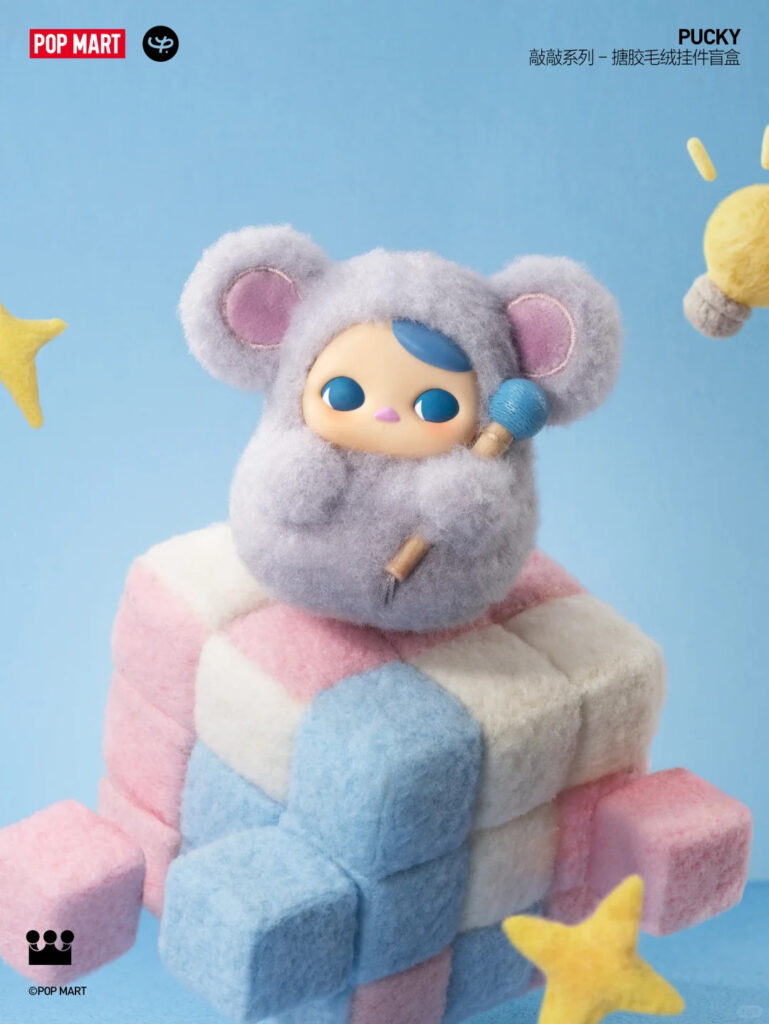
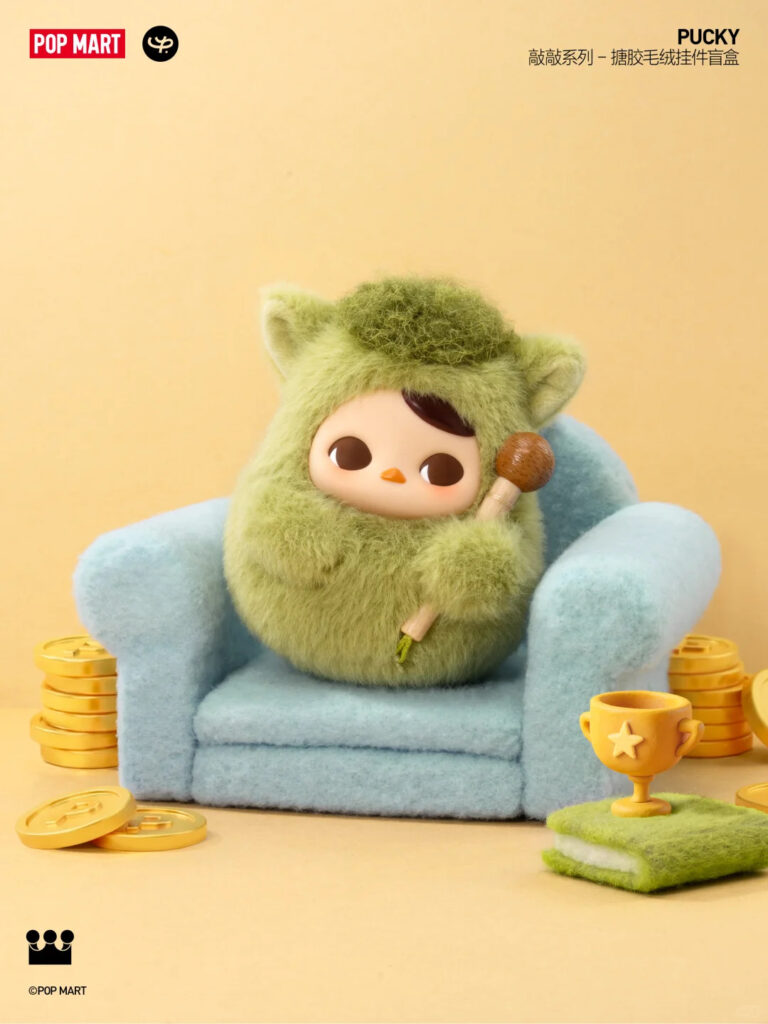
The Chinese toymaker’s latest blind-box release, Pucky Knock Knock, takes inspiration from muyu, a traditional Buddhist percussion instrument used to keep rhythm during sutra chanting. Launched in January at RMB 99 (US$14) per box, the plush keychain series blends spiritual symbolism with tactile play: pull out the tiny drumstick, tap the character’s head, and it emits the familiar electronic tok of a muyu (木鱼).
The reference is immediately legible to young Chinese consumers. In recent years, digital muyu apps have quietly gone mainstream, letting users tap their screens to ‘accumulate merit,’ often punctuated by tongue-in-cheek pop-ups like ‘merit +1.’ What began as meditation aid has evolved into a form of low-stakes emotional self-care – and sometimes a way to jokingly offset bad behavior or workplace frustration.
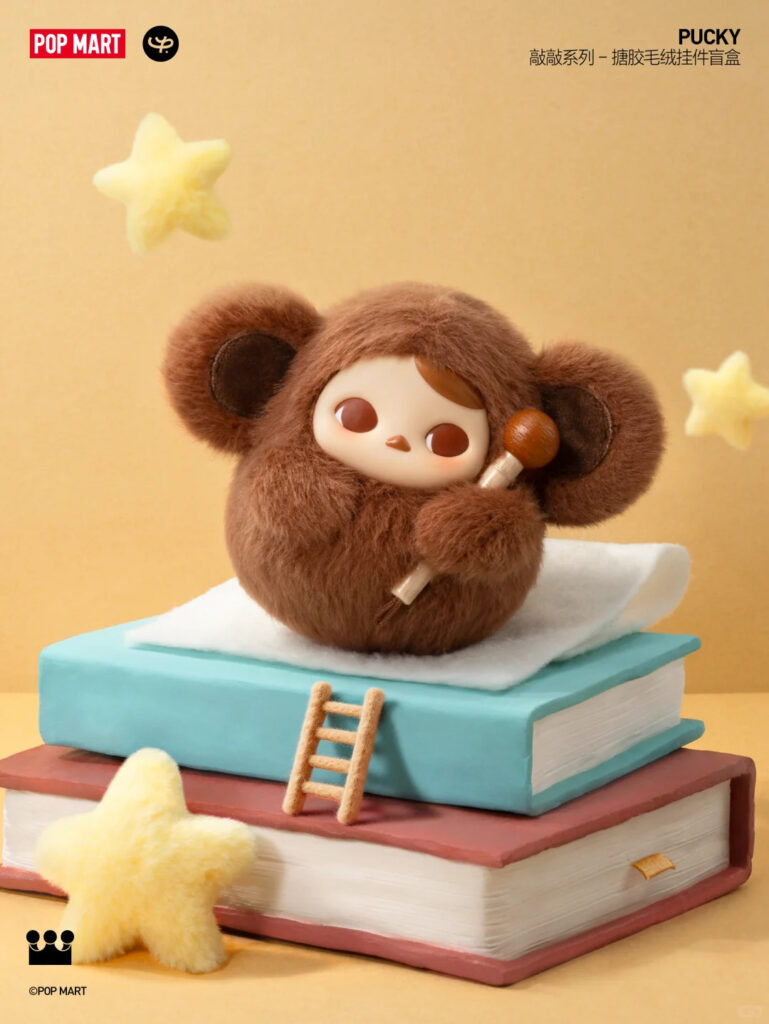
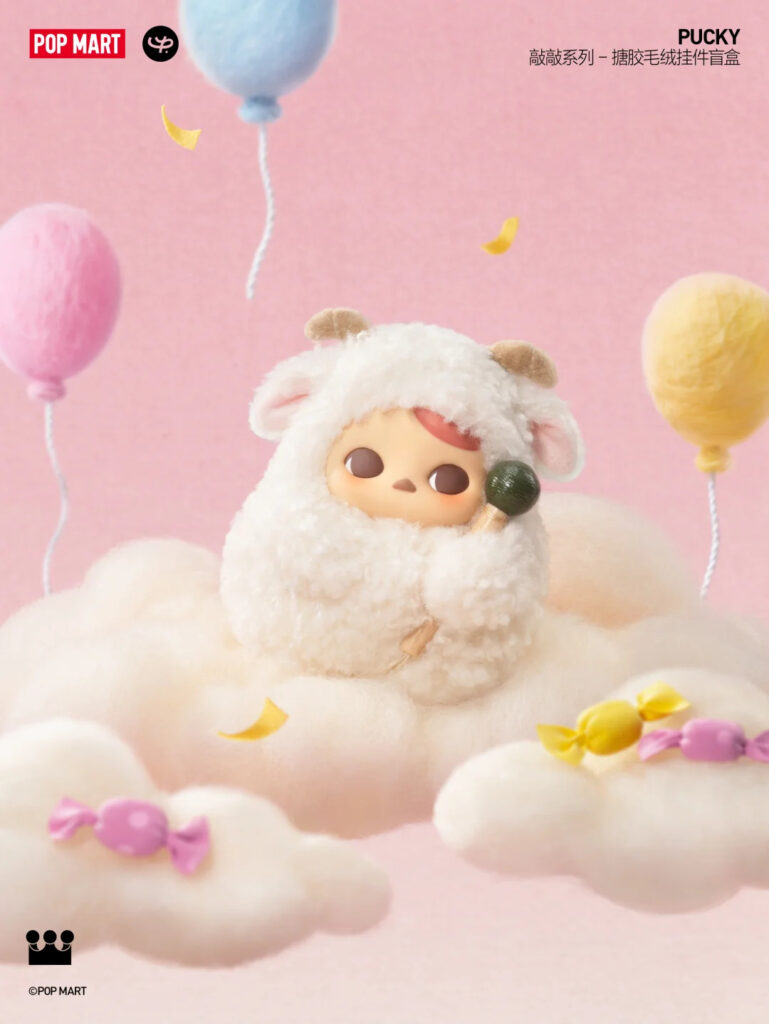
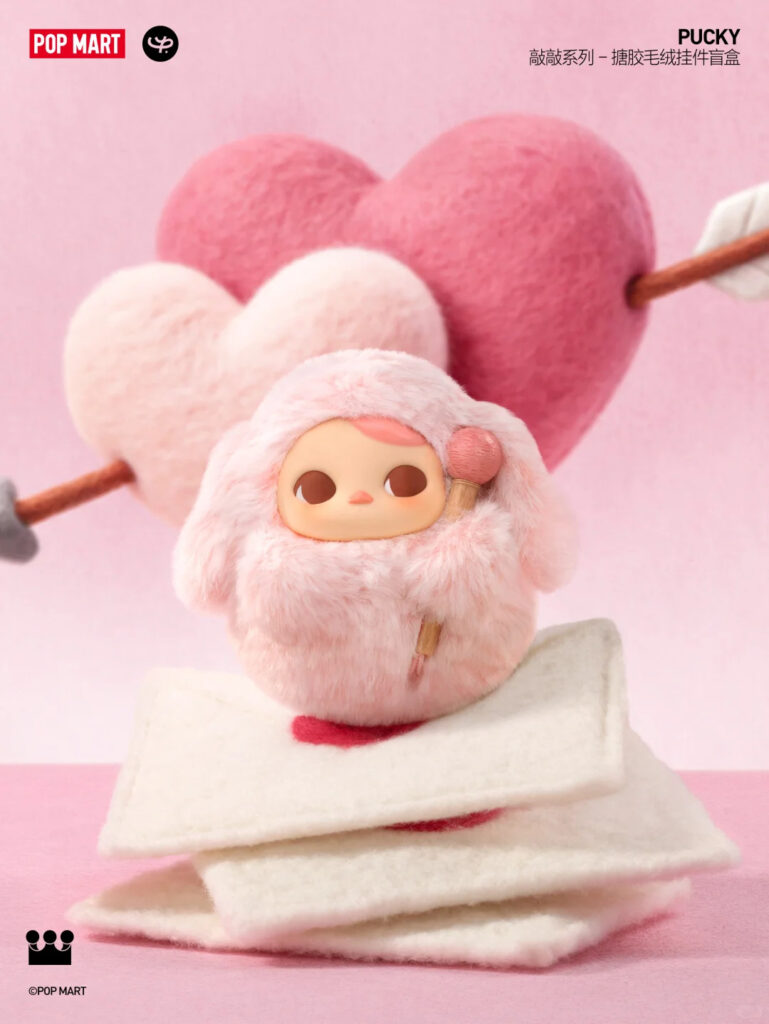
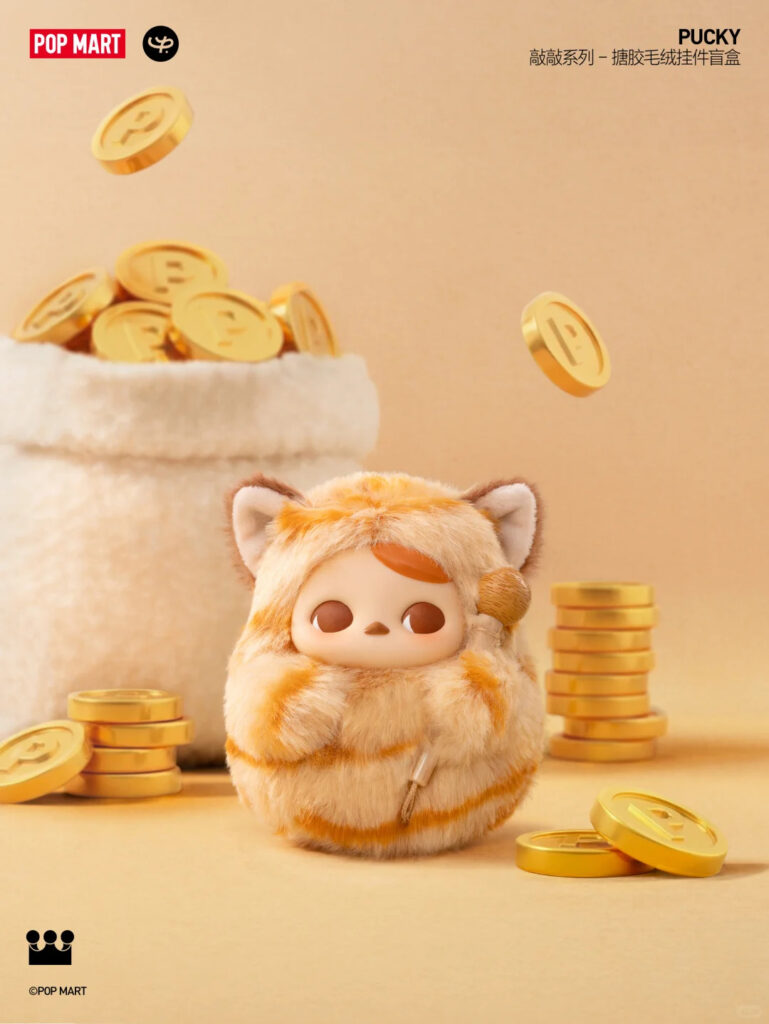
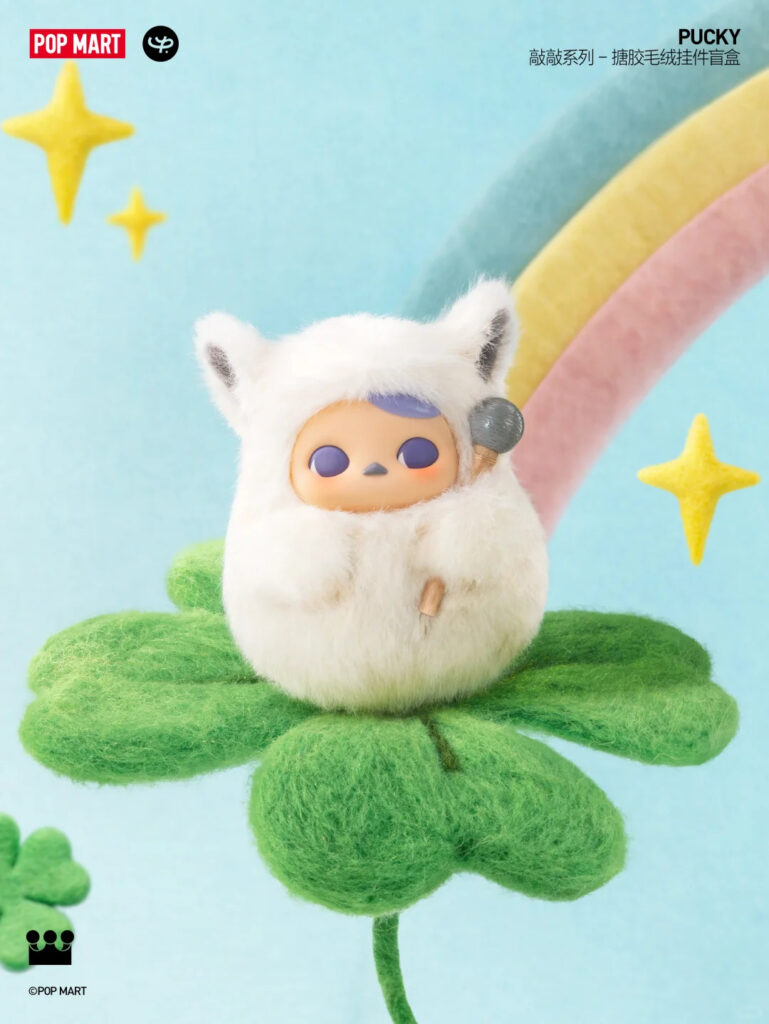
Pucky Knock Knock translates that logic into physical form. The lineup includes six standard figures themed around abstract rewards – luck, wisdom, happiness, wealth – plus a hidden edition linked to success. The series sold out rapidly through official channels, with the secret figure reportedly reselling at several times its original price. On social media it’s already being framed as the next breakout hit after Labubu.
The character itself isn’t new. Pucky was created in 2018 by Hong Kong artist Pucky and has long occupied a softer, more whimsical corner of Pop Mart’s universe. What’s changed is context. Today’s consumers aren’t just buying cute collectibles, they’re buying rituals. A knock between meetings. A moment of calm after a bad interaction in the corridor. A joke that doubles as self-soothing.
The trend fits neatly into a broader wave of stress-relief consumerism in China – from desk bananas tied to anxiety-reducing wordplay, to endless squishable toys and apps that digitise incense burning and prayer wheels. Pop Mart’s bet on this being the new frontier for their next wave of collectible toys is sharp and simple.