


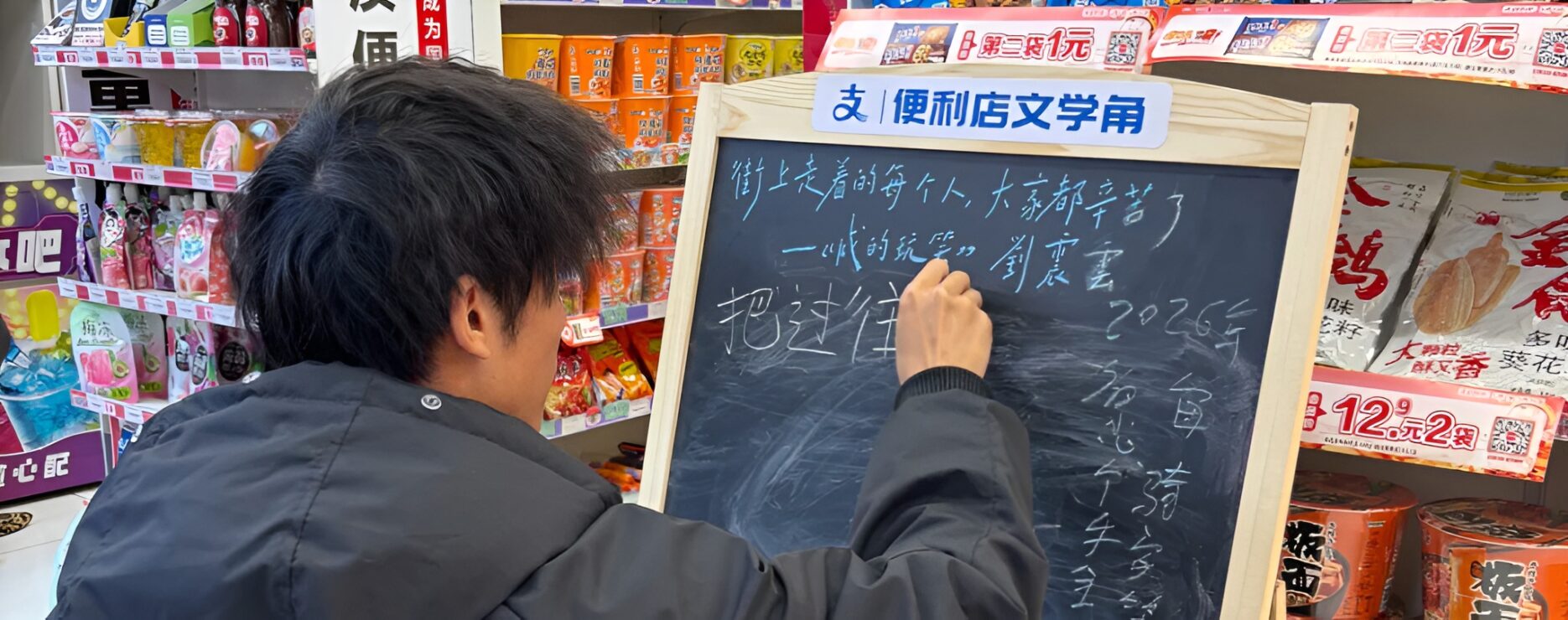
You walk into a convenience store in China to buy a bottle of water. At the back of the store there’s a black board where people have been writing messages to each other. Some are funny. Some are tired. Some are quietly moving. That’s the idea behind China’s latest viral micro-trend: convenience store literature (便利店文学), and Alipay (支付宝) is behind it.
The trend became viral in Alipay partnered with well-known writer Liu Zhenyun (刘震云). In Meiyijia (美宜佳) stores, Alipay set up a Convenience Store Literature Corner (便利店文学角) and invited customers to write on the board. Lui kicked it off with a line from his new book Salty Jokes (咸的玩笑): ‘Everyone walking on the street – you’ve all worked hard.’
Once that first line went up, the rest was the internet doing what it does best: ordinary people joined in. Students, kids, delivery drivers, shoppers – everyone added their own words, turning a tiny corner of the store into a shared public moment.
How Alipay turns user wishes into interactive campaigns

This is where Alipay’s style comes in. the company has a habit of taking something people already enjoy doing – like making wishes, sharing blessings, or playing along with a holiday ritual – and turning it into a campaign people can participate int.
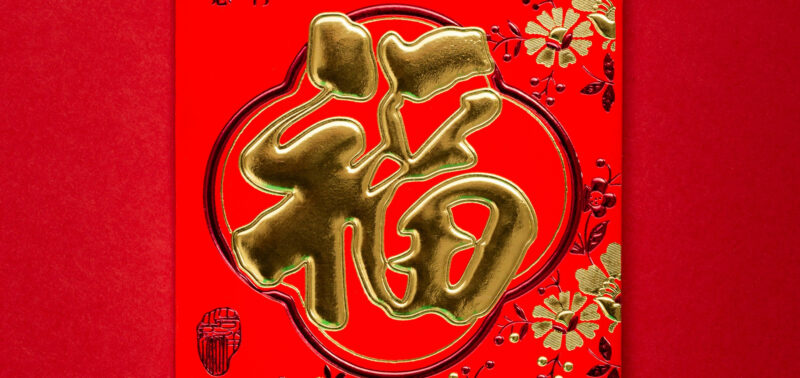
The best-known example is their Chinese New Year Five Blessings (集五福) campaign, where users collect digital Fu cards and share them with friends. It’s becoming a yearly ritual at huge scale. Alipay has been quoted as saying the programme has attracted 900 million participants since its inception ten years ago. The point is simple: Alipay doesn’t just want you to pay. It wants you to play along.
Alipay has also been at this with other in-store moments. When a viral Family Mart (全家) spread online, Alipay partnered up with family mart to turn the trend into an offline activation linked to Alipay’s tap feature. The activation involved cup sleeves and playful rituals around clinking drinks – basically turning the video’s meme qualities into something you could actually go and do.
Alipay convenience store literature: People shaping brand story

Put these pieces together and you get a loop that keeps repeating: people comment, Alipay responds, users share, more people join in, more new ideas appear. In this arrangement both brand and consumer meet in the middle. The public wants something, and the brand delivers.
Alipay then benefit because they can tie these viral moments back to their product features as they did with the tap feature at Family Mart. In that case, the action is positioned as not just paying, but joining in. When product isn’t directly involved, Alipay still meaningfully put themselves in front of consumers right before the time of payment.
Alipay: convenience store literature – the big picture
Convenience store literature is small simple and emotionally direct, and that’s exactly why it works. It takes the most ordinary – perhaps even mundane – setting in Chinese urban life and gives people permission to leave something human behind.
For Alipay the bigger story is how it keeps building campaigns that feel like they come from the public, not a boardroom. The brand’s best activations aren’t shouting at consumers. They’re simply giving them a reason to participate and making sure that Alipay is the platform that lies beneath it all.