




Unitree Robotics: Key takeaways
- Unitree built its lead by making legged robots cheaper, beginning with quadrupeds before expanding into humanoids
- High-profile performances have translated complex engineering into public attention, commercial credibility and orders
- Its soaring valuation assumes that robots will move beyond laboratories and demonstrations into productive, repeatable work
Unitree (Unitree宇树科技) has spent a decade making legged robots cheaper. On its first day as a public company, investors sent Unitree’s own price in the opposite direction. Its shares closed 460% above their issue price, turning a RMB 61 billion IPO valuation into a market capitalisation of approximately RMB 342 billion (US$50.7 billion).
It is a grand moment for Unitree – although perhaps still less memorable than the night 16 of its humanoids danced at China’s 2025 Spring Festival Gala.
That performance made visible a project nearly a decade in the making: bringing down the cost of legged robots. Unitree has succeeded on price. Its IPO raises the harder question of utility: what will all that new capital help its robots do?
Unitree Robotics Founder profile: Wang Xingxing (王兴兴)
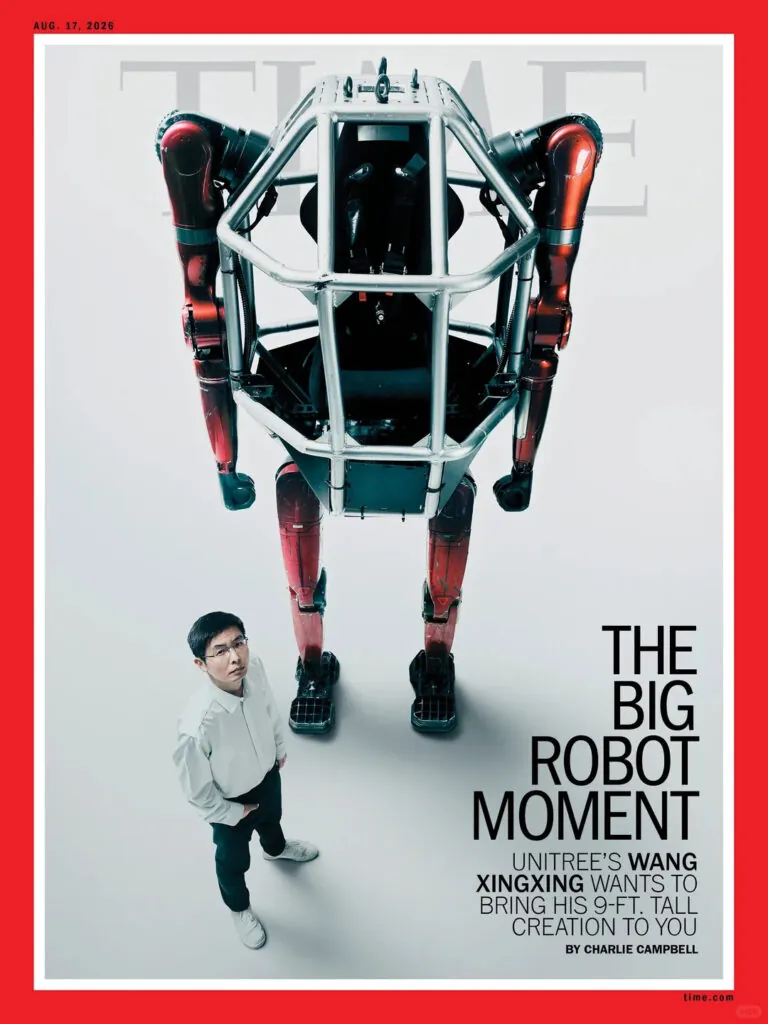
The philosophy was always that robotics would never break the commercial barrier unless the parts that power them could be produced affordably
- Born: 1990, Ningbo, Zhejiang
- Education: Mechatronics at Zhejiang Sci-Tech University, master’s degree at Shanghai University
- Company: Founder and CEO of Unitree Robotics (宇树科技)
- Founded: 2016, aged 26
- Known for: Turning high-performance legged robots into comparatively affordable, commercially available products
Wang developed XDog while studying at Shanghai University. The quadruped would form the basis of some of Unitree’s first commercial models. It attracted media attention, encouraging Wang to leave his day job and found Unitree.
Going in, the philosophy was always that robotics would never break the commercial barrier unless the parts that power them could be produced affordably.
Four legs first
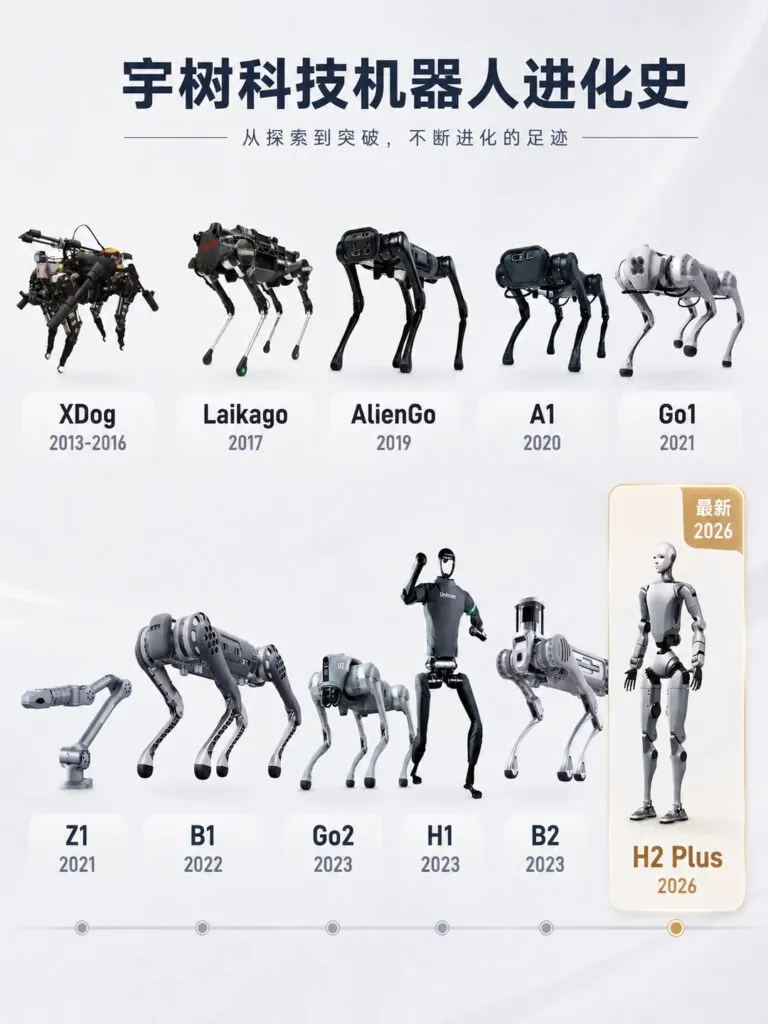
Quadrupeds would be Unitree’s route to market. Its first commercial four-legged robot was 2017’s Laikago. It launched at around US $20,000–30,000, depending on add-ons. Three years later, Boston Dynamics launched Spot – a quadruped that drew attention for its ability to navigate difficult terrain – at US $74,500, over double Laikago’s highest asking price.
By 2021, Unitree was pricing newer models of quadruped robots at just US $2,700. Wang’s philosophy of affordability proved right. Unitree’s quadruped sales rose from 2,403 units in 2022 to 17,946 in the first nine months of 2025.
Resisting humanoids
Quadrupeds served definite needs in education and industry. Humanoids could not yet provide that kind of utility
Quadrupeds served definite needs in education and industry. Humanoids could not yet provide that kind of utility. Wang has said his investors repeatedly asked whether he’d develop humanoids. His answer was that until they could be useful or saleable, there was no point. Embodied AI changed his view.
Unitree’s full-size humanoid H1 robot appeared in 2023. The smaller G1 came in 2024 with a stunningly low price tag of RMB 99,000 (roughly US $16,000). With that, a humanoid was no longer an outrageous purchase for a laboratory or university. Sales grew accordingly. Humanoids went from 1.88% of Unitree’s core revenue in 2023 to 51.53% in the first nine months of 2025.
Performance as product demo
Unitree understands that robots sell through demonstration. It dressed quadrupeds as oxen for the 2021 Spring Festival Gala. Its robots formed part of the spectacle around the 2022 Beijing Winter Olympics.
Then, in 2025, those 16 H1 humanoids performed a yangge folk dance in Zhang Yimou’s YangBOT. When Unitree sat down for its IPO disclosures, it pointed to boosted domestic orders after the Gala performance as proof it was commercially viable.
Its performances turn difficult engineering into visible proof
Most viewers – including us – will never fully understand what keeps a humanoid robot upright. They do not need to. The choreography translated balance, torque and range of motion into a language that investors, procurement teams and the public could immediately understand.
The Dao view: Unitree’s valuation rests on the leap from performance to productivity
Unitree says it develops components including motors, gear reducers, controllers and lidar alongside its motion-control systems. The model resembles the Chinese EV playbook: integrate important components, reduce prices, build sales volume and use the proceeds to fund further development.
Unitree has paired that manufacturing strategy with a talent for spectacle. Its performances turn difficult engineering into visible proof. The Spring Festival Gala appearance built mass awareness and, according to the company, lifted domestic orders.
In 2025, Unitree generated RMB 1.71 billion (US $253 million) in revenue and shipped more than 5,500 humanoids. Adjusted net profit reached approximately RMB 600 million (US $89 million). Its RMB 61 billion IPO valuation therefore represents roughly 36 times annual revenue and more than 100 times adjusted profit.
That valuation anticipates a much larger market than Unitree serves today. Current demand still comes largely from research, education, and demonstration. The company’s next test is moving from robots that perform on cue to robots that earn their keep.



_来自小红书网页版1-800x444.jpg.webp)