



Molly Tea (茉莉奶白) has lost a trademark infringement lawsuit against Louis Vuitton: logo infringement, the bone of contention. But now the legal battle has ballooned. The Chinese web has been fired up with debate over intellectual property, cultural heritage and the ownership of traditional Chinese design.
Let’s wheel it back. This begins at a court in Suzhou – one that orders the premium tea brand to pay out RMB 10.3 million (US$1.5 million), ruling that its four-petal blossom logo infringed seven of Louis Vuitton’s registered flower trademarks. For the bean counters among you, that compensation includes RMB 10 million in damages and 300,000 yuan in legal costs. Molly Tea has also been ordered to publish statements across its official online channels to address the infringement. Unsurprisingly, the company says it will appeal.
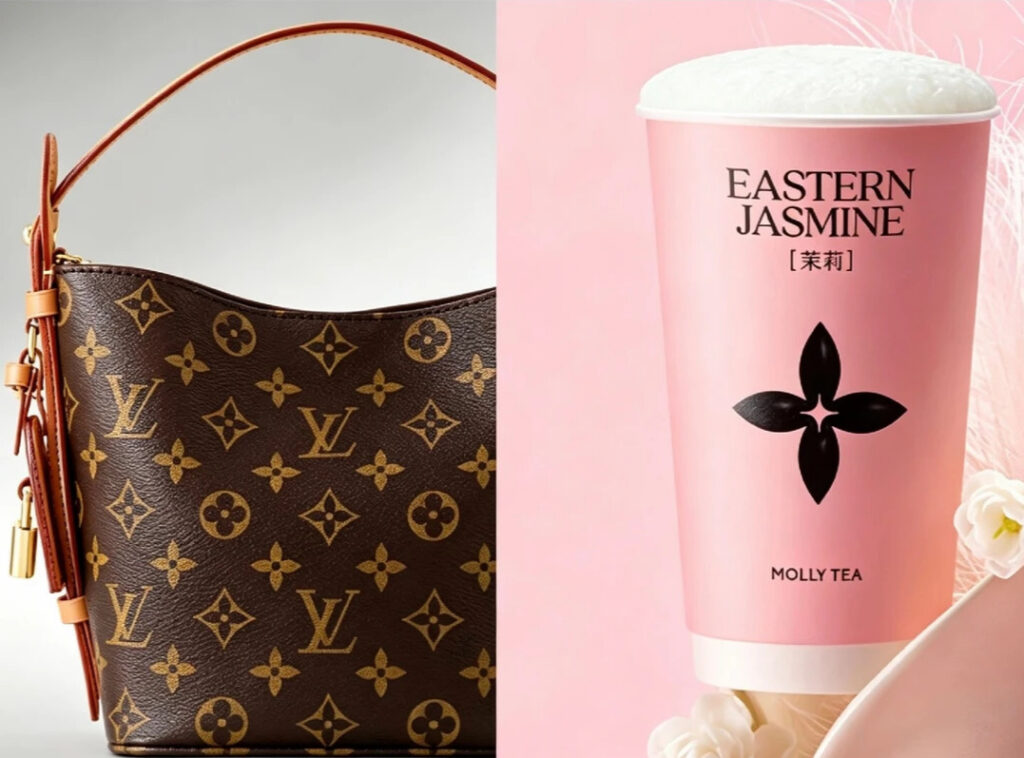
Louis Vuitton’s floral monogram is one of the most recognisable designs in the luxury segment, and arguably beyond it. The court argued that even if consumers would not mistake bubble tea for luxury handbags, they could reasonably assume a commercial collaboration existed between the two brands. That association was sufficient to establish trademark infringement. Now, here’s where public opinion comes into play…
Louis Vuitton may have won in court, but Molly Tea wins the day
It’s landed firmly on Molly Tea’s side. The ruling has generated hundreds of millions of views on Weibo, where hashtags like ‘Molly Tea lost the lawsuit but won the public’s heart’ have pinged their way into the hot search list.

Many commenters argue LV’s motif resembles decorative patterns dating back to China’s Tang dynasty. It doesn’t stop at netizens. Even State media has weighed in to point out that this case exposes weaknesses in China’s protection of traditional cultural symbols.
The controversy has shifted attention away from whether the logos are visually similar and towards a broader question: where should trademark protection end when designs draw on shared cultural heritage?
The Dao view: Louis Vuitton may have won in court, but Molly Tea wins the day

Pragmatically, it’s hard not to join LV’s side. Yes, their design may look similar to the Tang motif – it may even have been lifted straight from the history books. We’ll never know. The realpolitik of it is that LV trademarked the design first. Molly Tea would have surely known this – and the business risks – when they used the motif themselves.
The judgment reinforces the strength of globally recognised trademarks and China’s willingness to defend on home turf. Molly Tea is taking a hit, however, the legal defeat may have produced an unexpected branding win. Hordes of consumers are rallying behind the fast-growing tea chain as a symbol of domestic creativity facing off against a global luxury powerhouse. Some users have even pledged to buy a cup of tea a day in support of what they see as an outright injustice. That’s a lot of very bankable goodwill for a brand to play with.