

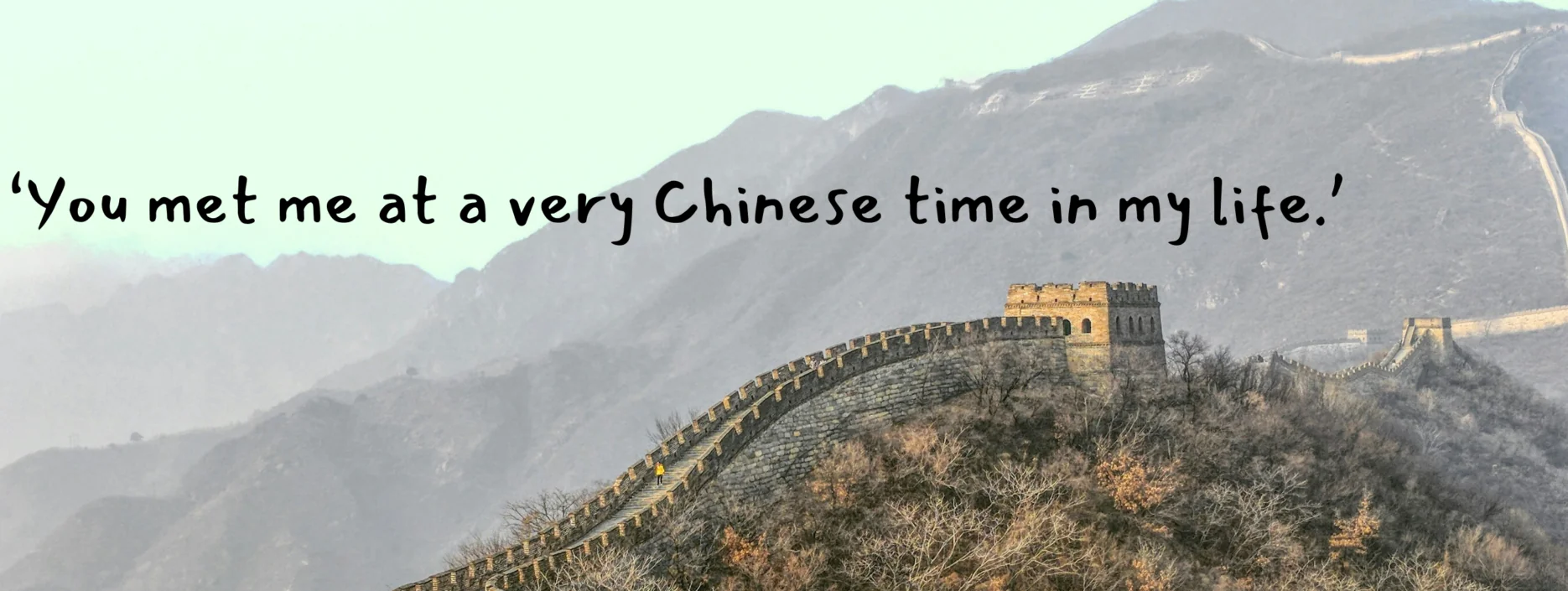
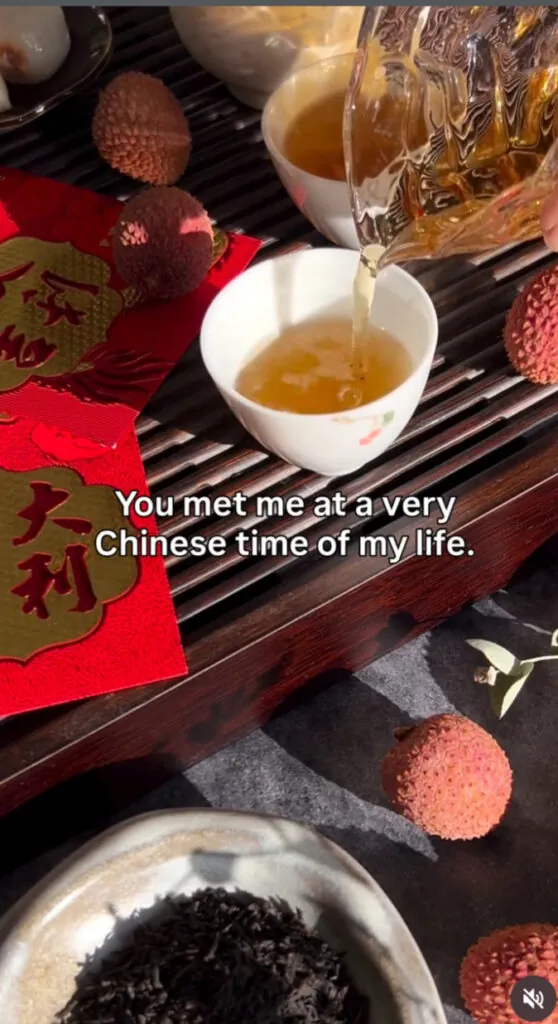
If you’re into the Chinese-culture algorithm on social media, you might have heard a phrase being thrown around a lot these days: Chinamaxing. It often comes with the phrase ‘You met me at a very Chinese time in my life’ written across reels of westerners in Chinese clothes, drinking hot water, smoking Chinese cigarettes, or getting drunk with the local uncles – the general idea is one of optimising one’s life through proximity to China.
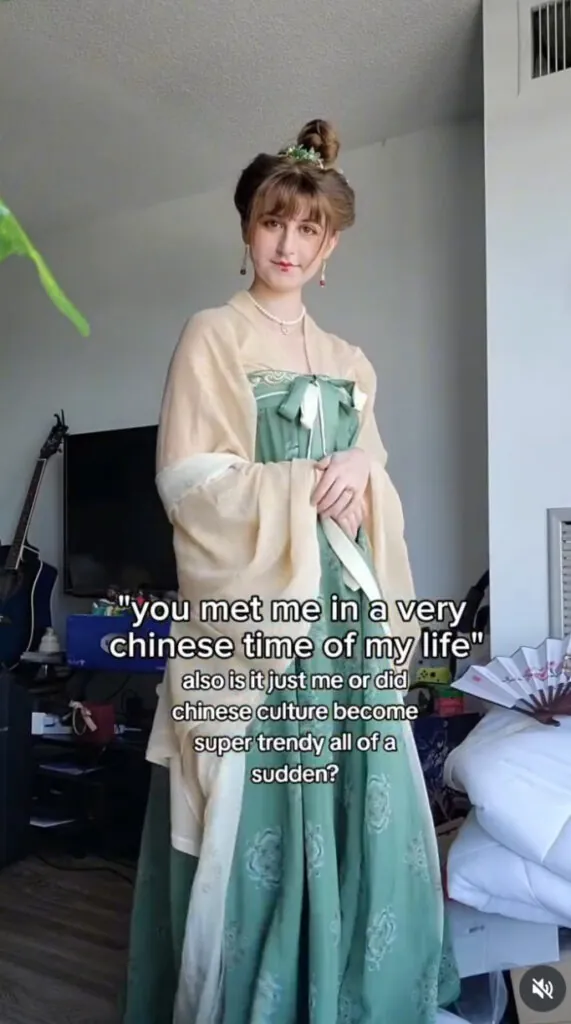

The trend is arguably not about China at all. Perhaps it would be more accurate to see it as what westerners project about China: a country where trains run on time, housing is cheap, technology makes life convenient, where a woman can walk home carefree after dark. In that case it’s also – in part at least – about the perceived failings of these meme-lord’s own societies.
For much of China’s recent decades, the country has been seen as the world’s factory. The Chinamaxing trend is one spoke in the wheel of change that sees ‘Chinese’ as a byword for futurism, functionality and something of a vibe.
‘You met me at a very Chinese time in my life’ is a trait of Chinese soft power
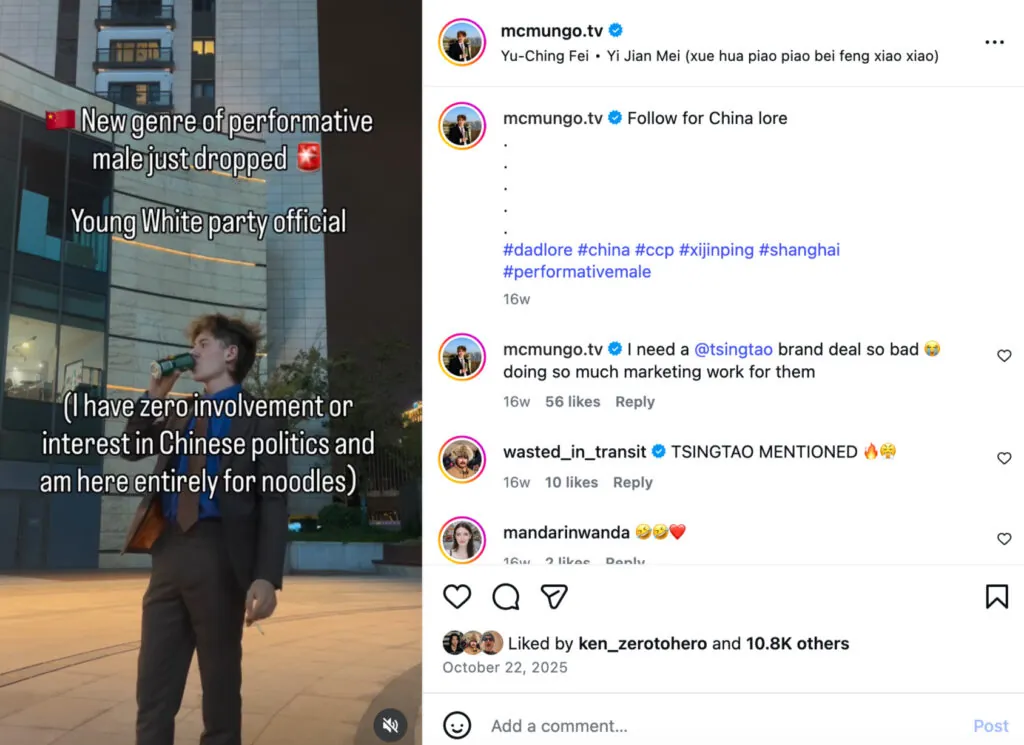
Of course, some have been quick to paint the meme up as harmful Chinese propaganda, though no one has been able to provide solid evidence of this. It also smacks of the kind of accusation made at any content showing China in better than negative light.
If anything, the harm is in taking this meme too seriously. Chinamaxers aren’t really living a Chinese life, they’re aping it. But in all this, China does come out the winner. Chinamaxing signals that the country is no longer some distant land, but a soft power to be reckoned with. It’s now embedded in the mindset of young people in a way that it wasn’t 20, or even ten, years ago. Chinamaxing isn’t about becoming Chinese. It’s about China becoming a yardstick.