




China’s EV giant says it may have found a solution to one of electric cars’ most stubborn problems: charging time. BYD has unveiled a new system built around a nine-minute EV battery charging technology, capable of taking a battery from roughly 10% to 97% in about nine minutes. If the technology performs as promised, charging an electric car could soon take little longer than a quick petrol station stop.
The breakthrough combines BYD’s latest version of its Blade battery with a new high-power charging platform. Under ideal conditions, the system can deliver about 70% charge in roughly five minutes. That kind of speed requires extremely powerful infrastructure: BYD says its system relies on ultra-fast flash charging stations capable of delivering up to 1,500 kilowatts of power – several times higher than most fast chargers currently on the market.
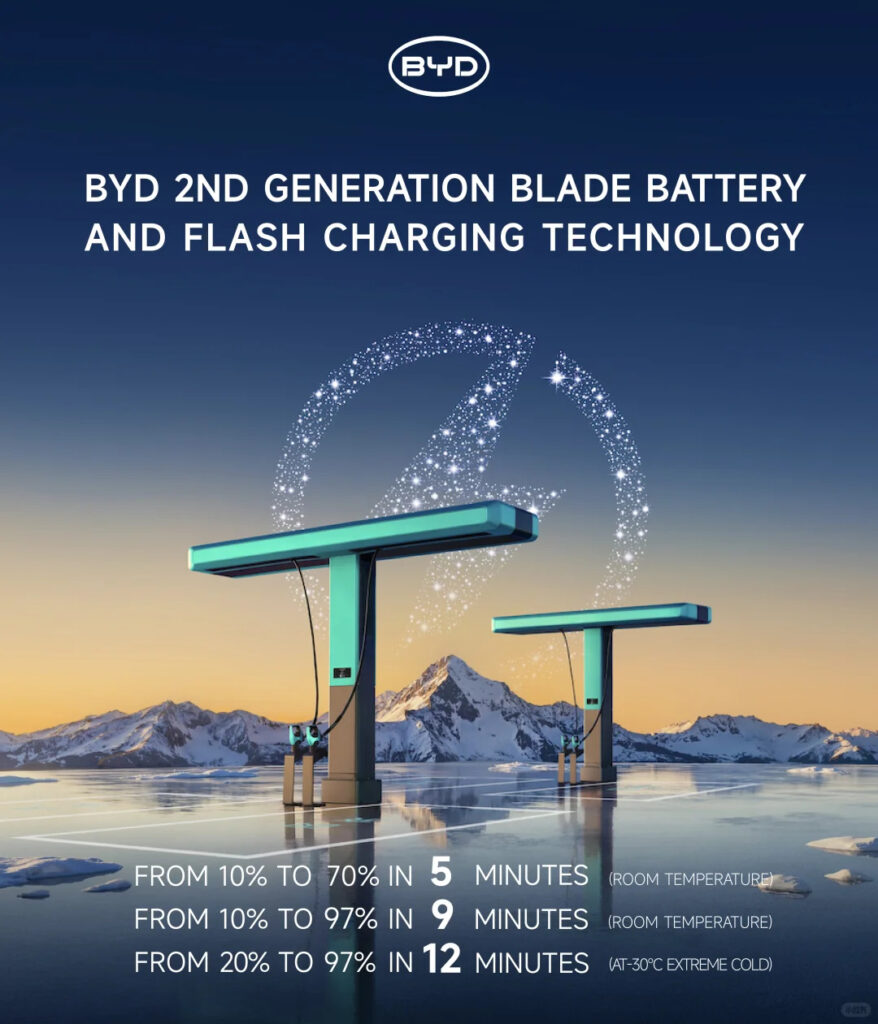
Range is also part of the pitch. Vehicles equipped with the battery could achieve driving ranges of up to around 1,000 kilometres. That combination – long range and ultra-fast charging – is designed to directly target what’s known as range anxiety – the low-level fear among EV drivers that their vehicles may run out of juice far from a charging station.
The thing is technology alone won’t solve the problem. BYD says it plans to build around 20,000 of these flash-charging stations across China, including roughly 2,000 along major highways, to support the system. These flash charging stations will need to be rolled out before range anxiety can truly be soothed.
BYD nine-minute EV battery charging tech: the bigger picture
The move comes at an opportune time: China’s EV market has entered a new phase of competition with price wars squeezing margins across the industry, and regulation coming in to prevent further price slashing. This has pushed automakers to compete increasingly on tech.
It looks like BYD has drawn its ranks on the battlefield of faster charging. If drivers can recharge an EV in the time it takes to nip into the petrol station to buy a coffee, the ever-lingering psychological barrier separating EVs from petrol vehicles starts to seem like less of a gulf.