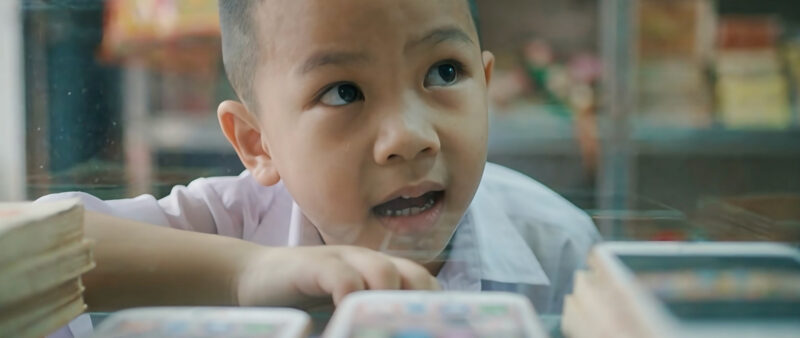




Last year, Chinese childrenswear brand Balabala (巴拉巴拉) put out a touching short film titled Chinese Children. Now they’re back at it with Chinese Children 2.0, the latest instalment in its ongoing content series exploring childhood and growth. It comes in partnership with Xuexi Qiangguo (学习强国) an app that promotes Xi Jingping thought, among other things, and shifts its focus to the theme of ‘passion’ (热爱).
The campaign builds on what the first film started. That earlier instalment, produced in March 2025 with Xinhua News Agency to mark the 20th anniversary of Balabala’s bala T product line, centred on children’s emotional development, highlighting how they process setbacks and turn them into part of growing up.
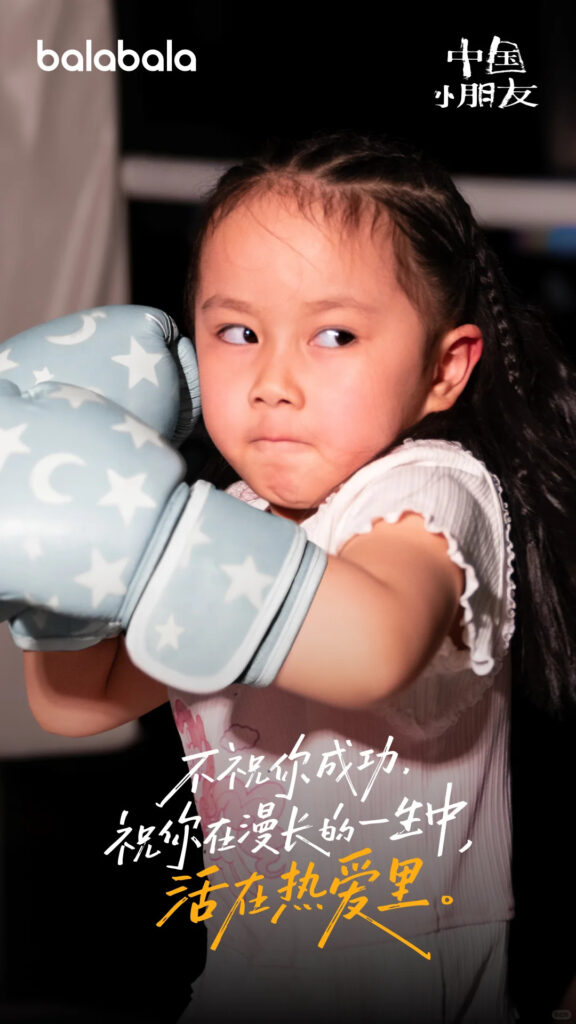
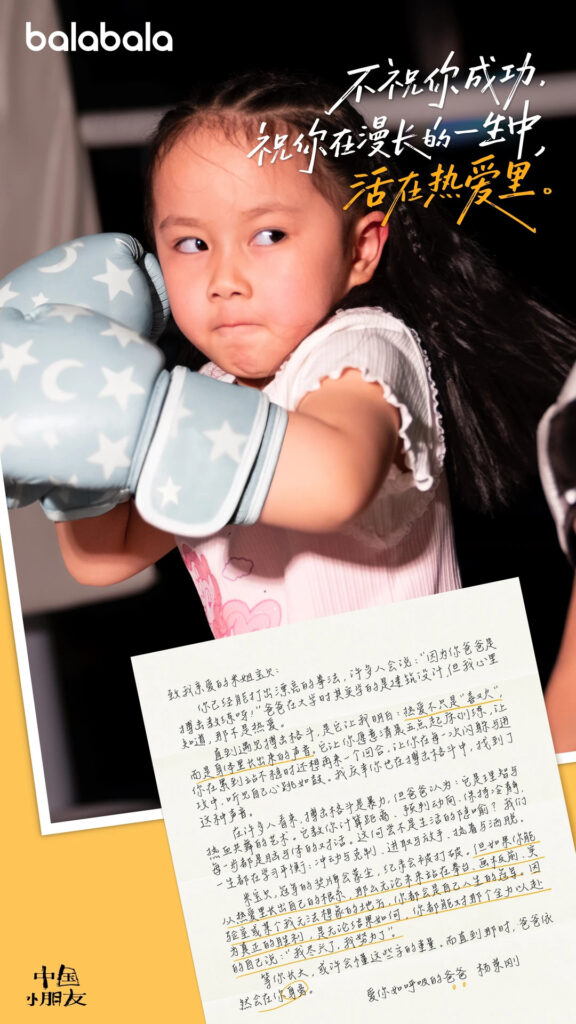
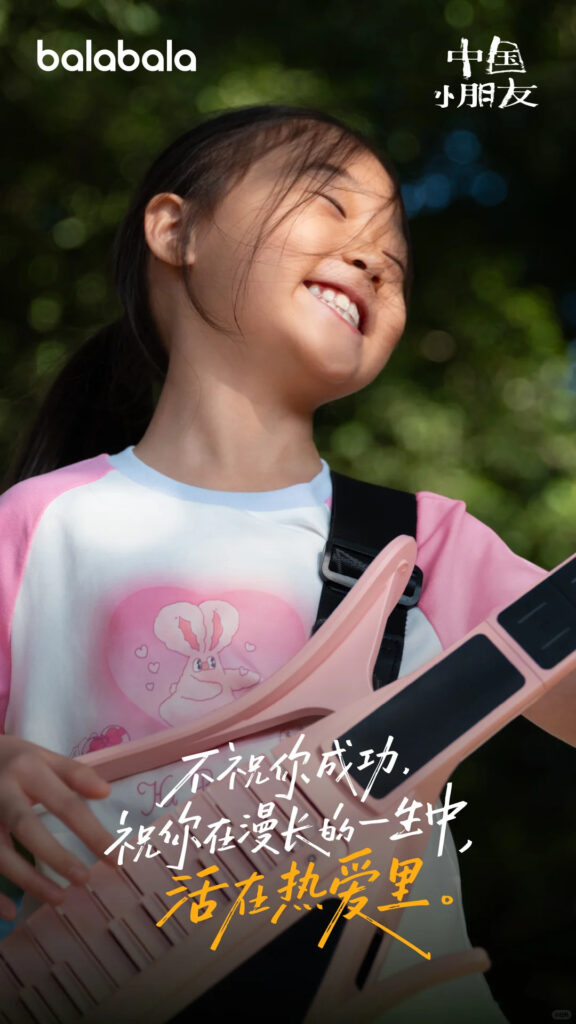
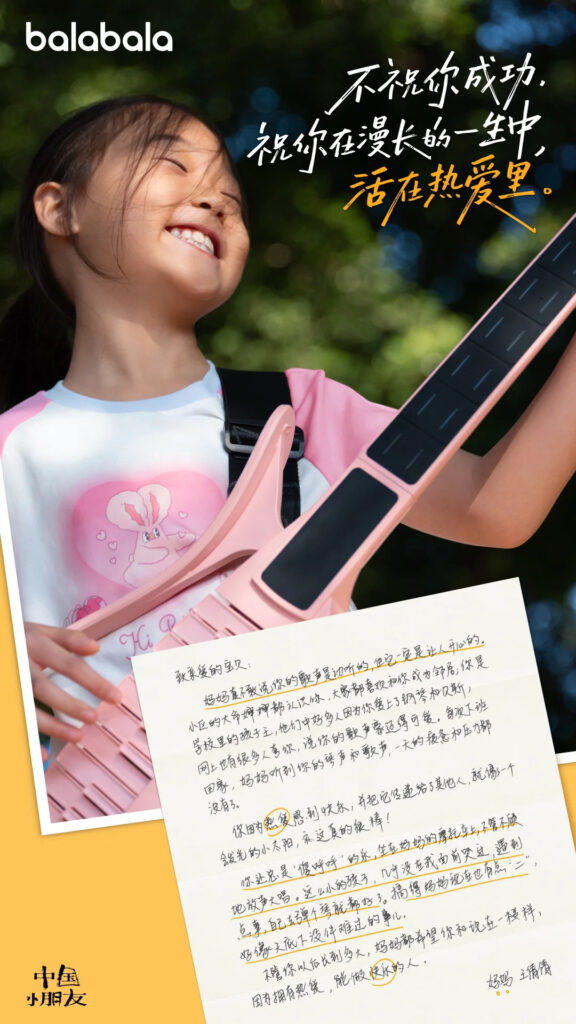
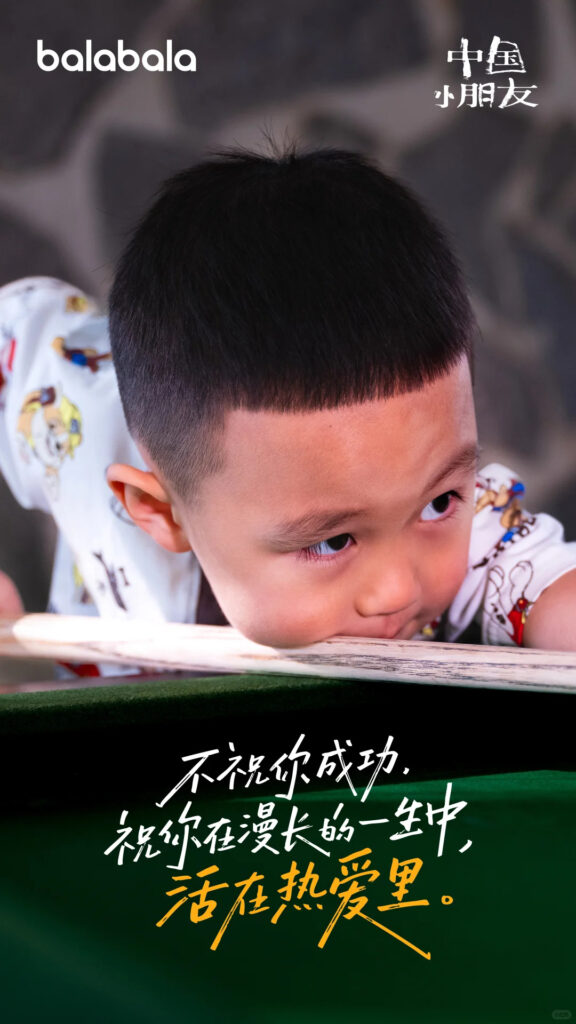
In the new film, Balabala documents a range of children’s interests, including insects, traditional instruments such as the pipa, lion dancing, painting, boxing and seal carving. The film presents these pursuits without hierarchy, framing them as self-directed expressions rather than performance-driven activities.
Alongside these moments, the film also depicts the challenges that accompany children’s interests. Scenes include children feeling misunderstood by peers, resisting pressure to perform, or seeing their work altered or erased. The narrative positions passion as something that involves uncertainty and persistence, rather than a straightforward or purely positive experience.
A notable change from the first instalment is the inclusion of individual names for each child featured. The campaign also extends beyond the film itself, with Balabala publishing letters written by parents to their children, adding a layer of intergenerational perspective.
Through the series, Balabala continues to position its bala T line as part of children’s everyday lives, framing the product as a long-term presence rather than a seasonal item. The approach aligns with broader brand moves toward emotional storytelling and sustained narrative building. We’ve seen it recently with 999 Ausnutria and FILA KIDS. It’s hardly a subtle tactic, given the emotional bonds between parents and children, but can you knock an approach that hits home? Probably not.