




Patagonia’s repair festival: Key takeaways
- Patagonia’s Shanghai festival offers repairs for outdoor clothing and backpacks from any brand
- Accepting other brands’ gear gives potential customers a useful first encounter with Patagonia and puts the brand’s repair ethos into practice
- That encounter could build trust and future consideration, even without any evidence that festival participation leads to sales
So you’re the outdoorsy type. At home, you’ve got a peg of jackets and a cupboard full of gear, all of it worn from trips to the wilderness. Bring it down to Patagonia’s (巴塔哥尼亚) Shanghai repair festival and they’ll repair it for you. And the brand’s Worn Wear station accepts outdoor clothing and backpacks of any kind, from any brand. It need not have a Patagonia label.
For shoppers who may never have bought a Patagonia item before, they’re creating a first encounter that could matter years down the line
That might sound counterintuitive. Perhaps it is. Patagonia is helping festival-goers keep a purchase they already own and use rather than buy new. But the festival is an open door. For shoppers who may never have bought a Patagonia item before, they’re creating a first encounter that could matter years down the line. They’re also driving home the brand’s central message: care for the earth.
The fix-it festival
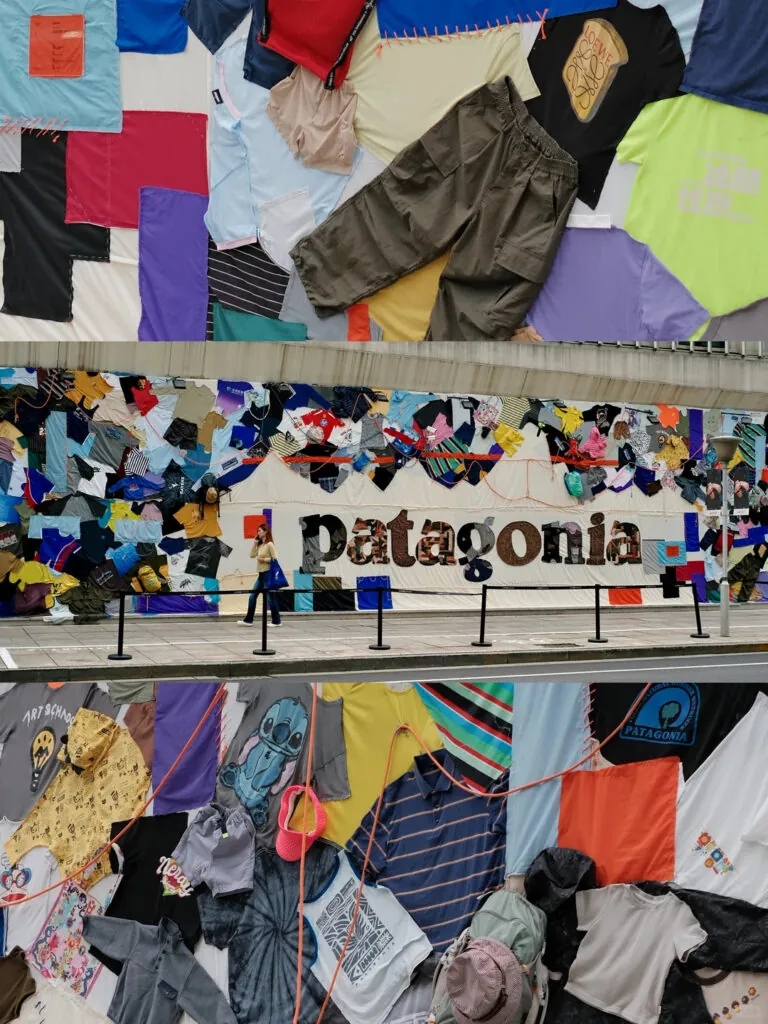
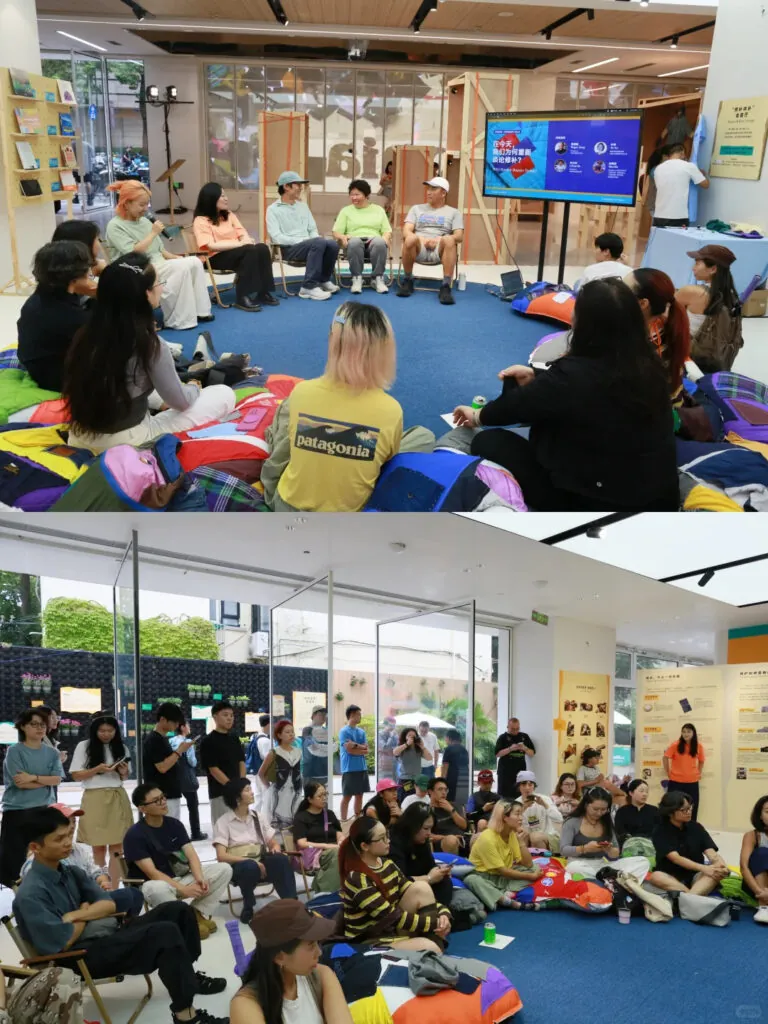
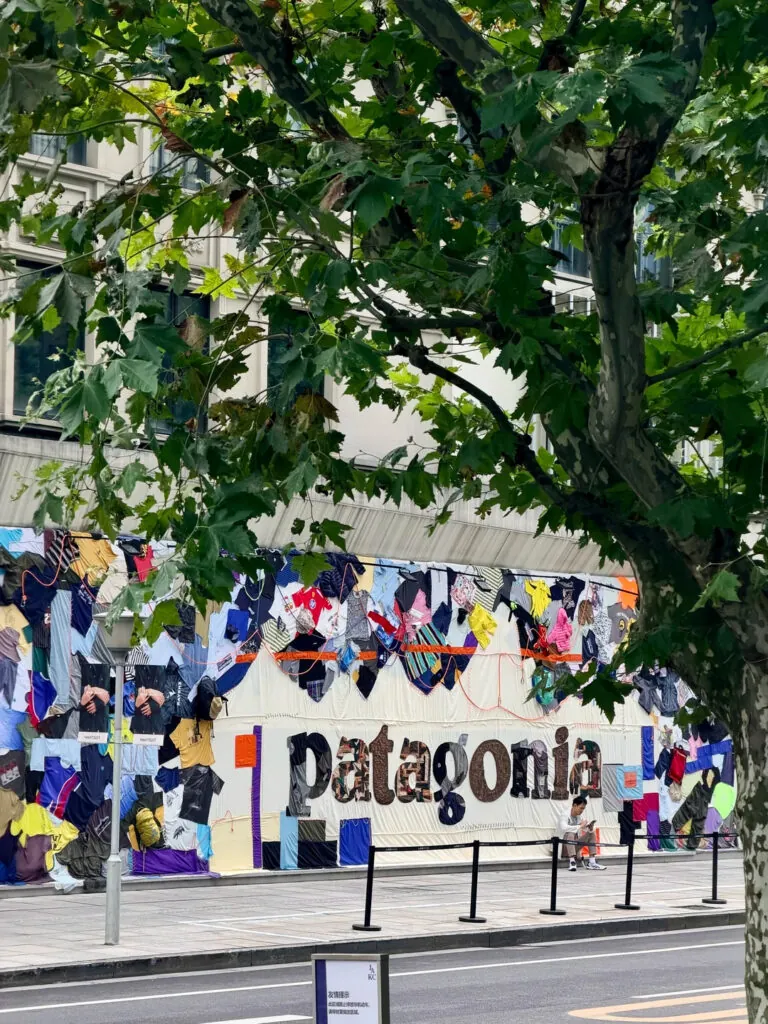
Patagonia’s Visible Repairs festival opened in Shanghai on 19 September and runs until 7 October. Worn Wear sessions run on three of those days. At these events, repair teams have been brought in to help fix a range of outdoor equipment: climbing shoes and trekking poles, paddles and snowboards – you name it.
The workshops also teach visitors how to mend and customise what they bring in. One even does this using leftover exhibition materials.
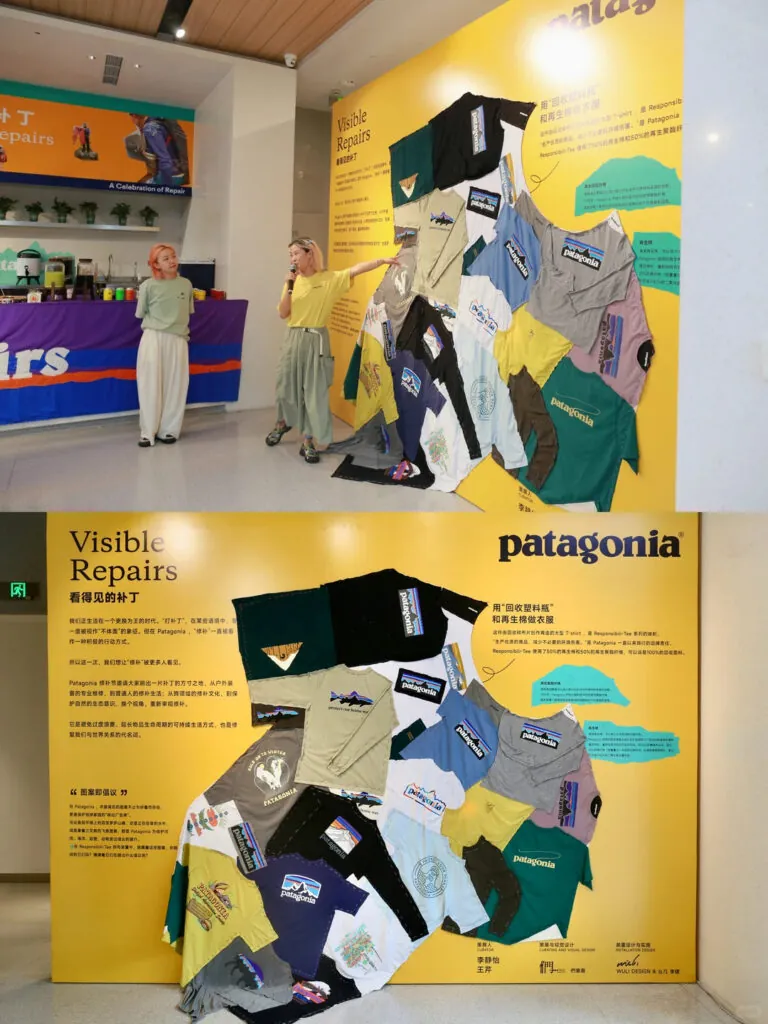

So, someone might arrive with a damaged backpack, leave with a repaired strap and learn a skill they can use again. Patagonia has given that visitor something useful without asking them to buy another bag.
Why repair someone else’s gear?


Accepting other brands’ products widens the pool of people with a reason to turn up. You need only own battered outdoor gear. If you do, you may already climb, hike or ski and that makes you a potential Patagonia customer.
There’s more. Offering repair allows Patagonia to express an idea that’s hard to convey in an advert. And in this case the message makes an advert hard to trust. That’s because Patagonia is essentially telling us to buy less. Fixing that jacket – especially when it carries another company’s logo – delivers that message in a way that makes it very hard to deny.
A good repair experience could, then, cement Patagonia as a very credible brand in a visitor’s mind
A good repair experience could, then, cement Patagonia as a very credible brand in a visitor’s mind. When they consider buying a new jacket, years from now, Patagonia might then become the direction they go in. At the very least they might continue returning to the workshops.
Making the repair work visible
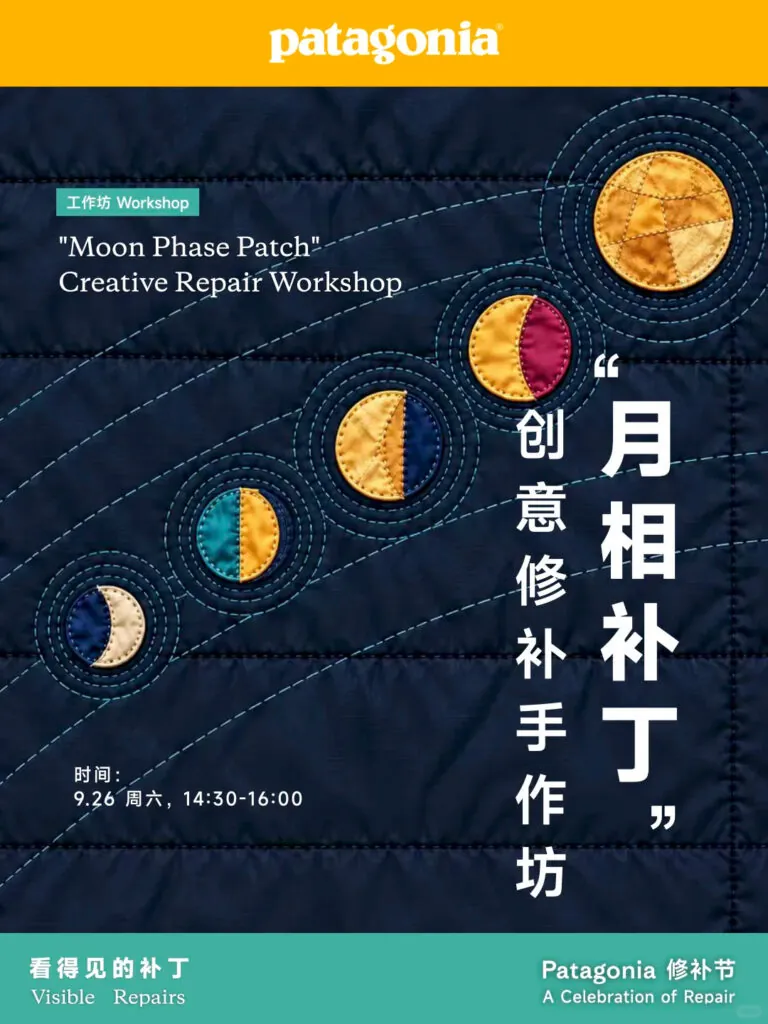
Patagonia has a long repair story to draw on for its credibility. The Worn Wear programme dates back to 2012. It began with clothing swaps and expanded to repair events. Used-gear sales and guidance on caring for products was a part of these events too.
At these events – and Shanghai is no exception – patches play a role. These patches are stitched over tears and worked into repair jobs. They work as evidence of repair. With them, the object bears a reminder of Patagonia’s hand in extending the product’s lifespan.
Dao view: ‘We’re in business to save our home planet.’
The festival shows how a brand can introduce itself by solving a problem the consumer already has. But there’s a hefty dose of commercial tension to Patagonia’s tactic: a successful repair delays the purchase Patagonia ultimately wants.
Running workshops and hiring skilled repairers also requires resources. Those expenses come out of Patagonia’s pocket. The festival, therefore, must provide the company value greater than straight income.
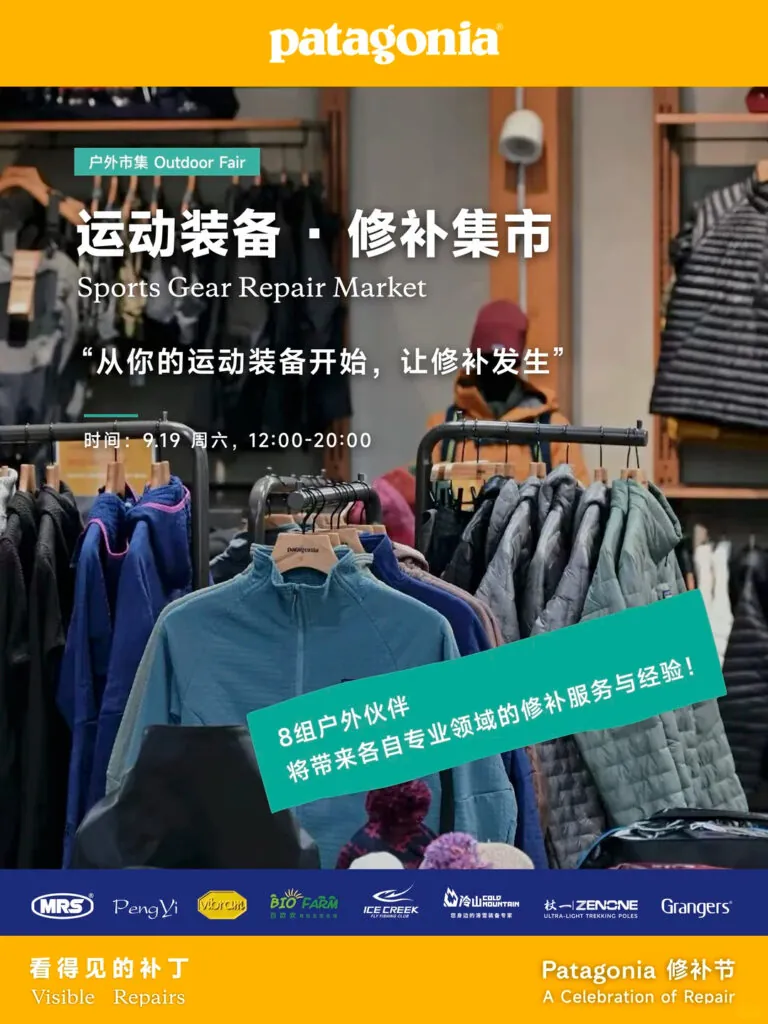
What’s really important to Patagonia is getting a message across. That message underpins the brand’s whole ethos. It’s summed up in some English-language copy they used a while back: ‘We’re in business to save our home planet.’
Even the most cynical among you has to admit that the brand wants to do some good. To the less cynical, a message of saving the earth hits home in a way that outlasts a normal product cycle. It is very likely that will translate into sales when the time is right.