



Haidilao burger business: Key takeaways
- Revenue from Haidilao’s core restaurant business fell 7.1% in 2025, despite total group revenue growing slightly.
- New burger brand Huanxianbao gives the group access to lower-cost, solo and delivery-friendly dining occasions.
- Its greatest competition may come from Chinese giants Wallace and Tastien rather than McDonald’s and KFC.
Haidilao (海底捞) – China’s largest hotpot chain – is swapping broth for beef patties with the opening of Fresh Burger (Huanxianbao, 欢鲜堡), a new fast-food burger concept, in Wuhan. In a market typically thought to be in the firm grip of McDonald’s and KFC, this looks ambitious. It’s really more of an experiment.
Fresh Burger currently has one store and joins 19 other brands being developed under Haidilao’s Red Pomegranate Plan. What the launch does reveal is the urgency behind Haidilao’s search for growth beyond hotpot.
Haidilao’s headline growth conceals a struggling core
| 2025 measure | Result | Year-on-year |
| Total revenue | RMB 43.23bn | +1.1% |
| Haidilao restaurant revenue | RMB 37.54bn | −7.1% |
| Customer visits | 383.9m | −7.5% |
| Table turnover | 3.9 times/day | Down from 4.1 |
| Delivery revenue | RMB 2.66bn | +111.9% |
| Other restaurant revenue | RMB 1.52bn | +214.6% |
Sources: Haidilao Results Report / Haidilao 2025 Annual Report
The above numbers show another side of what’s going on inside Haidilao’s business. Hotpot still accounted for 86.9% of group revenue. Its decline was offset by businesses serving consumers in different ways. Delivery revenue more than doubled, while revenue from Haidilao’s other restaurant brands rose 214.6% to RMB 1.52 billion (about US $225 million).
Those brands remain small, contributing just 3.5% of total revenue, but their rapid growth shows why Haidilao is giving them attention.
And the wider category is offering little easy growth. China’s hotpot market expanded only 3.5% in 2025, while the number of operating hotpot restaurants reportedly fell 15.4%. Value-led chains, regional specialities and fresh-cut concepts are fighting harder for a limited pool of customers.
Why a burger joint makes sense for Haidilao


Hotpot is an occasion. It requires time. You eat it with company and put down about RMB 100 (US $14.80) per person to do so. Burgers on the other hand can be eaten alone. They can also be delivered easily – which taps into the 111.9% growth this segment has seen for Haidilao – and sold throughout the day.
Fresh Burger’s average spend is around RMB 33 (US $4.90). Its burger sets run from RMB 19.90 (US$2.95) to RMB 41.90 (US$6.20), placing the brand within reach of anyone looking for a quick meal. And Haidilao also has a credible product angle…
‘Others sell burgers; we sell fresh burgers.’
Fresh Burger’s slogan
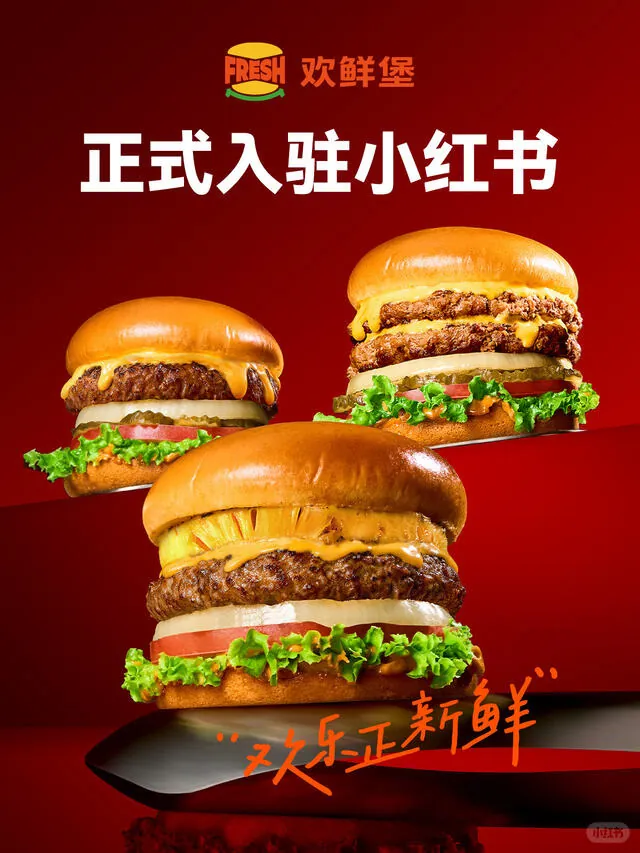
Fresh Burger uses daily-delivered Angus beef, prepared in an open kitchen where customers can watch from cut to cook. The slogan says it all: ‘Others sell burgers; we sell fresh burgers.’


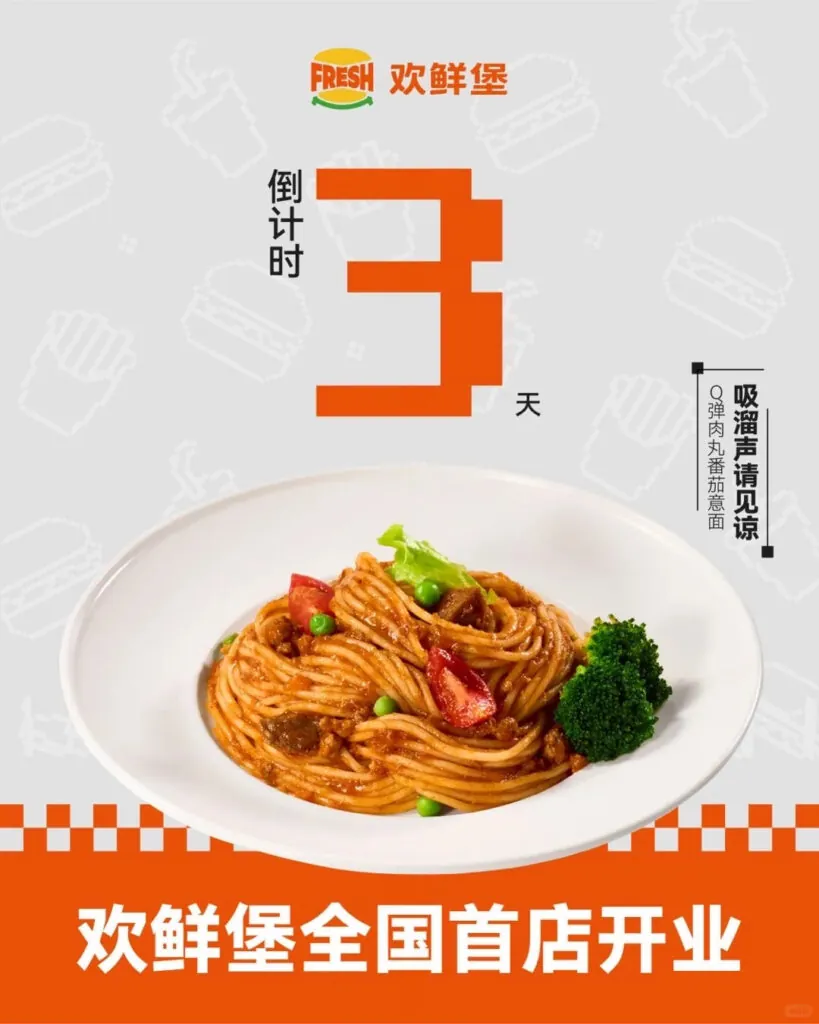


Visible preparation is on form for a broader Fresh Burger strategy. The group has introduced fresh-cut meat and seafood ranges to its hotpot restaurants too. There, freshness and transparency justify value. Fresh Burger does the same for fast food, piggybacking on the broader delivery networks at the business’s disposal to make the proposition work.
This all sounds very well thought out, but there is one snag: focus. Alongside burgers, the store sells pizza, pasta, salads, coffee, gelato and alcohol, taking the menu to nearly 50 items. It’s the sprawling menu of Gordon Ramsey’s Kitchen Nightmares, and it could complicate everything.
The Dao view: China’s burger giants are increasingly Chinese

McDonald’s and KFC remain the big dogs. KFC has more than 13,000 restaurants in China. McDonald’s ended 2025 with over 7,700 and plans to open roughly 1,000 more this year. To add to this, Fresh Burger’s domestic competition is just as intimidating.
Third-party data put Wallace (华莱士) at more than 19,400 stores and Tastien (塔斯汀) at over 12,500 by June. The latter has built its growth around freshly baked buns, Chinese flavours and a distinct ‘Chinese burger’ identity.
Fresh Burger therefore enters a market crowded at every level: American incumbents, huge domestic value chains, Chinese-style burgers and premium fresh-beef specialists. More than ten restaurant brands entered or expanded within the category during the first half of 2026 alone.
For now, Fresh Burger is a small experiment with large implications
Haidilao brings procurement scale, cold-chain infrastructure and deep restaurant experience. What remains unproven is whether consumers associate any of those strengths with a burger brand bearing a different name.
For now, Fresh Burger is a small experiment with large implications. Haidilao just needs to prove it can scale the idea – but we know that scale is one thing they know how to achieve.

_来自小红书网页版1-800x444.jpg.webp)