



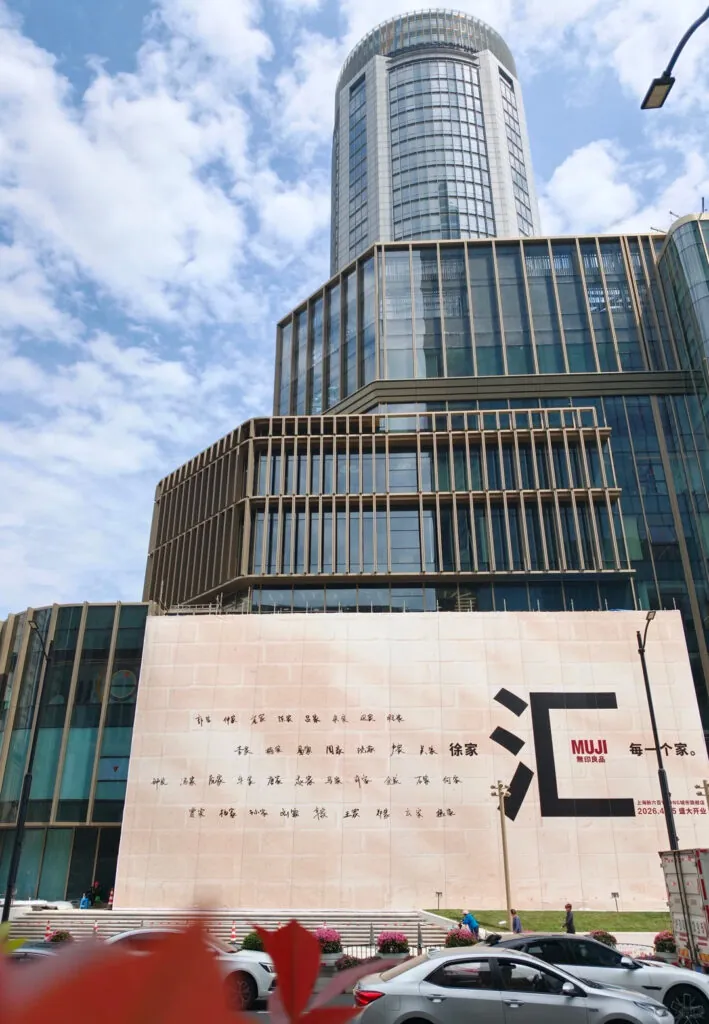
After a departure campaign from their Shanghai flagship store charmed fans of the brand, Muji is now under the glaring lens of the Chinese online community for a Xujiahui poster that doesn’t quite feel on brand. It’s hung outside Muji’s Shanghai New No. 600 YOUNG flagship in Shanghai’s Xujiahui district (徐家汇), and the concept is pretty tight.
The brand breaks down ‘Xujiahui’ (徐家汇), centring on the first two characters ‘Xu family’ (徐家), before expanding outward. Crowdsourced handwritten surnames – Wang, Li, Zhang, alongside compound names like Murong – are layered into a dense visual field that ultimately resolves into the final character 汇 (to gather). It’s a clean piece of work: from one family to many, from many into one place. It’s also a message that taps into MUJI’s long-running homely narrative.
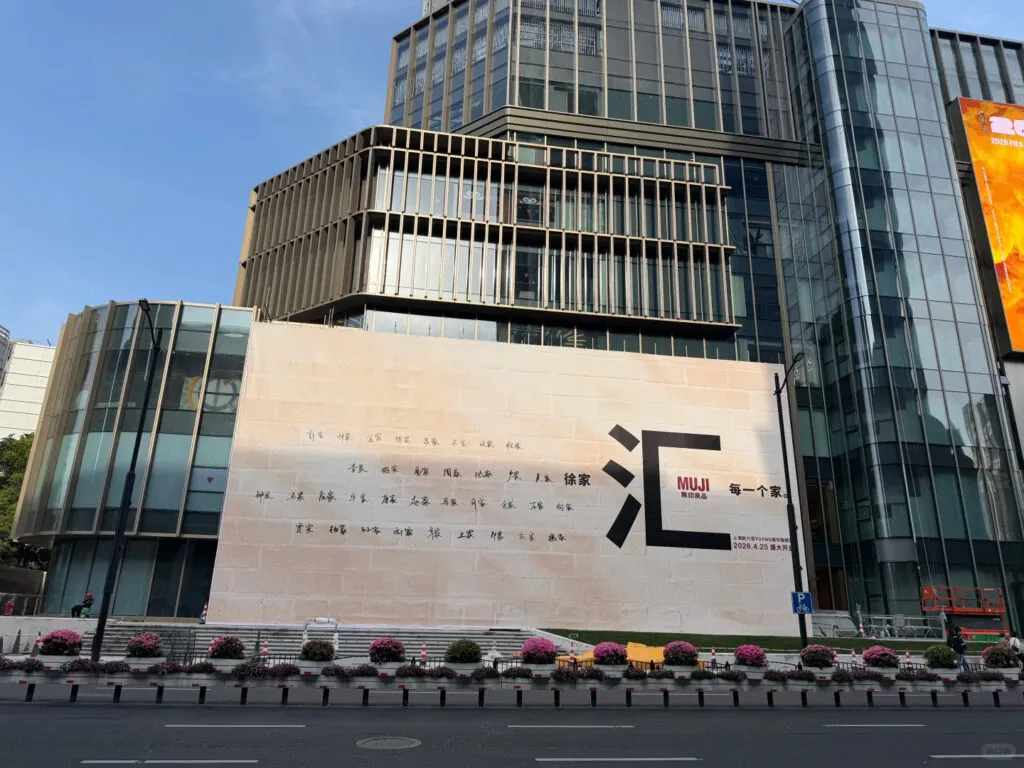
On Chinese social platforms, the reaction has been split. Rednote discussions show two camps forming quickly. Supporters focus on the logic. They read the work as participatory and locally attuned, a campaign that pulls MUJI closer to Chinese consumers.
Critics, however, aren’t arguing with the idea. They’re looking at the design. The oversized black 汇 character – thick, dominant, bold – is the flashpoint. Users describe it as visually jarring, out of step with the handwritten textures around it, and at odds with the negative space that typically defines MUJI’s aesthetic.

It’s a question of execution discipline. MUJI has built its brand on restraint and minimalism. The thing about minimalism is that when the restraint behind it slips – even slightly – it becomes frighteningly visible.
The poster Muji put up in Xujiahui hasn’t failed. But you could say it has exposed something in Muji’s branding: MUJI’s idea of home is tied very tightly to how it chooses to show it. When it drifts even slightly off course, the customers that have tied themselves just as tightly to that brand image feel it all too acutely.