




If you’ve been following China brand news over the last few weeks you’ll have no doubt seen the explosion of collaboration surrounding Zootopia 2 (疯狂动物城2). Disney’s new movie might just be the most collaborated IP in, well… history.
The film’s China release has been rolled out with an enormous marketing push. Over 60 brands ranging from sectors as diverse food and beverage, mass retail, toys, fashion, tech and automotive, have been bought on board to trumpet the movie’s arrival.
It’s hard to ignore. That’s probably the point. But from a marketing perspective it looks a bit like betting every number on the roulette wheel. So what should you be paying attention to, and why?
Zootopia 2 X MINISO

MINISO (名创优品) is one of the largest Zootopia 2 partners. The retailer released more than 100 co-branded SKUs across toys, accessories and home goods, while also converting landmark locations – including its Hangzhou MINISO LAND store – into immersive Zootopia spaces.
The strength here is not novelty but density. MINISO’s nationwide footprint ensured the characters were encountered repeatedly and casually, reinforcing familiarity rather than hype. Reports that MINISO signage appears inside the film further elevated the partnership, marking an uncommon instance of Chinese retail IP entering a Hollywood animation’s on-screen world.
POP MART and TOP TOY

This is an obvious win for the Zootopia’s marketing minds. No one is hotter than POP MART at the moment and TOP TOY has similar appeal. That appeal is anchored the collectible side of the rollout, releasing blind-box figures, plush toys and character-led series tied to the film.
This plays directly into an existing consumer habit rather than creating a new one. Cut characters like Judy Hopps and Nick Wilde are ideal IPs for collectibles and collectibles extend financial returns well beyond the time the film spends on screens.
Luckin Coffee
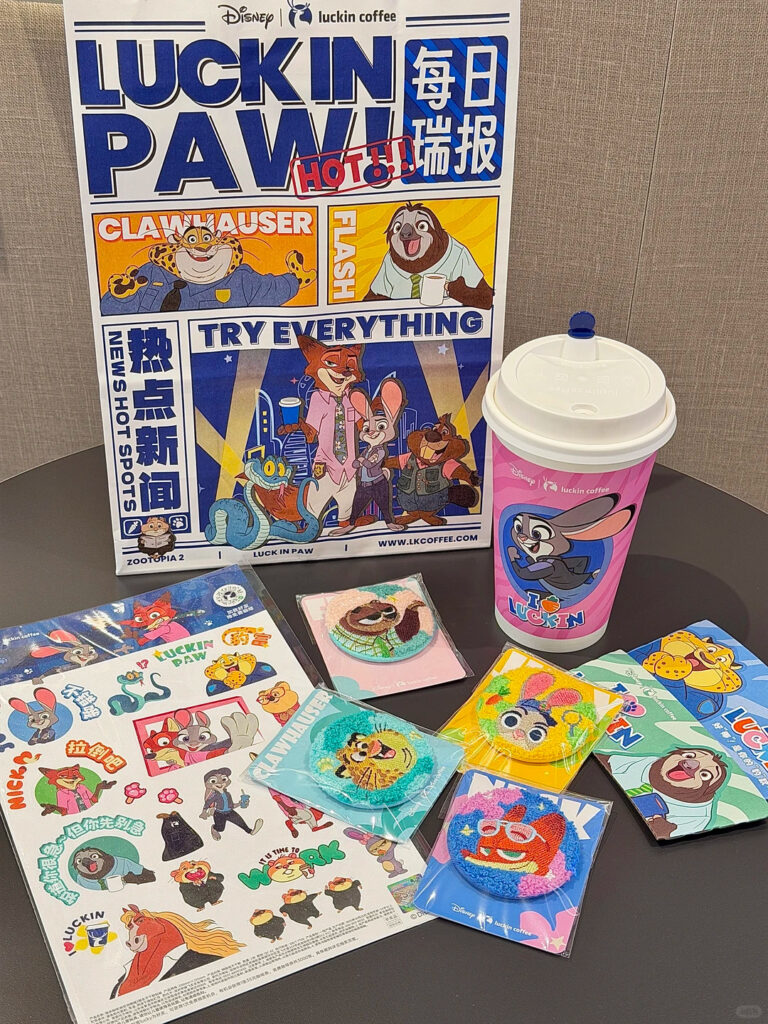
Among food and beverage partners, Luckin Coffee stands out for scale and visibility. Luckin has rolled out themed drinks, packaging and a wide range of peripherals across its stores. The collaboration worked not because any single item was exceptional, but because coffee is habitual.
By embedding the IP into a daily purchase, Luckin helped turn Zootopia 2 into something encountered repeatedly. Sure, the kids that watch the film aren’t likely to be buying coffee, but their parents are – and that’s who’ll also be buying the tickets and the merchandise.
So why Zootopia 2?
Disney’s decision to mobilise Zootopia 2 at scale in China rests on one basic fact: the original film was a commercial outlier. When Zootopia was released in mainland China in 2016, it generated roughly RMB 1.53–1.54 billion (about US $236 million) in box office receipts.
Within two weeks of release, cumulative box office had passed RMB 1 billion (about US $140 million), indicating strong word-of-mouth and repeat viewings rather one-off ticket sales. It remains one of Disney Animation’s most successful titles in China to date.
_来自小红书网页版-768x1024.jpg)
What made Zootopia stick with Chinese audiences is arcane knowledge, but its track record matters. Movies aren’t cheap to make, and these days big studios rarely walk into a project without a guarantee of good merchandise and perhaps a theme-park ride or two – take a look at the Marvel Universe for another case in point.
Zootopia offers perfect familiarity. Its characters have circulated continuously through re-runs, merchandise, and yes, those theme-park integrations for nearly a decade, maintaining recognition well beyond the original theatrical window.
Serious brand equity, right? The blizzard of marketing around no.2 is Disney drawing water from that well. Commercially, Zootopia 2 is the kind of highly proven asset and movie studio would kill to reactivate – not just in order to get bums in theatre seats, but to sell the merchandise that drives up a big studio’s profit margins.