



For a low-alcohol drink, RIO put out a Chinese New Year campaign with quite a burn. Not on the back of the throat, but on China’s banquet drinking culture. It’s a move to appeal to a younger Chinese audience – a segment not overly keen on the boozy rituals of their elders.
Anyone who’s spent a stint in China will likely know what this means: drinking in toasts over a detonated dinner of gnawed bones, bottles and the table-rested heads of anyone unable to keep up. It often involves spirits and pressure to drink them. Gen Z consumers can likely avoid this kind of session for most of the year, but during festival season, it’s hard to swerve. And this is where RIO steps in.
The RIO Chinese New Year Campaign: What did they do?
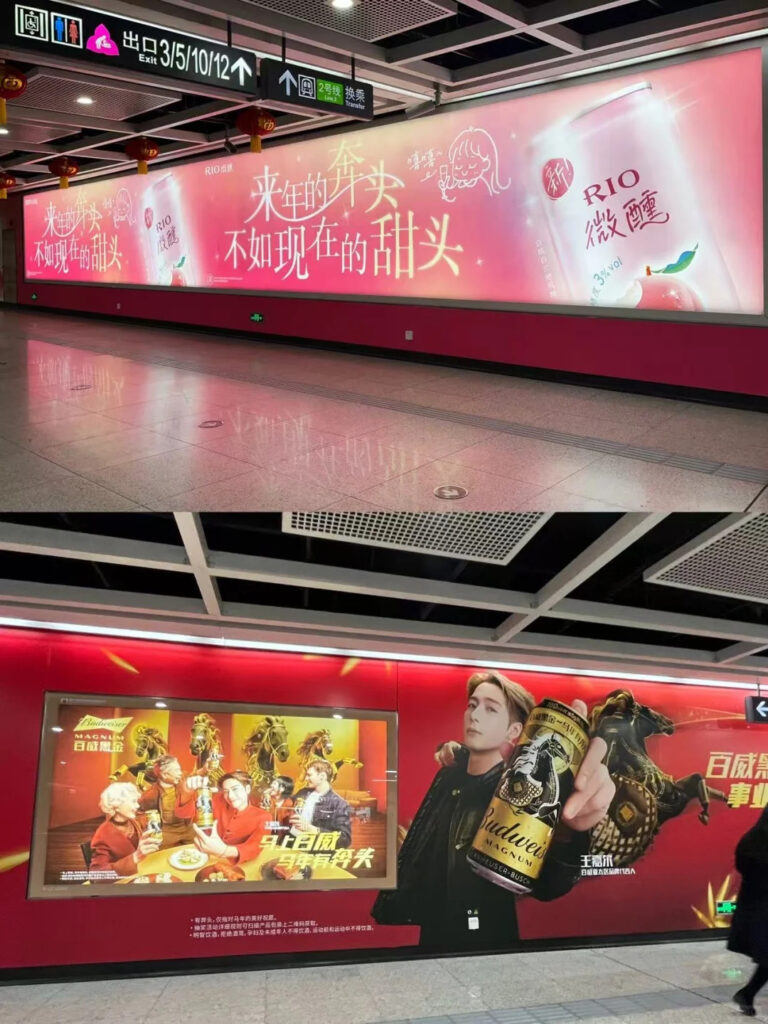
They’ve run a campaign that pokes fun at these norms, and the brands that dominate the conversation. RIO bought up billboard space next to household brands’ ads in subway stations around China, then used their space to comment directly on the rival brand’s promise. Slogans like ‘I’m not lowering my glass for anyone.’ (我才不比谁的酒杯更低) and ‘I’ll sit at the kids’ table.’ (我做小孩那桌) poked gentle fun at big-name baijiu brands. The lines offer up a light-hearted refusal, rather than a hard no.
Next to a Budweiser ad that ran the line ‘The Year of the Horse gives you something to strive for.’ (马年有奔头) RIO countered with: ‘Tomorrow’s promises aren’t as good as today’s sweetness’ (来年的奔头,不如现在的甜头).
The RTD revolution
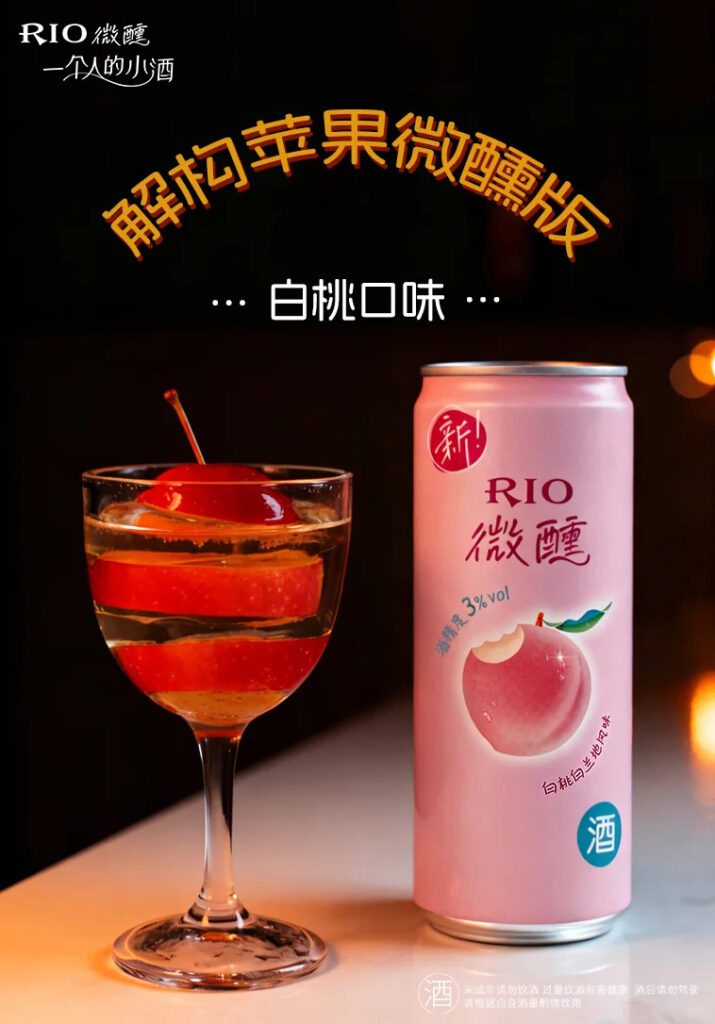
As an RTD option, they’re expertly placed to run with this message. RTD, or light-alcohol drinks is a segment that’s growing in popularity in China. Last year Mixue Bingcheng invested heavily in a beer brand on the expectation that low-alcohol drinks are one of the last segments of China’s alcohol market with decent growth potential.
China’s RTD alcoholic beverages market was valued at around US$1.7 billion in 2024 and is projected to reach about US$2.7 billion by 2035, implying a steady annual growth rate of roughly 4.5%, though other reports put that growth rate as high as 10%. Even China’s legacy liquor brands are shifting focus to this segment.
The trend comes from Gen Z – a generation that, much like in the west, look to health and fitness or activities as ways to socialise rather than getting drunk. When they do drink, they don’t go in for high-alcohol content. Drinks that boast a novelty content like boozy variations on fruit teas, or drinks where the alcohol is masked by softer flavours are preferred.
Why the RIO Chinese New Year campaign matters now

RIO aren’t the only brand that plays on the trials of festival season. Nike have had a crack at family pressures and Hema have attempted to take on festive fatigue. These campaigns from RIO hit on something broader: an apathy for the tight rules and traditions that govern Chinese New Year.
It’s a young thing. You don’t see legacy Baijiu brands pulling down norms, because their customers are the ones those norms work for – an older generation that largely believe the young should respectfully drink up. It’s a complex social duel. RIO’s campaign works because it doesn’t exacerbate this conflict. Actually, it tries to de-escalate it. Marketing to Gen Z at this time of year seems less and less to be about persuading them to do something, and more about giving them permission not to.