


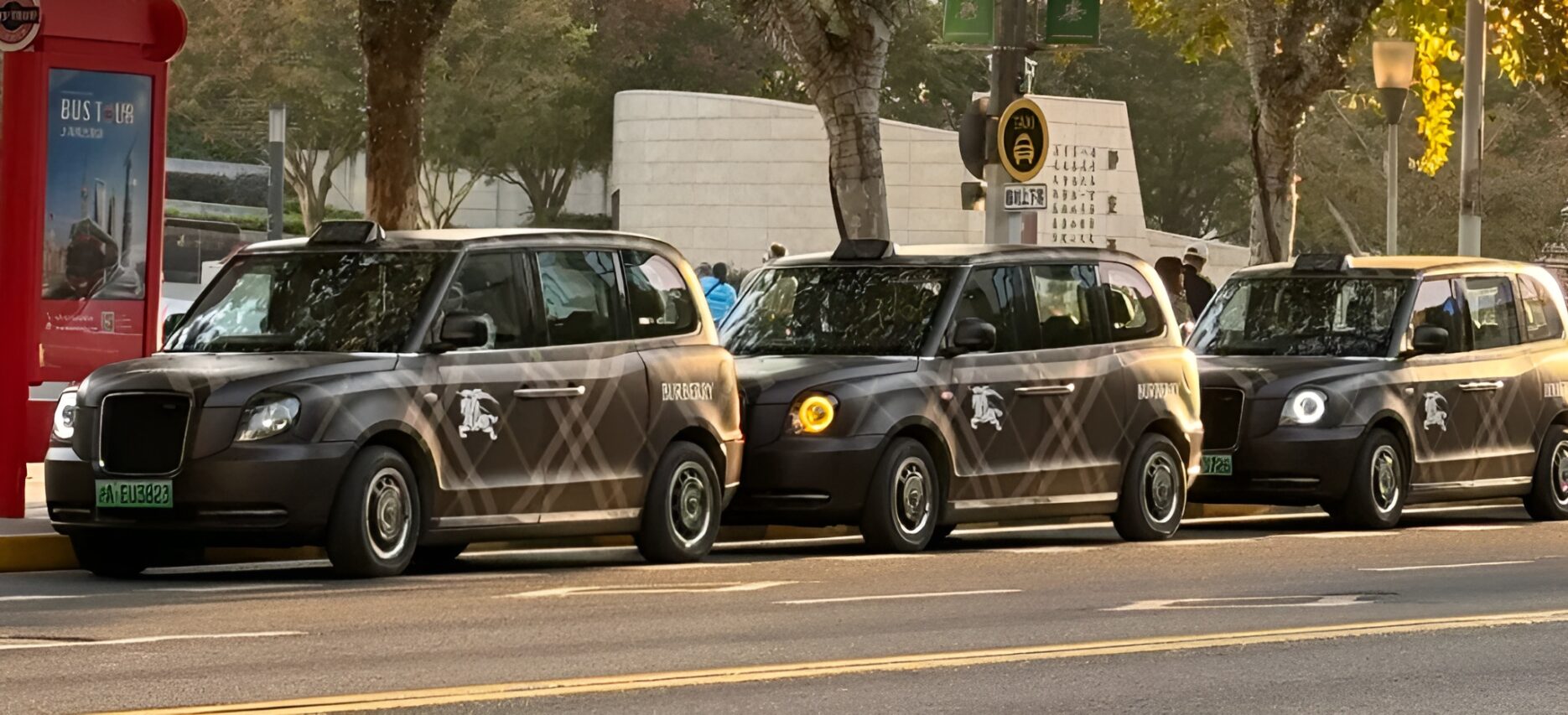
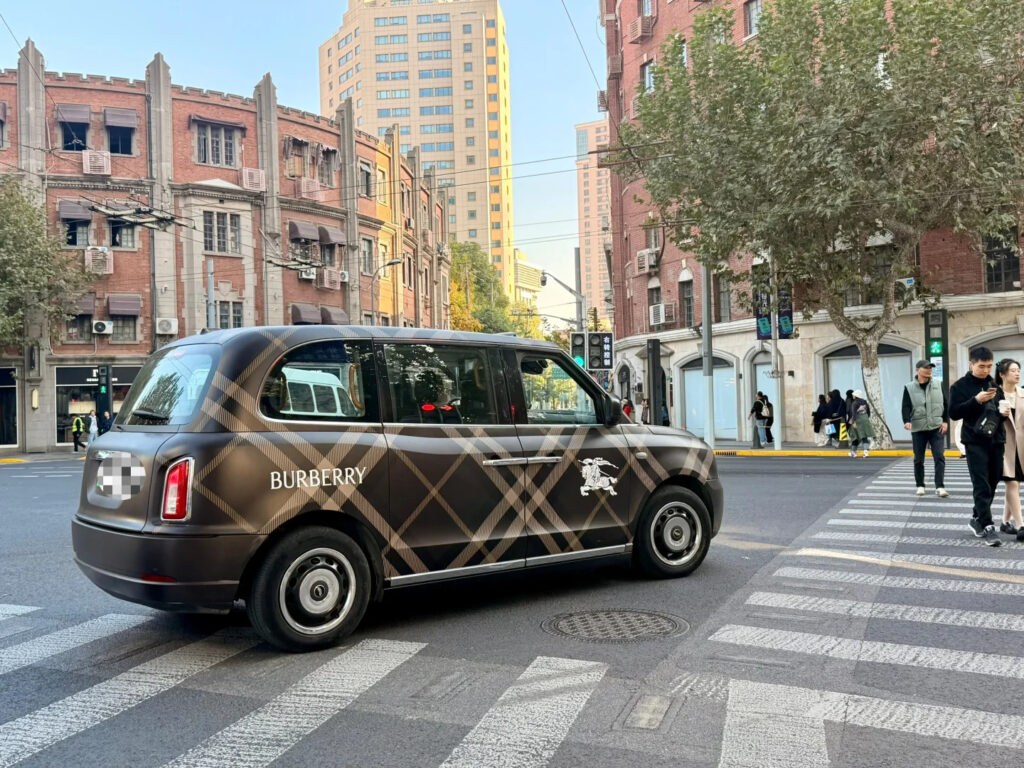
Burberry (博柏利) has taken its branding into some of Shanghai’s most expensive postcodes, this time on four wheels. Over the past week, a small fleet of Qiangsheng taxis wrapped in Burberry’s signature check pattern has been spotted moving through high-traffic commercial areas including the Bund, Plaza 66 and Fumin Road. If you see a Burberry taxi, they appear in loose groups of fewer than five vehicles, blending into everyday city traffic while remaining unmistakably branded.
The taxi campaign is a move away from traditional large-scale outdoor advertising and towards more casual, street-level formats. In 2023, the brand experimented with a rose-print bus wrap in Shanghai. That activation drew mixed commentary online, with some users praising its visibility and others questioning its fit with luxury codes. This year’s execution is simpler and more recognisable, relying on the brand’s core check rather than seasonal creative.
Burberry has paired the taxi rollout with an unconventional retail installation at Shanghai Hongqiao Airport: a temporary scarf stall styled to resemble a market stand. The format intentionally avoids the polished theatrics of a luxury pop-up, instead leaning into a casual, transactional aesthetic more commonly associated with mass or lifestyle brands.
On Chinese social platforms, the response has been notably warm. Users sharing photos of the taxis and airport stall describe the activations as approachable and unexpectedly engaging, with several noting they felt more inclined to stop, browse or interact precisely because the formats felt informal rather than exclusive.
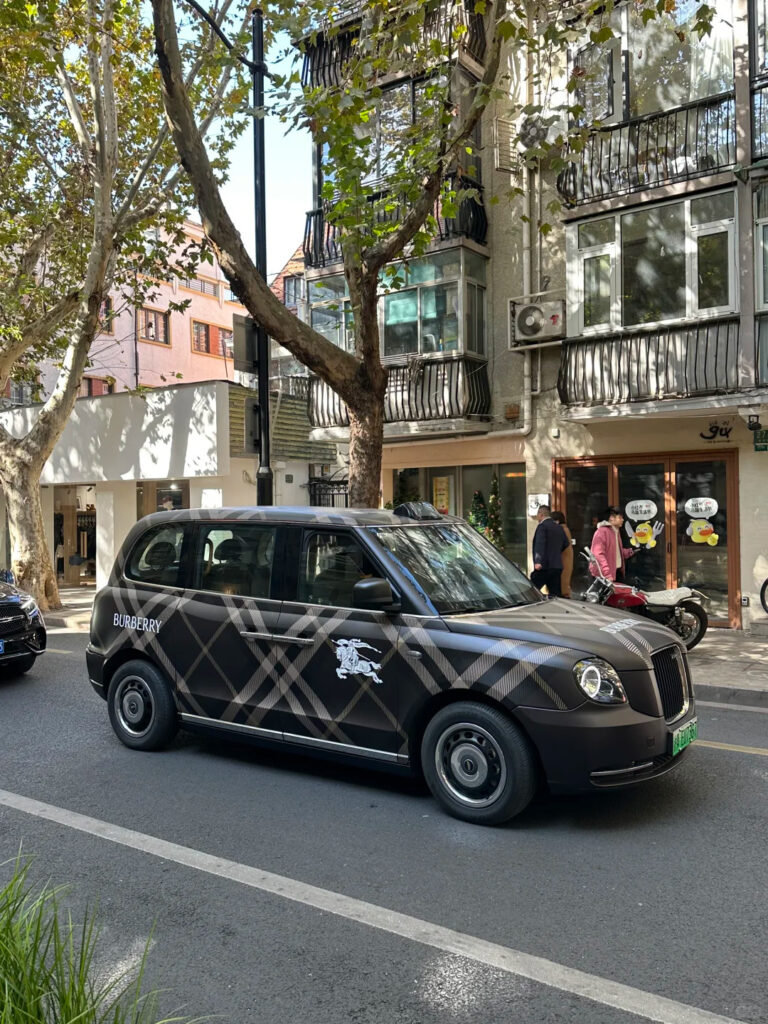
Instead of relying on spectacle or distance, Burberry appears to be testing a softer strategy built around everyday visibility and cultural familiarity. In a market where foreign luxury brands are increasingly competing for attention in daily life, Burberry’s latest marketing strategy says that relevance is now found on the street, not just behind the finely polished glass of a department store window.