



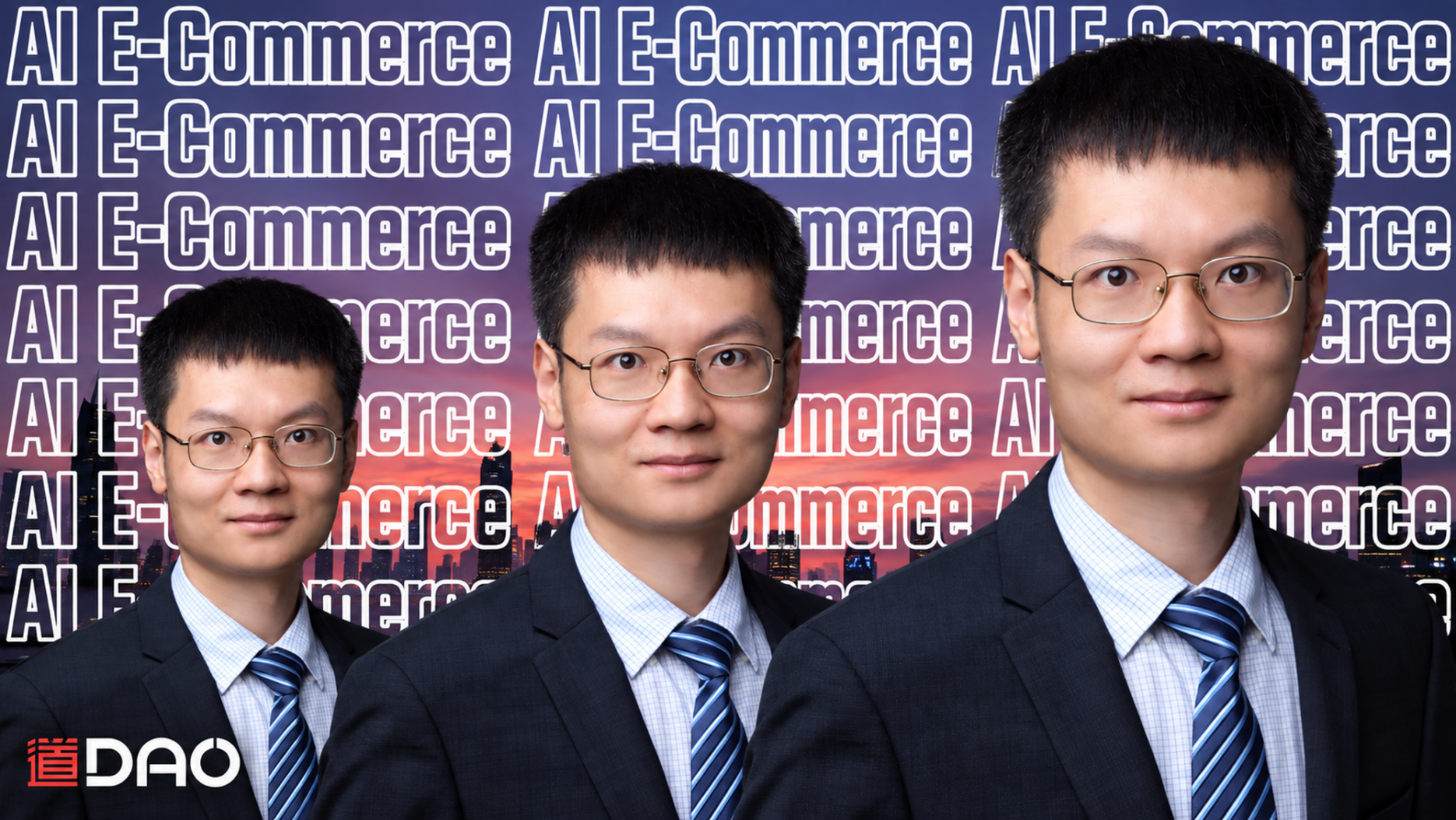

Xi Li (李曦) is a professor of marketing at the University of Hong Kong, where he studies how AI and algorithms influence businesses and consumers.
His academic career spans computer science at Tsinghua University, operations research at the Hong Kong University of Science and Technology, and a management PhD at the University of Toronto.
His research covers online marketplaces, personalised pricing and consumer privacy. For Dao Insights, he discusses how AI shopping agents could reshape Chinese e-commerce, changing how brands reach customers and compete for their attention.
Where is AI already making the biggest difference to Chinese e-commerce?
At the present stage, I think AI is changing e-commerce mainly in two related ways. First, it is changing the process of product search. Previously, consumers had to define what they wanted in some detail before they could search for it.
If I was planning a trip, for example, I would first choose a destination and then look for a hotel. Now a consumer can simply say, ‘I want a seaside destination where I can dive and eat good seafood,’ and ask AI to recommend options, without first specifying the exact product. This makes search much more convenient. A field experiment on Meituan’s generative search found that this kind of intent-aware search increased purchases.
This could divert traffic from traditional internet platforms and intensify competition
Second, in the future, users may not go directly to each shop or platform. They may instead compare options across platforms through AI. Returning to the hotel example, rather than checking Ctrip and Meituan separately, we may simply ask an AI tool to recommend a hotel that offers good value for money. This could divert traffic from traditional internet platforms and intensify competition between hotels. I believe this will happen, but there is not yet enough public data to say how large the broader cross-platform effect will be.
Are recommendation systems evolving into genuine shopping agents?
Recommendation systems will certainly change. The biggest change, as I mentioned, is that they make searching more convenient. Consumers no longer need to search through platforms one by one; they can put a question directly to an AI and ask it to help.
There is another benefit for consumers. In the past, they might not have known much about certain products. When buying a car battery, a medicine or another specialised product, for example, it can be difficult to judge which option is better, and consumers may spend a long time researching and comparing.
AI can help organise and compare the information, making it easier to assess value for money. This may make products with stronger objective features easier to identify. Before an AI can complete purchases on a consumer’s behalf, it would still need reliable product information and clear authorisation for payment. In the case of medicines, it should support rather than replace professional advice.
If consumers increasingly shop through AI assistants, how will products earn visibility?
This is what is often called GEO. Previously, we talked about SEO: making sure a search engine could find a product. Now companies also need to think about GEO, so that AI can retrieve and understand their products. GEO should not be treated as a complete replacement for SEO; the basic search principles still matter.
On the one hand, the underlying strength of the product becomes more important. Persuasive language may work with an individual consumer, but copywriting alone may be less useful to an AI agent. AI may also use different sources from those a consumer would normally consult. Companies may therefore need authoritative endorsements, objective product specifications, accurate availability information and clear answers to frequently asked questions. In other words, they need to optimise their visibility in a different way.
What will this shift mean for merchants’ advertising strategies and costs?
The commercial model for AI is still not very clear, and we do not yet have one definitive set of lessons for companies. One likely development, however, is that some traffic will move from online platforms towards AI search interfaces. Paid recommendation is not yet a universal model: ChatGPT has introduced clearly labelled advertising, while Claude says it will remain ad-free. I would therefore not assume that every general-purpose AI tool will charge merchants simply to be recommended. Even so, if AI tools become important gateways for product discovery, they could divert traffic and advertising revenue from traditional platforms.
I do not think this will necessarily concentrate all traffic on leading products. Future AI agents may recommend different products to different consumers and make recommendations more personalised, allowing some long-tail goods to gain exposure. This could reduce competition for traditional advertising slots, although a small number of AI recommendations may also create a new kind of competition for placement.
Which businesses are best positioned to benefit from AI-led commerce? Will platforms and established brands gain the greatest advantage from their data, or could smaller merchants use AI to compete more effectively?
Following on from the previous question, I think products with good quality and clear objective information may be more likely to be favoured by AI, because AI relies more on product specifications and available evidence than on traditional persuasive language. However, AI can judge only from the data, reviews and other signals available to it; it cannot observe quality directly.
AI can help people with niche interests find products that meet their needs
In addition, small merchants and long-tail products may have better opportunities, because AI can help people with niche interests find products that meet their needs. I see this as a possibility rather than an automatic outcome.
Is China’s deep integration an early indicator of where global e-commerce is heading, or are there features of the Chinese market that cannot easily be replicated elsewhere?
This is a complex question. In some respects, China may provide an early indication of where commerce is heading, for example in livestreaming and social media. Other features are not so easy to replicate. China has a mature logistics network that can deliver products to consumers very quickly.
China’s laws also differ from those in other countries, especially in Europe. Europe is generally more restrictive about the use of consumer data, although China also regulates personal information and automated decision-making. Some Chinese experience can therefore be applied in other regions, but it should not be transferred mechanically. Whether it is suitable depends on local conditions.
How could AI change the role of livestreamers, influencers and social-commerce content?
AI will affect content in two ways:
1. First, as you suggest, more virtual hosts and AIGC will appear online. They may replace some of the traffic previously generated by human presenters.
2. Second, traditional livestreamers have had to participate in person, but the time of leading presenters is limited and they cannot meet every brand’s needs. With AI, realistic livestream content based on an authorised digital version of a presenter can be produced without the person appearing every time. This could help leading livestreamers work with more brands and scale content production more quickly. Such content should be clearly labelled and used with the presenter’s consent.
Overall, I think virtual hosts will replace human livestreamers to some extent, but they will not replace the human market completely.
What new risks does AI introduce for consumers and brands?
There will certainly be many different problems, but we cannot yet identify all of them. They will need to be observed as the market develops. At present, I see four questions that could have a major impact:
1. Conflicts of interest and product quality. If an AI is paid to promote products, will that create a conflict of interest and lead it to recommend lower-quality products?
2. Merchant manipulation and consumer interests. How might companies use GEO, or generative engine optimisation, to make a platform recommend their products, and could this harm consumers?
3. Data privacy. To receive highly personalised recommendations, how much data should consumers share with AI?
4. Platform barriers and traffic allocation. Should internet platforms such as Amazon, JD.com and Taobao allow AI tools to access their data? If they do, does that mean handing their traffic over to AI?
At a minimum, platforms will need clearer labelling of paid recommendations, stronger checks on sellers and reviews, privacy controls, and a basic explanation of why a product was selected. The detailed rules will need to evolve with practice.
Chinese e-commerce companies are increasingly serving international markets. Could their experience with AI, logistics and highly integrated platforms give them an advantage overseas, and how might Western competitors respond?
Chinese companies are indeed further ahead in applying AI in some commerce scenarios than many overseas markets, especially in Europe, although American companies also have many innovations in AI applications.
I do not think China is ahead in every respect. Chinese and American companies have much to learn from each other, and this is a process of mutual learning. I believe more Western companies will draw on Chinese approaches in the future, while Chinese companies will also learn from Western approaches. The two sides will encourage each other’s development.
Looking ahead three to five years, what would convince you that agent-led shopping has genuinely arrived in China?
I believe that, over the next three to five years, more users will shop through AI agents. Consumers may become increasingly willing to do less research themselves before making a purchase and to delegate more decisions to an AI agent.
Products may also need to move from ‘to C’ to ‘to AI’. By this, I do not mean that consumers will stop mattering. Rather, brands need to understand not only how to design products that consumers like, but also how to make those products understandable and recommendable to AI. They may even need to think about how to present prices and offers to a consumer’s AI agent. These are important issues for companies to watch.
For platforms, the question is not only how to integrate AI into their own services, but also how to avoid handing all of their traffic to third-party AI tools. For example:
1. How can a platform ensure that its data is not accessed or used by AI without permission?
2. How can it create additional value that general-purpose AI tools cannot provide?